

Commentary
If the Russian-speaking community in Latvia cannot articulate their interests without being seen as disloyal, they could end up embracing a pro-Kremlin agenda.
Sergejs Potapkins
{
  "authors": [],
  "type": "pressRelease",
  "centerAffiliationAll": "dc",
  "centers": [
    "Carnegie Endowment for International Peace"
  ],
  "collections": [],
  "englishNewsletterAll": "democracy",
  "nonEnglishNewsletterAll": "",
  "primaryCenter": "Carnegie Endowment for International Peace",
  "programAffiliation": "DCG",
  "programs": [
    "Democracy, Conflict, and Governance",
    "Middle East"
  ],
  "projects": [],
  "regions": [
    "North Africa",
    "Algeria"
  ],
  "topics": [
    "Political Reform",
    "Foreign Policy"
  ]
}
REQUIRED IMAGE
Algeria’s May 17 parliamentary election is just one week away. The ruling party is expected to maintain its majority, and the results will reflect rather than alter the real balance of forces within the executive branch of the state. The key issue is the power relationship between the civilian and military branches of the ruling elite.
FOR IMMEDIATE RELEASE: May 9, 2007
- News Release -
Algeria’s May 17 parliamentary election is just one week away. The ruling party is expected to maintain its majority, and the results will reflect rather than alter the real balance of forces within the executive branch of the state. The key issue is the power relationship between the civilian and military branches of the ruling elite. The outcome of the parliamentary elections in 1991 served as a catalyst for the army’s assumption of political power. The descent into violence that followed completed the militarization of Algerian politics and consolidated the power of the generals.
In Demilitarizing Algeria, Hugh Roberts, a specialist on North Africa, analyzes the unprecedented political role and power of Algeria’s military since the advent of formal pluralism in 1989, President Abdelaziz Bouteflika’s actions to reassert presidential authority, and the longer-term implications for democratic reform in Algeria.
Since becoming president in 1999, Bouteflika has had significant success in curbing the power of the military commanders by reining-in formal political pluralism and relying on a form of civilian authoritarianism. The reestablishment of presidential authority is not complete, since the army’s intelligence services remain effectively independent of the presidency’s nominal oversight.
The author points to several challenges that could impede future political reform. Bouteflika may use planned constitutional revisions not only to extend the term limits for his presidency, but also to reduce the already limited role of the parliament. Recent recrudescence of terrorist activity could provide a pretext for the military to reassert their authority at the president’s expense.
An aggressive campaign by western governments to promote political reform in Algeria is unlikely to succeed, but these countries—especially the U.S.—should review their policies to avoid jeopardizing the demilitarization of the political system.
“The danger of a reversal of the recent trend to a civilian government and a remilitarization of the Algerian political system is intimately linked to the global war on terrorism. It is important that Washington not encourage Algeria’s general to reassert themselves in the political sphere,” says Roberts.
Notes:
The Carnegie Endowment for International Peace is a private, nonprofit organization dedicated to advancing cooperation between nations and promoting active international engagement by the United States. Founded in 1910, its work is nonpartisan and dedicated to achieving practical results.
###
Carnegie does not take institutional positions on public policy issues; the views represented herein are those of the author(s) and do not necessarily reflect the views of Carnegie, its staff, or its trustees.

If the Russian-speaking community in Latvia cannot articulate their interests without being seen as disloyal, they could end up embracing a pro-Kremlin agenda.

Sergejs Potapkins
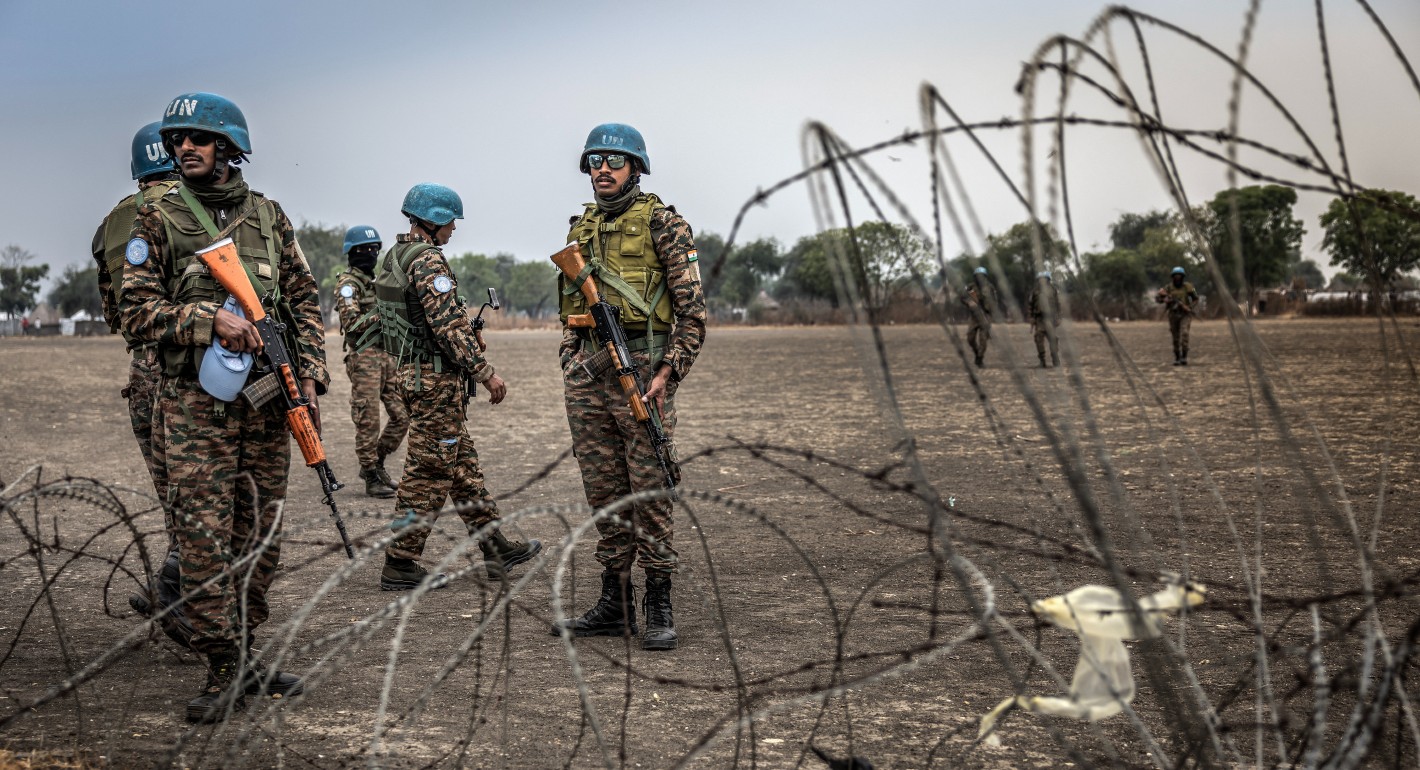
Washington’s decision to support some UN functions while letting others wither is pulling the organization apart at the seams.

Stewart Patrick, Theodore Zaritsky

Are Germany’s economic, industrial, and political struggles becoming a liability for the EU’s ability to rise to the geopolitical moment?

Rym Momtaz, ed.

Russia’s ruling party would have benefited from Putin appearing as its distant patron, but as an active frontman imposing his views on the public, he has done nothing but harm both the party’s election campaign and the ruling system overall.

Andrey Pertsev

China’s police training infrastructure construction projects provide benefits to recipient countries, promote China’s image as a major global security provider, and are likely to reinforce alignment between Beijing’s security priorities and those of countries in the Global South.


Cameron Waltz, Sheena Chestnut Greitens, Kim Nguyen, …