

Commentary
Amr Hamzawy
{
  "authors": [
    "Amr Hamzawy"
  ],
  "type": "legacyinthemedia",
  "centerAffiliationAll": "dc",
  "centers": [
    "Carnegie Endowment for International Peace",
    "Malcolm H. Kerr Carnegie Middle East Center"
  ],
  "collections": [],
  "englishNewsletterAll": "menaTransitions",
  "nonEnglishNewsletterAll": "",
  "primaryCenter": "Carnegie Endowment for International Peace",
  "programAffiliation": "MEP",
  "programs": [
    "Middle East"
  ],
  "projects": [],
  "regions": [
    "North America",
    "United States",
    "Middle East",
    "Egypt",
    "Gulf",
    "Levant",
    "Maghreb"
  ],
  "topics": [
    "Political Reform",
    "Foreign Policy"
  ]
}
Source: Getty
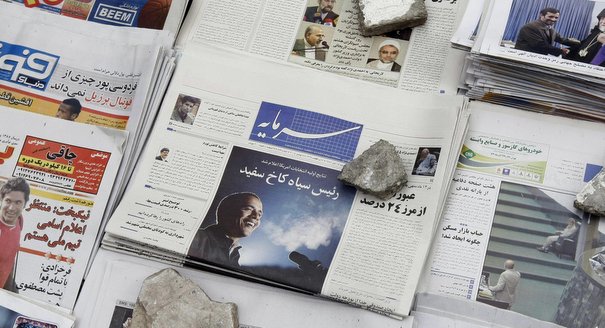
There are significant differences to how America’s moderate friends in the Middle East and those of its radical foes reacted to Barack Obama’s speech to the Muslim world.
Source: Web Commentary

Hamas’ skeptical response to Obama’s speech signifies the movement’s inability to discern an actual change in American policy. Obama did not exclude Hamas, or describe it as a terrorist organization. Rather, he recognized the movement’s legitimacy, referring to its popularity among Palestinians, and calling on it to live up to its international obligations, respecting the terms of previous treaties with Israel, so that it can take part in further negotiations. Here Obama abandoned the definition of Hamas as an organization beyond the pale, and signaled America’s willingness to engage it. This is a truly different approach than that of the previous U.S. administration.
Obama abandoned the definition of Hamas as an organization beyond the pale, and signaled America’s willingness to engage it. This is a truly different approach than that of the previous U.S. administration.
In Egypt, about a third of the population expressed enthusiasm and euphoria about Obama’s speech, while 67% expressed skepticism. America’s foes in the Middle East, primarily Iran, and the resistance movements Hamas and Hizbollah, could not deny the positive notes Obama struck on Islam and Palestine. Nonetheless, they described Obama’s speech as a pabulum of good intentions and kind words (especially the references to the Koran) that in and of themselves cannot solve the problems the United States confronts in the region.
From the Supreme Leader of the Islamic Republic of Iran, Ali Khamenei, we heard the clearest articulation of this position, that Obama’s words must be matched by actions, without which there can be no improvement in relations between the U.S. and the Muslim world. Hamas and Hizbollah made similar statements. And the Egyptian and Jordanian Muslim Brotherhood organizations, which traditionally maintain close ties to Hamas, echoed the same skepticism. The supreme guide of the Egyptian Brotherhood described in a statement issued on June 6 Obama’s speech as good on intentions and empty on policy steps.
The Egyptian, Saudi, and Jordanian governments all praised Obama’s speech, and welcomed a new beginning in American-Arab relations. Obama’s remarks on Islam and Muslims, his position on the Palestinian issue, in which he stressed America’s commitment to the two-state solution and to the national aspirations of the Palestinians, on withdrawal from Iraq and dialogue with Iran to keep the country’s nuclear program strictly peaceful, were all greeted warmly. Spokesmen for each of the three governments made clear that Obama’s positions represent a change of course in American policy after George W. Bush.
Obama stressed the universality of representative government as a value in which Americans believe, but made it clear that the United States will not impose its system of government on anyone
These three countries, all autocracies the U.S. badly needs to secure its interests in the Middle East, were also relieved to hear Obama abandon the Bush administration’s interpretation of democracy promotion, characterized by persistent interference in the domestic affairs of foreign countries. Obama stressed the universality of representative government as a value in which Americans believe, but made it clear that the United States will not impose its system of government on anyone.
Nonetheless, democracy activists and opposition movements -- liberal and religious alike -- especially in Egypt, were alienated by Obama’s speech, which they decried as an endorsement of Arab autocracy. Many of them criticized the President’s decision to deliver his remarks in Cairo, in spite of the negative democratic and human rights record of the Mubarak regime.
The Syrian government reacted more cautiously to Obama's speech than its allies Iran, Hamas, and Hizbollah. The Syrians did not issue an official statement until June 6 and, they hope for an opening in relations with the United States
Interestingly, the response of the Syrian government to the speech was more cautious than that of its allies Iran, Hamas, and Hizbollah. The Syrians did not issue an official statement (until June 6) and some journalists in the government controlled press described Obama’s remarks as a sign of change and expressed their desire for the new administration to put its words into action. It seems the Syrians are hoping for an opening in their relations with the United States, and that they are willing to remain in a holding pattern for some time, even though the President did not mention Syria or the Syrian-Israeli peace negotiations once in his speech.
Unlike the resistance movements, Muslim clerics and scholars -- both inside and outside official religious establishments -- praised Obama for his references to the Koran, and his appreciation of the true tolerant spirit of Islam. In a way, they acted as an antidote to the aggressive statements issued by Bin Laden and al-Zawahiri, who described Obama as a crusader and merely a more pleasant follower of Bush.
These reactions and responses demonstrate dramatic differences among Arab governments and political factions. Obama has bought himself an appreciable amount of good will, but his ability to match words with actions will very shortly be tested in Palestine, Iran and probably sooner in Lebanon.

Director, Middle East Program
Amr Hamzawy is a senior fellow and the director of the Carnegie Middle East Program. His research and writings focus on Egypt’s and other middle powers’ involvement in regional security in the Middle East, particularly through collective diplomacy and multilateral conflict resolution
Recent Work
Amr Hamzawy
Amr Hamzawy, Kathryn Selfe
Carnegie does not take institutional positions on public policy issues; the views represented herein are those of the author(s) and do not necessarily reflect the views of Carnegie, its staff, or its trustees.

In the discussions made possible by the State Duma election campaign, one question is being asked more and more loudly. “What next?”

Andrey Pertsev

Over the past decade, China has moved from marginal player to major producer of all things batteries. The United States, Europe, and others are aiming to balance the market.

Milo McBride

The DFC should focus on advanced, low-carbon energy sources, prioritizing areas where the United States has comparative advantages.
Noah Gordon, Liana Schmitter-Emerson
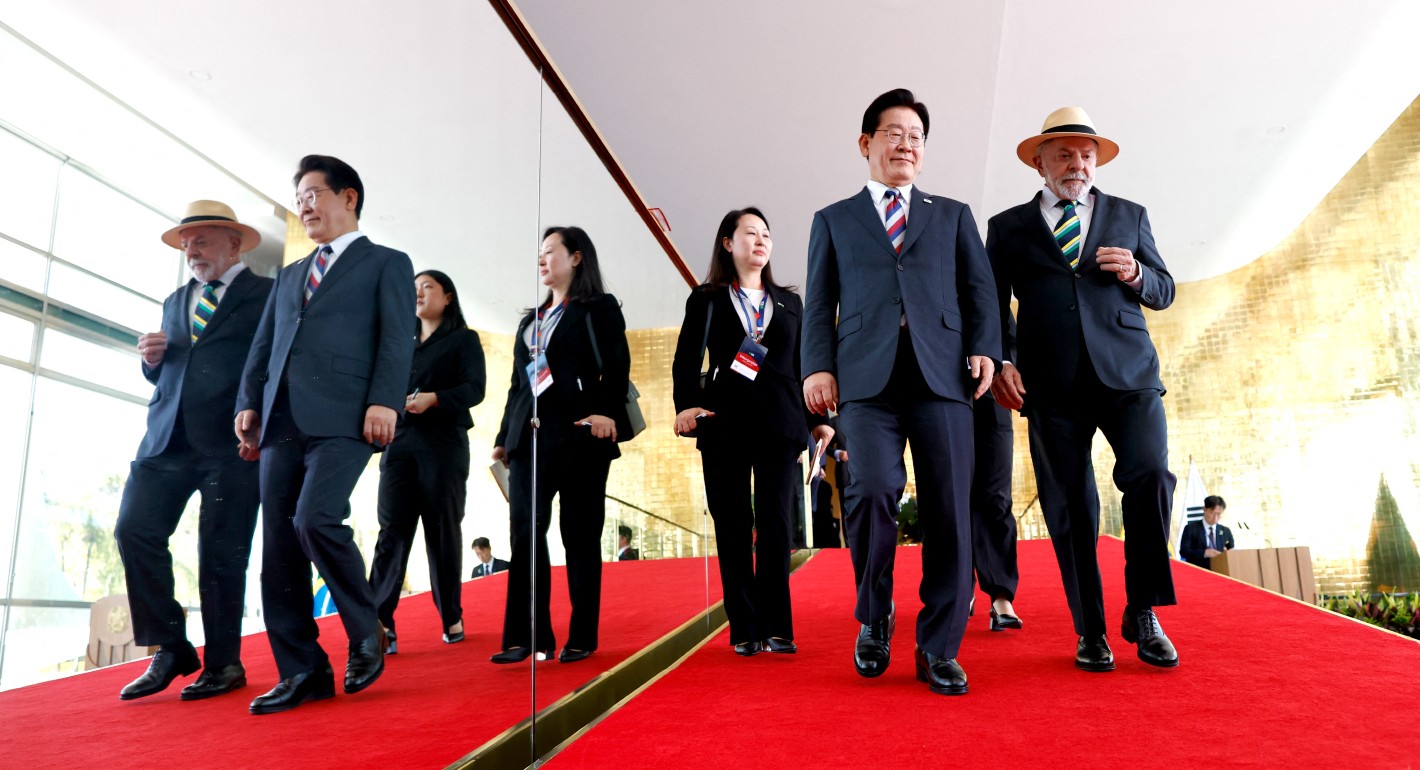
Lee’s tour shows how Seoul is reorganizing its diplomacy away from Pyongyang and toward industrial networks and the geography of the compute economy.

Darcie Draudt-Véjares
The Pentagon is calling for a rapid AI transformation. Autonomous drones offer a case study in the eight bottlenecks the U.S. military must navigate to realize that vision.
Jake Steckler