

Commentary
Ahead of a tough winter for Ukraine, Donald Trump’s swing back toward Russia bodes ill. But instead of panicking, Kyiv’s European allies are focusing on action.
Rym Momtaz
Source: Getty
As Gaza peace negotiations take center stage, Washington should use the tools that have proven the most effective over the past decades of Middle East mediation.
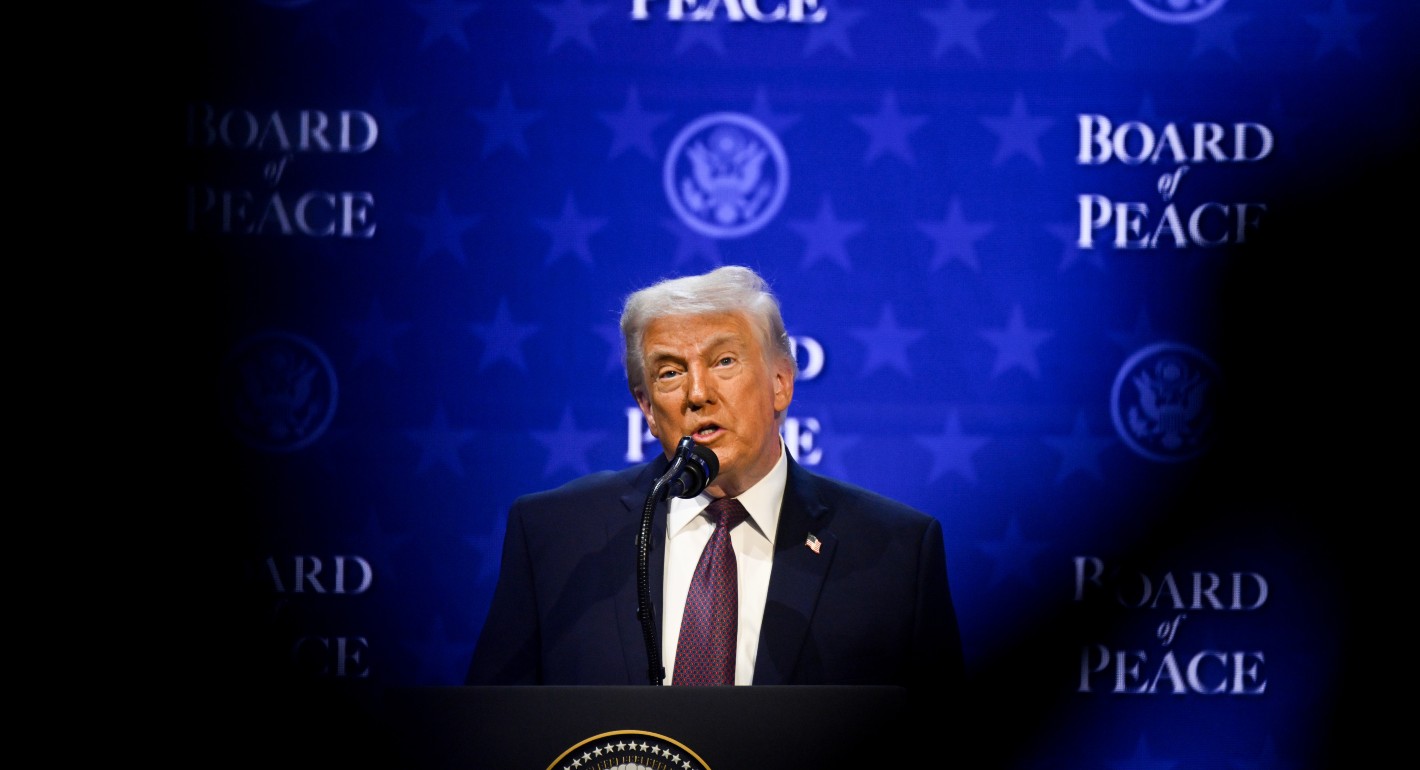
The United States is again at the forefront of peace negotiations in the Middle East, stepping into a familiar role as mediator between Israel and its neighbors. On November 17, 2025, the UN Security Council approved Resolution 2803 endorsing the Comprehensive Plan to End the Gaza Conflict. The resolution is largely based on U.S. President Donald Trump’s twenty-point plan for peace, and it envisions both a Washington-led role in chairing a Board of Peace to redevelop and reestablish governance in Gaza and the creation of an International Stabilization Force to oversee security and train and support Palestinian police forces in Gaza.
For this effort to succeed, the United States should learn from the lessons of the past fifty years and employ mediation strategies that were successful in previous negotiations. These include sustained high-level U.S. leadership, incentives, and inducements to ensure the parties stay the course (and accountability to prevent spoilers), as well as intentional sequencing that entails conditional, yet tangible, benefits to prepare domestic and regional populations for long-term peace and stability.
This paper provides a comparative analysis of how the United States successfully (and unsuccessfully) used the available policies, tools, and levers—sustained high-level leadership, facilitation and mediation, sequencing and conditionality, incentives and inducements, security guarantees, and public diplomacy—to facilitate peacemaking across four case studies: the successful Egypt-Israel and Jordan-Israel tracks and the failed Syria-Israel and Palestine-Israel tracks. Ultimately, this paper suggests policy lessons for future mediation efforts, tailored to the specific context of U.S. implementation of UN Security Council Resolution 2803.
Between 1974 and 1979, the United States played a central and ultimately successful role in mediating peace between Egypt and Israel. The October 1973 war transformed the regional context and set the stage for a series of disengagement agreements. U.S. secretary of state Henry Kissinger’s intensive “shuttle diplomacy,” in which he shuttled between the parties on repeated short trips between 1974 and 1975, produced Sinai disengagements, created the structure for a sustained U.S. mediation role, and sidelined the superpower rival—the Soviet Union. It was this unique political environment that, combined with the fear that a continued stalemate would result in renewed conflict, prompted Egyptian president Anwar Sadat to visit Jerusalem in 1977. Sadat’s historic visit created an opening that the United States, under president Jimmy Carter, exploited through the Camp David summit in September 1978. Camp David produced two frameworks: one for a peace treaty between Egypt and Israel and another for Palestinian autonomy in the West Bank and Gaza. The formal Egypt-Israel peace treaty was then signed in March 1979.
The U.S. policy tool kit combined intense presidential engagement and high-level shuttle diplomacy, a robust package of large and deliverable incentives (notably increased U.S. military and economic aid to Egypt as well as to Israel), threats of sanctions that altered the distribution of costs and benefits for the two formerly warring parties, and security arrangements in the Sinai Peninsula that together made peace politically feasible. The Camp David Accords (September 1978) and the subsequent Egypt–Israel Peace Treaty (March 1979) showcased not only American diplomatic skill but also the importance of aligning assurances and inducements with anticipated political costs, sequencing sensitive issues, and providing institutional follow-through across administration changes.
In the 1990s, the United States, riding the success of its efforts in the Gulf War, pursued peace between Israel and its Arab neighbors with renewed vigor. Taking advantage of reshuffled regional relations, the United States and the Soviet Union brought together delegations representing key stakeholders at the Madrid Conference in 1991. Madrid created a platform from which to relaunch Arab and Israeli negotiations. Bilateral and multilateral tracks produced progress on three fronts—Palestine, Jordan, and Syria—with varying levels of success.
The Palestine-Israel negotiating track evolved out of the Madrid Conference but quickly transitioned into a unique format—a secret back channel of direct negotiations between Israelis and Palestinians under the auspices of the Norwegian government without the involvement of the United States. These negotiations culminated in the Oslo Accords (1993 and 1995) and a more public, official channel led by the United States in Washington that carried the Oslo negotiations forward. The Declaration of Principles on Interim Self-Government Arrangements (Oslo I) on September 12, 1993, which created an interim agreement between Israel and the Palestine Liberation Organization (PLO), initially sparked hope for an end to the Palestinian-Israeli conflict and the possibility of broader regional peace. However, a lack of political will by the parties, U.S. failure to provide meaningful incentives, and populations that were not adequately prepared to accept the agreement ultimately undermined the process.
The Palestine-Israel track was handicapped from the start due to the massive power imbalance between the state of Israel and the Palestinian people. Palestine was not a state, and even determining who would sit at the table on behalf of the Palestinians was a challenging task. Initially, during the Madrid Conference, the United States was barred from communicating with the PLO, whom Israel (and the United States) eventually recognized as the sole representative of the Palestinian people. This created a trust deficit and spurred accusations that the United States was not an honest broker in the negotiations.
Despite serious and sustained U.S. engagement at the highest levels after the signing of Oslo I and large incentive packages—economic incentives to the Palestinians and military incentives to the Israelis—the negotiations progressed in fits and starts. They never addressed the thorniest issues in the conflict or moved past Oslo I’s interim framing. Furthermore, the United States failed to adequately prepare the Israeli and Palestinian publics to accept the Oslo Accords; anti-Oslo voices eventually hijacked both sides of the conflict. In Israel, a right-wing Israeli extremist assassinated prime minister Yitzhak Rabin because of his role in the Oslo Accords, and the anti-peace camp eventually helped elect Prime Minister Benjamin Netanyahu, who saw the Oslo Accords as a betrayal. On the Palestinian side, several groups including Hamas, the Palestinian Islamic Jihad, and the Popular Front for the Liberation of Palestine rejected the Oslo Accords. The failure to implement them was one of the factors that sparked the second intifada.
Jordan, in support of the Palestine-Israel negotiation track, waited until the signing of Oslo I in 1993 before pursuing its own peace treaty with Israel. Just one day after the Oslo I signing, Jordan and Israel agreed to the Common Agenda for negotiations. In October, Jordan, Israel, and the United States established the Trilateral Economic Committee that met regularly in Washington; these meetings eventually produced a ministerial-level trilateral meeting that was to be held in Jordan in late July 1994. This occasion would be the first time Jordanian and Israeli officials publicly met in the region. In a televised parliamentary speech just weeks before the meeting, King Hussein proclaimed that he would be willing to publicly meet Israeli prime minister Rabin—a move likened to Sadat’s historic Jerusalem visit for its transformative impact. A series of key events ensued: The three delegations met in Jordan on July 20, 1994, and days later, King Hussein, Rabin, and U.S. president Bill Clinton met in Washington to sign the Washington Declaration, ending belligerency and committing to negotiations for a comprehensive peace treaty. Throughout the summer and fall, intense negotiations settled border and water disputes. On October 26, 1994, at the newly opened Wadi Araba border crossing, the Jordan-Israel treaty was signed.
The United States leveraged several tools to facilitate the Wadi Araba treaty, most notably the linking of key U.S. incentives with dramatic progress and sustained high-level mediation. These efforts enabled negotiations to proceed swiftly, limited opportunities for spoilers, and managed domestic and regional discourse through gradualism and strategic public diplomacy. Although Jordan and Israel had not experienced active conflict in decades, careful management of domestic and regional perceptions remained paramount to avoid acts of terror or political violence that risked spoiling the peace process. Washington’s strategic engagement in the Jordan-Israel peace track resulted in more than three decades of peace between the two countries.
The United States’ mediation of Syria-Israel negotiations in the 1990s failed to produce a final agreement. Bilateral Syria-Israel talks—also rooted in the Madrid Peace Process—proceeded intermittently through the 1990s and gained renewed momentum under Clinton in the late 1990s. Clinton invested personal diplomatic capital and convened intensive talks—most prominently in late 1999 and January 2000 in Shepherdstown, West Virginia. These talks addressed core issues between the two parties, including the Golan Heights, border security arrangements, and normalization. However, no final treaty was concluded.
The failure reflects a complex mix of structural constraints on the Syrian and Israeli sides and policy limitations on the U.S. side. The Israeli-occupied Syrian Golan Heights presented a far more intractable territorial core than Sinai, which Israel occupied in 1967 and whose return to Egyptian sovereignty was Cairo’s one demand for a peace deal with Israel. The Golan Heights presented a set of security and strategic considerations for Israeli domestic politics and public opinion, which constrained Israeli negotiators. Syria’s domestic and regional priorities—including complex linkages to Lebanon—limited its willingness to make credible concessions for a peace deal. On the other hand, U.S. inducements were either insufficient, poorly timed, or incapable of shifting Syrian and Israeli domestic political calculi in ways analogous to the peace negotiations in the late 1970s between Egypt and Israel or the 1990s between Jordan and Israel. Ultimately, the United States failed to tackle the contentious Golan issue and stopped short of effectively incentivizing peacemaking, maintaining momentum, and staying invested while balancing other peace tracks.
This paper focuses on the United States’ tool kit in the four cases, examining what instruments Washington had at its disposal, how it used them, and how those uses did or did not change the political calculations of the principal parties, incentivizing the signing and successful implementation of peace agreements or failing to deliver sustainable peace. The paper further seeks to trace causal mechanisms from U.S. policies and actions to political outcomes, while recognizing the limits of mediation where structural constraints were decisive for the principal parties.
To understand differences in outcomes, it is useful to outline the primary instruments that were available to the United States:
The United States applied these instruments differentially in the Egypt-Israel, Palestine-Israel, Jordan-Israel, and Syria-Israel tracks between the 1970s and the 2000s. Comparing those differences is central to diagnosing how the United States can effectively promote peacemaking in the Middle East today.
U.S. objectives in the 1970s were shaped by Cold War competition, regional stability concerns, and the desire to reduce the costs of repeated Arab-Israeli wars to U.S. strategic interests in the Middle East. Egypt was central as a large and populous country and a diplomatic leader in the Arab world. Washington’s interest in aligning Cairo away from Soviet patronage amplified the stakes of success. Sadat’s initiatives created a unique window for high-level U.S. engagement. Having expelled Soviet military advisers from Egypt in 1972 and embraced negotiation through the United States as the sole mediator after the 1973 war, Sadat turned the historical tides by visiting Jerusalem in November 1977. Sadat took a bold political risk in Jerusalem and subsequent negotiations—Egypt’s removal from the Arab League and Sadat’s eventual assassination highlight the peace process’s contentiousness. Israeli prime minister Menachem Begin, though ideologically predisposed against territorial concessions, engaged in bargaining that permitted a final agreement. The Cold War environment meant that the Egyptian reorientation toward the United States had transformational significance, increasing the value of American assurances. All three parties saw strategic value in peace.
Kissinger’s shuttle diplomacy (1973–1975) established disengagements and demonstrated U.S. capacity to broker agreements. Carter’s decision to host an intensive summit at Camp David in 1978 was a strategic application of presidential ownership. Camp David insulated the principals from immediate domestic political pressures and allowed U.S. brokers to design a tradecraft of sequencing that turned ostensibly irreconcilable positions into negotiable components. A key feature of the negotiations was Carter’s shuttle between the principals, who rarely met face-to-face due to insurmountable tensions. Such an approach limited political posturing and allowed the United States to apply pressure where needed without concern for damaging either leader’s image. Carter’s sustained attention and willingness to personally mediate bridged gaps that technical diplomacy alone could not.
The United States was responsible not only for its efforts at Camp David but also for kick-starting the entire peace process. Prior to the 1973 war, Kissinger had intended to convene an international conference in pursuit of this very goal. Instead, Washington bided its time in the war, strategically aiding Israel’s military to enforce the idea that the United States was a reliable and powerful ally. This strategy ideally positioned Israel ahead of bargaining and helped move Egypt away from the Soviets. This level of control continued throughout the entire peace process, as the United States mediated nearly every detail down to the specifics, including disengagement protocols and economic cooperation frameworks. This style of facilitation gave both parties the assurance of Washington’s support and constant monitoring, dramatically limiting risks for both sides. In addition to Kissinger’s shuttle diplomacy and Carter’s summit, the constant facilitation and mediation from U.S. brokers was central in the Egypt-Israel peace process.
A central strategic choice was to handle Egypt-Israel bilateral issues separately from the Palestinian question. The Camp David framework allowed negotiators to focus on a finite set of problems (Sinai withdrawal and normalization between Egypt and Israel) while deferring the more complex Palestinian issues to a broader multilateral framework. This modular approach reduced the chance of a single failing issue collapsing the entire negotiation. By carving out a doable bilateral deal and deferring the Palestinian problem, the negotiations achieved a focused and realizable objective.
Following Camp David, the United States packaged substantial economic and military assistance to Egypt. This assistance had two effects: It replaced Soviet support with American patronage (a strategic reorientation) and created immediate material benefits to help Sadat withstand domestic and regional criticism. For Israel, the assurance of continued U.S. security cooperation and advanced military supplies reduced the perceived costs of withdrawing from Sinai and helped manage domestic opposition. These U.S. policy choices were enabled by the unique context—Sinai was territorially discrete and relatively easy to demilitarize and monitor, which made trade-offs visible and verifiable. In short, U.S. aid packages were substantial, timely, and conditional enough to alter Sadat’s incentives and provide Begin with security assurances.
The treaty complemented territorial withdrawal with layered security arrangements: demilitarization of large swaths of Sinai, the deployment of multinational observer forces, and clear verification protocols. The presence of third-party monitors, backed by U.S. diplomatic weight, reduced the credibility gap and securitized the withdrawal in a way that protected Israeli interests. Furthermore, Washington’s efforts, including the establishment of the U.S. Sinai Field Mission and later Multinational Force and Observers, continued even beyond withdrawal, ensuring both sides felt secure in recognition of the long road to true trust.
Washington actively managed domestic political fallout by ensuring that aid packages were legislatively supported and that political communication emphasized the strategic and economic benefits of the treaty for Egypt. U.S. diplomacy included parallel efforts to persuade key elites and opinion leaders in both countries that the deal would be durable and beneficial.
Following the success of the Egypt-Israel and Jordan-Israel peace agreements, the United States was ready to tackle the far more complex Palestine-Israel relationship. While Camp David and Wadi Araba were bilateral agreements, they both referenced broader Arab-Israeli peace and were intended as stepping stones for the key to ending the conflict—an Israeli and a Palestinian state living side by side in peace and security.
The United States was able to facilitate an additional agreement in October 1998—the Wye River Memorandum—which sought to implement the Israeli-Palestinian Interim Agreement on the West Bank and the Gaza Strip (called Oslo II). Unlike the previous rounds of Palestine-Israel negotiations, Wye River marked a new phase in U.S. involvement wherein Clinton himself was personally involved, seeking to pressure the prime minister Benjamin Netanyahu and placate the Palestinians. Clinton had been steadfastly committed to the peace process, jeopardizing U.S.-Israel relations by publicly calling out Netanyahu’s continued settlement activity.
The final set of negotiations related to the Oslo process was the 2000 Camp David meeting. This brought together Yasser Arafat, the Palestinian president and PLO chairman; new Israeli prime minister Ehud Barak; and Clinton in the waning days of the Clinton administration for one last-ditch effort at negotiating the final status issues (the more complex pieces that would need to be decided in a final peace treaty such as the right of refugees to return, the status of Jerusalem for both parties, and final borders). The summit ended without an agreement and, together with the outbreak of the second intifada, signaled the end of the Oslo process.
Early on, then secretary of state James Baker was instrumental in setting the stage for what would become the Oslo Accords. The 1989 Baker Plan, which sought to find a compromise between Israeli and Palestinian positions, laid out phases (negotiations followed by Palestinian elections) and affirmed the U.S. and Egyptian roles in solving the conflict.
The Madrid Conference carried the Baker Plan into a multilateral format but exposed important fissures that the United States failed to anticipate. First, it allowed the Palestinian track to be led by a joint Jordanian-Palestinian delegation that did not include representatives of the Palestinian diaspora or from East Jerusalem. Second, it struggled with separating the Palestine-Israel track from the broader Arab-Israeli conflict. In the ensuing negotiation rounds, the Palestinian and Jordanian delegations split.
One of the biggest mistakes the United States made in the Palestine-Israel track was ceding part of the mediator role. In addition to the formal Washington channel of talks, Norway began a secret back channel of negotiations in January 1993. This would allow the more difficult issues (such as the inclusion of the PLO) to play out behind closed doors, while the less contentious issues could be followed more publicly from Washington. While this dual channel approach created the context for the eventual (albeit short-lived) success of the Oslo Accords, it also diminished U.S. credibility and made it more difficult for the United States to enforce the provisions of the Oslo Accords during later phases, as the United States had not been in the room during the Oslo negotiations.
The Oslo back channel netted Oslo I in 1993, which aimed to establish a Palestinian Interim Self-Government Authority and “elected Council for the Palestinian people in the West Bank and the Gaza Strip, for a transitional period not exceeding five years.” Negotiations would then take place during the transitional period to address the key issues—the status of Jerusalem, Palestinian refugees, Israeli settlements, security, and borders—all of which were to be deferred to a later date.
Oslo was monumental in that it achieved formal recognition of the right of Israel to exist as a state by the PLO and formal recognition of the PLO as the legitimate representative of the Palestinian people by Israel. But it was intentionally vague and did not explicitly mention the creation of a Palestinian state or the end to the occupation. Furthermore, the phased approach left many opportunities for spoilers.
One of the most challenging behaviors for the United States to address was Israel’s continued building of settlements in the West Bank, which changed the facts on the ground and made negotiating more difficult, as it created a moving target. In 1990, in the lead up to Madrid, Baker threatened to withhold Israel’s $10 billion loan guarantees if Israel did not stop settlement construction. Later, the United States leveraged the promise of positive conditionality, emphasizing the economic benefits of peace, such as trade, tourism, and cultural exchange, for both sides. However, neither the positive nor negative pressure was tangible and was therefore largely ineffective.
Oslo II was signed in Washington in September 1995, marking the end of the first stage of negotiations and bringing the United States into more of a leadership role. The key outcome was dividing the West Bank into Areas A, B, and C, each of which had varying levels of Palestinian civil and security control. Again, however, the agreement did not address the final status issues.
The United States made a series of errors that began with good intentions but ended up dooming the Oslo process. First, by focusing on confidence-building measures and interim steps rather than a comprehensive agreement, the United States unintentionally set the process up for failure. Furthermore, tabling the so-called final status issues of Jerusalem, refugees, and settlements led to hollow agreements.
During the entire Oslo process, the United States sought to secure economic backing for the plan to “make the [Palestinian] people feel the benefit of the accord” in an effort to help with public buy-in of the peace process. Additionally, the United States organized a multilateral donors conference in Washington, securing around $3.6 billion in pledges from the European Union, Japan, Norway, Saudi Arabia, and the United States (which was the largest donor at $500 million). The United States also shepherded additional multilateral donor efforts, but very little made it past the idea phase.
To get both parties on board with the Wye River agreement, the United States, led by Clinton, played an active role, offering political and economic inducements to both sides. On the political side, the United States committed to a monitoring role, ensuring both sides complied with the accords. Economically, the United States acceded to Netanyahu’s demand for a U.S.-Israel memorandum of understanding to guarantee an additional $1.2 billion in military aid, conditioned on Israeli implementation of the accord. The United States also promised significant economic aid to the Palestinians, including an additional donors conference that secured over $2 billion for the Palestinian Authority between 1999 and 2003, conditioned on Palestinian compliance with the accord.
In addition to military aid, the United States offered Israel a variety of informal security guarantees, including continuing to ensure Israel’s qualitative military edge over its Arab neighbors. The United States also provided letters of assurance to Israel in 1993–1994 to assuage Israeli security concerns. During the Clinton administration, the United States increased its intelligence sharing and joint military exercises with Israel and committed to monitoring Palestinian compliance with Oslo’s security provisions, creating trilateral security coordination mechanisms.
The U.S. role in the Palestine-Israel track increased following the assassination of Rabin in 1995 by a right-wing Jewish extremist who opposed the Oslo Accords. Netanyahu, who had been vocal against the Oslo process, succeeded Shimon Peres, Rabin’s foreign minister and one of the architects of the Oslo Accords, who served as prime minister briefly following Rabin’s assassination. Thus, the United States needed to intensify its intervention to push the Netanyahu government to prevent the Oslo process from completely collapsing. However, the Clinton administration had a much more friendly relationship with Rabin than it did with Netanyahu and was therefore unable to induce Netanyahu—who was focused on rapidly expanding Israeli settlements—to take the Oslo process seriously.
The Oslo experience makes clear that sustained, high-level U.S. commitment to a process is insufficient to guarantee success. Spoilers—largely in the form of domestic publics on both sides—were able to sabotage Oslo’s implementation. The United States failed to adequately prepare the publics for peace or provide significant incentives to show how peace would improve people’s lives. Furthermore, the interim nature of the process and phased approach lacked measurable and serious benchmarks and consequences for inaction, making it easier for spoilers to intervene.
Similarly to the 1973 war, the Gulf War opened the door for renewed pursuit of peace in the region. Beginning in Madrid (1991), the United States divided peace negotiations into bilateral tracks between Israel and each of its neighbors—a method that proved successful with Egypt. In contrast to the Palestinian and Syrian negotiation tracks with Israel, the Jordanian track was distinguished by the fact that the two nations had not fought in more than twenty-five years.
As such, the United States aimed to move beyond mere absence of war (cold peace) to establish a warm peace between Jordan and Israel through sustained diplomatic, sociocultural, and economic interaction. While U.S. aid was limited by Jordan’s pro-Iraq tilt in the Gulf War, Jordan’s desire to reconcile with the United States—combined with Israel’s desire to stabilize its eastern front—created a uniquely ideal moment for peace. Washington’s aim, however, went beyond Jordan, with hopes that success on the Jordanian track would encourage progress on the Palestinian and Syrian tracks.
When King Hussein visited Washington in June 1993, he outlined Jordan’s needs from the United States in exchange for a peace agreement, including debt forgiveness. In a key moment of presidential engagement, Clinton memorized the king’s requests, holding the meeting without notes. Such a move signaled serious engagement and made a lasting impact on the king. This positive outcome is especially notable considering that Clinton did not immediately agree to King Hussein’s requests. Rather, he posited that to gain Congress’s approval for aid, there would need to be dramatic progress. Clinton used leverage—Jordan’s specific requests for U.S. aid and broader aim of correcting course since tilting against Washington in the Gulf War—to produce more progress in negotiations. Presidential engagement, though limited, was timely and impactful, providing a clear path forward from Jordan’s requests to a regional meeting. Considering the speed at which the following events occurred, such high-level engagement seems to have been a turning point.
The United States’ mediation of the Jordan-Israel treaty effectively started with it enticing regional delegations to return to the negotiation table in Madrid, thereby restarting the peace process. However, Jordan’s hesitancy to seriously engage in the process until the Palestinian delegation made progress meant that the real work began in September 1993. The process was fast-moving, with a common agenda being signed just one day after Oslo I and the Trilateral Economic Committee being created a month later. It was through this trilateral committee that the United States most effectively facilitated negotiations, making significant progress on economic cooperation and gradually building trust with each step forward. In fact, it was U.S. officials who insisted each meeting produce progress to avoid losing momentum. By keeping initial negotiations in Washington, in a bilateral format, and between negotiating delegations, the United States eased external pressures and maintained a low profile for the process.
In mid-July, King Hussein’s Sadat-style parliamentary speech shifted plans, but the United States stayed flexible and adjusted, using the momentum from the king’s proclamation to move toward a flashy head-of-state-level event following the regional trilateral. Washington took the lead on sequencing, suggesting a meeting among negotiators first, then a ministerial-level trilateral meeting, followed by a meeting of the heads of state in Washington. The regional trilateral meeting marked a shift in attitudes as all sides felt the excitement of the developing peaceful relations between Israel and Jordan. The parties arrived in DC, signed the Washington Declaration, and participated in a joint press conference, all within the week. Speed was the most effective tool the United States employed at this stage; when the moment presented itself, Washington pushed both sides to accept gradual but quickly sequenced steps.
After the Washington Declaration, negotiations on more contentious issues commenced. Land and water proved to be sticking points, as Israel maintained significant agricultural land beyond the borders of the 1949 armistice agreement on which border negotiations were based. The United States proposed land swaps, leases, and special land designations as a solution. Israel agreed, and, in exchange for Jordan’s acceptance, the parties arranged for adequate water guarantees.
In King Hussein’s June 1993 meeting with Clinton, his biggest request was debt forgiveness amounting to $700 million. Clinton expressed that he was limited by congressional approval and would require dramatic progress to convince lawmakers. Thus, Washington effectively linked debt forgiveness with drama and persuaded other allies to do the same. The drama in question, a regional meeting, proved seriousness by moving negotiations into the public eye. Furthermore, the United States suggested it could guarantee overseas private investment corporation loans, assist with agricultural needs, and provide Jordan with excess military equipment. Although confined by domestic politics, Washington found impactful incentives and successfully linked them to meaningful progress.
Israel required little in negotiations beyond the agricultural land adjustments, as having a qualitative military edge remained its primary concern and this treaty would not impact that. Furthermore, the need for U.S. inducements was limited by the nature of the treaty, which was built upon the cornerstone of economic cooperation benefiting both parties rather than disarmament and withdrawal procedures.
The primary hurdle for both Jordan and Israel throughout negotiations was domestic and regional reception. King Hussein had already witnessed the political violence of his own grandfather’s assassination, and both parties surely remembered when Egypt’s Sadat—the last Arab leader to make peace with Israel—was assassinated. Weary of public reaction, the negotiators relied on gradualism and tangible outcomes for local populations to ensure a psychological acceptance of peace and the benefits it would bring to their lives.
The Syria-Israel negotiations also originated in the Madrid Conference, which capitalized on the post–Gulf War and post–Cold War environment to reopen negotiations between Israel and neighboring countries. Throughout the 1990s, the United States supported bilateral technical working groups, shuttle diplomacy, and summit-level interventions. The Clinton administration made sustained efforts in the late 1990s to translate diplomatic momentum into agreements through a series of concentrated negotiations. The Syria-Israel negotiations were especially crucial to peace, as Syria had not only been at war with Israel since its foundation but had also fought in nearly every conflict. Peace between the two nations would continue turning the tide of U.S. influence in the region and help extinguish a key source of conflict. Furthermore, Syria held significant influence over Lebanon, giving the United States good reason to believe that success with Syria would help control Hezbollah.
Clinton, despite juggling two other peace tracks (Palestine-Israel and Jordan-Israel), was personally engaged in the Syria-Israel track, not only communicating directly with relevant stakeholders but also undertaking his own bouts of shuttle diplomacy and hosting a summit in Shepherdstown, West Virginia. However, as one critic pointed out, compared to Kissinger’s squeezing tactics when negotiations got tough, Clinton was a hugger; he failed to apply enough credible pressure to create results. Throughout the Syria-Israel negotiations, the Clinton administration prioritized the other tracks, freezing and restarting progress on multiple occasions. Thus, despite playing a significant role in various moments, Clinton was perceived as lacking commitment to the Syria-Israel negotiations.
The post–Cold War environment was qualitatively distinct. There was no major superpower competition to leverage against Syria; the Soviet patronage that had been a lever in the 1970s was no longer an equivalent variable. Syria’s strategic calculations were rooted not only in territorial claims but also in its influence in Lebanon, regional posture, and domestic considerations about the regime’s legitimacy and survival. These variables made Syria unwilling to budge on necessary elements for Israel’s security needs and gave Washington little leeway to apply pressure.
Washington offered facilities, technical advice on security arrangements, and intensive shuttle mediation throughout the Syria-Israel peace process. However, the credibility of U.S. mediation took a hit in the Syria-Israel track. In a key moment, U.S. secretary of state Warren Christopher relayed a message to Syria that Israel would be willing to withdraw from the Golan Heights, the primary sticking point in negotiations due to the area’s strategic and symbolic value, conditional on a lengthy list of demands. Rather than following up on this breakthrough, Washington’s attention was promptly pulled to Oslo, then Jordan, and by the time Syria-Israel negotiations reopened, this commitment to withdrawal for peace became mere hearsay. Moreover, many on the Syrian side viewed the United States as a mouthpiece for Israel, rather than an honest broker, because of repeated failures to find room for and encourage compromise. In losing its credibility as a negotiator—by repeatedly abandoning efforts in Syria, failing to provide adequate pressure at key moments, and seeming too aligned with one side—the United States effectively lost what little leverage it had in this track.
The Syria-Israel peace treaty would entail a phased plan over several years, though the two sides disagreed on the order of operations. Whereas Syria argued for full withdrawal as a condition of normalized relations, Israel argued for the opposite. Moreover, the two sides disagreed on the timing of each phase, including how long the Golan Heights would be under a probationary period of intense monitoring. Despite many suggestions and negotiation sessions, the parties did not reach a compromise.
In the late 1990s, the United States offered incentives, but these tended to be limited by domestic constraints and by Syria’s hesitancy to join the U.S. camp because of a perceived lack of benefits for doing so. The United States sought to craft a package that would reconcile Israeli security concerns with Syrian territorial demands over the Golan Heights. However, the inducements on offer—while significant—did not have the structurally transformative potential that U.S. assistance had for Egypt in the late 1970s. Without the capacity to offer a package that credibly neutralized the domestic political costs for both Syria and Israel, Washington lacked a decisive lever.
Unlike Sinai, Golan presented heightened strategic value: It is high ground overlooking northern Israel, equipped with early-warning advantages and significant strategic depth. For Israel, withdrawal involved conceding key military terrain. As such Israel, prioritizing its qualitative military edge, demanded significant compromises from Syria and guarantees from the United States in return for withdrawal. Some of the security guarantees Syria demanded were difficult for the United States to provide in a way that would be credible to Israel without meaningful and politically costly commitments by Washington. For Syria, recovering Golan was tied to national pride and political legitimacy. The combination of strategic geography and domestic symbolism made Golan far harder to bargain away than Sinai.
Israeli leaders faced intense domestic scrutiny and opposition to concession on Golan. The parliamentary system and the fragmentation of Israeli politics meant that bold territorial concessions risked political collapse. This constrained negotiators’ room for maneuvering and made it hard for Clinton and U.S. envoys to extract bold Israeli commitments.
The Syria-Israel equation was also made difficult because of Syria’s relationship with Lebanon, Palestinian politics, and Iranian influence. President Hafez al-Assad’s government valued its regional posture and its leverage in Lebanon alongside territorial claims. Assad’s calculus appeared constrained by concerns about internal stability and the regime’s image if compromises were perceived as weakness. Those domestic political costs diminished Damascus’s willingness to accept fractional or phased compromises that fell short of full restoration of sovereignty.
Syria’s role in Lebanon and its relationships with nonstate actors complicated the bargaining environment; Israel’s security calculations also referenced broader regional stability. These complex linkages increased the transaction costs of any deal and the number of stakeholders with veto-like power.
While working to implement UN Security Council Resolution 2803, the United States should focus broadly on:
As negotiations between Palestinians and Israelis proceed amid regional and international involvement, the U.S. role will be central. Considering the past success of secluded summits and intense presidential engagement, it is advisable to bring principals together in the United States, where they will be removed from domestic and regional pressures and fully engaged in negotiations. Considering the belligerency and high tensions between the principals, it is advisable for the United States to take a Camp David (1978) approach, separating the principals and acting as a true mediator between their concerns.
A key dynamic would be Trump’s relations with both sides: He must gain and maintain trust, bring actionable frameworks and ideas for compromise, know each side’s priorities well, offer impactful inducements, and continue these efforts as needed throughout implementation. Although U.S. presidential commitment does not ensure success—recall Clinton’s robust engagement in the Palestine-Israel track—without it, little has been achieved.
In both failed case studies, the United States fell short in its mediation efforts. On the Palestine-Israel track, the United States was cut out of the Norway-facilitated bilateral talks that led to the first Oslo agreement. As a result, U.S. credibility was diminished, and its enforcement capacities were weakened. In the Syria-Israel track, the United States’ preoccupation with the other negotiation tracks repeatedly resulted in the talks’ freezing. Whether a strategic decision of how to spend its efforts or a simple oversight, Washington’s inconsistent engagement in the process contributed to the Syria-Israel track’s failure.
In the 2025 Palestine-Israel track, it is crucial that the United States maintain a consistent leadership role through continued engagement with stakeholders to build trust, learn priorities, and maintain credibility. It should also employ constant mediation to move progress along, share realistic suggestions for frameworks and balanced compromises, and provide necessary facilities, technical expertise, and inducements to support negotiations.
One aspect of UN Security Council Resolution 2803 is the creation of a U.S.-led Board of Peace, whose goal is to oversee a technocratic committee of Palestinians to carry out day-to-day governance of Gaza, including coordinating humanitarian assistance and overseeing the disarmament of Hamas. As past efforts have shown, this board is most likely to succeed if its members are trusted and respected by Palestinians and Israelis. Trump’s decision to chair the board might backfire in this regard, as he has consistently favored Israeli interests over Palestinian interests. Furthermore, the Trump administration formally established the Board of Peace in Davos, Switzerland, in January, announcing the members of the Executive Board, made up almost entirely of Trump allies and with no Israeli or Palestinian members.
In the Egypt-Israel track, a phased approach over an extended period allowed confidence building and ample time to sort the specifics of disengagement and withdrawal. The rapid but phased approach in the Jordan-Israel track saw similar success on a shorter timeline, as the parties’ state of war lacked territorial conflict and thereby eased security concerns. In contrast, it was the extent of security concerns in the Syria-Israel track that made peace near impossible. In Oslo, the phased approach lacked binding timetables and tangible results and allowed too much room for domestic spoilers. This raises the question: Under what conditions do phased approaches work?
In the case of Gaza 2025, where there are ample security concerns and equal room for spoilers, a phased approach is appropriate to ensure gradual disengagement. However, ensuring accountability for failure to meet deadlines and requirements, as well as ensuring tangible progress is made (for instance, that humanitarian aid reaches citizens, Hamas is disarmed, Israeli forces withdraw, and the Palestinian Authority is reformed), will be crucial in ensuring effective gradualism.
One potential option based on past lessons is a deal that commits the United States to additional economic and diplomatic incentives embedded in a wider regional and international context. For example, the United States could work with Middle Eastern middle powers, such as Egypt, Jordan, Qatar, Saudi Arabia, and the United Arab Emirates, to promise more regional normalization with Israel in return for progress on Palestinian statehood. Israel would likely make this last point, which the current government opposes, conditional on progress in meeting its objectives in Gaza, such as demilitarizing Hamas. This approach would provide a horizon for negotiations that foreground each party’s primary objectives and offer meaningful incentives for peace.
In the Israel-Egypt track, the final status issues were addressed in a separate framework that was ultimately abandoned; in the Palestine-Israel negotiation track, they were saved for later phases that never came to fruition. While the Jordan-Israel track evidenced that sequencing allows for trust building and public diplomacy before handling the most contentious issues, failure to define an end goal for direct parties to the Israel-Palestine conflict makes today’s negotiations hollow. The current conflict has reached a critical juncture in which many states have recognized the state of Palestine on a multilateral level and the UN-endorsed ceasefire agreement has opened the door for a deeper, U.S.-led dialogue on a political horizon for Israel and the Palestinian territories. If the current moment is to be capitalized on in pursuit of sustainable peace, the final status issues must be addressed.
Offering ample and impactful incentives is a key aspect of U.S. mediation; choosing the right incentives and offering them at strategic moments will be crucial. In the Syria-Israel track, the United States’ incentives were not enough to sway parties to give up strategic territory. U.S. economic, military, and diplomatic incentives were sufficient in both the Egypt-Israel and Jordan-Israel tracks to convince the principals that it was in their best interest to sign and commit to the peace deals. In the Palestine-Israel track today, learning each side’s priorities and aligning incentives as closely as possible to those will be the great challenge. On the Palestinian side, a meaningful incentive could be reconstruction in the short run and a negotiation path toward statehood in the long run. For the Israeli side, the promise of a flashy Abraham Accords deal with Saudi Arabia could be made more attractive if the United States figures out how to sequence progress in Gaza with reforming the Palestinian Authority and developing a negotiation framework for Palestinian statehood and other final status issues. Short of these prerequisites, neither the Palestinian nor the Israeli side would be swayed to move beyond Gaza.
Typically, the United States offers military incentives as part of its inducement packages. In the Palestine-Israel track today, the United States could work with regional partners such as Egypt and Jordan to provide training and support for a highly monitored Palestinian police force to manage security in Gaza and safeguard later governance-building phases. Building detailed, phased aid structures in annexes of agreements could be a way to link incentives with gradual progress.
In the Egypt-Israel track, the United States played a leading role in monitoring the disengagement and provided a peacekeeping force to ensure compliance and accountability of the principals. In the Palestine-Israel track today, the U.S.-envisioned International Stabilization Force may provide helpful monitoring support, but the force must be seen as neutral and trusted by both parties. Otherwise, independent monitoring by the United States may be necessary, which would be a tough sell to domestic audiences in America.
Israeli domestic opinion has effectively moved beyond its previous acceptance of the two-state solution with the Palestinians, who are similarly unlikely to warm to what they see as rebranded colonization. Economic cooperation, financial and trade exchanges, and robust efforts to rebuild Gaza and end settlers’ violence in the West Bank may be meaningful details to build in, but changing the initial psychology is the hardest part and requires sustained success in the implementation of the Gaza Plan and UN Security Council Resolution 2803 so that a pro-peace constituency can reemerge gradually on both sides. Furthermore, the United States can support people-to-people efforts first within Palestinian and Israeli societies to help bridge gaps between pro- and anti-peace populations and later cross-border initiatives to help prepare the publics for peace, as Oslo failed to accomplish. Without public buy-in to the peace process, there is little chance for long-term success.

Director, Middle East Program
Amr Hamzawy is a senior fellow and the director of the Carnegie Middle East Program. His research and writings focus on Egypt’s and other middle powers’ involvement in regional security in the Middle East, particularly through collective diplomacy and multilateral conflict resolution

Acting Co-Director and Senior Fellow, Middle East Program
Sarah Yerkes is acting co-director and a senior fellow in the Middle East Program at the Carnegie Endowment for International Peace. Her research focuses on democracy and governance, U.S. foreign policy towards the Middle East and North Africa, and political and economic reform in Tunisia.
Former James C. Gaither Junior Fellow, Middle East Program
Kathryn Selfe was a James C. Gaither Junior Fellow in the Carnegie Middle East Program.
Carnegie does not take institutional positions on public policy issues; the views represented herein are those of the author(s) and do not necessarily reflect the views of Carnegie, its staff, or its trustees.

Ahead of a tough winter for Ukraine, Donald Trump’s swing back toward Russia bodes ill. But instead of panicking, Kyiv’s European allies are focusing on action.

Rym Momtaz

Without a ceasefire with Ukraine on attacking each other’s energy infrastructure—to which the Kremlin is unlikely to agree—the diesel agreement between Putin and Trump is largely for show, rather than representing a genuine increase in the volumes of Russian diesel on the global market.

Sergey Vakulenko

Despite its flop at the box office, the film raises important questions for the climate community to answer.

Leonardo Martinez-Diaz

Funding Ukraine remains a priority for European leaders. As Russia’s war of aggression heads into another winter, two feasible options to mobilize support for Kyiv should be fast-tracked.


Vladyslav Rashkovan, Gregory P. Wilson

In an interview, Rozina Ali discusses her new book on the rise and manifestations of Islamophobia in the United States.

Michael Young