• Research
  • Emissary
  • About
  • Experts
Carnegie Global logoCarnegie lettermark logo
DemocracyIran
  • Donate
{
  "authors": [
    "Larbi Sadiki"
  ],
  "type": "other",
  "centerAffiliationAll": "",
  "centers": [
    "Carnegie Endowment for International Peace",
    "Malcolm H. Kerr Carnegie Middle East Center"
  ],
  "collections": [],
  "englishNewsletterAll": "",
  "nonEnglishNewsletterAll": "",
  "primaryCenter": "Malcolm H. Kerr Carnegie Middle East Center",
  "programAffiliation": "",
  "programs": [],
  "projects": [],
  "regions": [
    "Egypt",
    "Gulf",
    "Levant",
    "Maghreb"
  ],
  "topics": [
    "Political Reform"
  ]
}
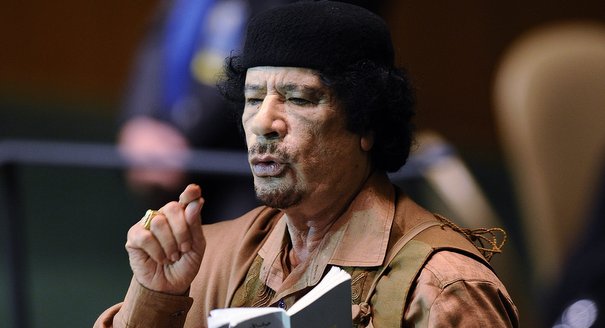
Source: Getty

Other
Malcolm H. Kerr Carnegie Middle East Center

Like Father, Like Son: Dynastic Republicanism in the Middle East

Democratic transition continues to elude Arab countries and Arab republicanism has lost much of its meaning, as presidential power is increasingly being bequeathed from father to son.

Link Copied
By Larbi Sadiki
Published on Nov 25, 2009
Arab autocrats have become quite skilled in public relations, mastering the language of democracy, human rights, and free markets while preserving old and arbitrary means of decision making. In the last ten years, Arab regimes have fallen into what could be referred to as “dynastic republicanism”—a form of government that translates roughly to an oxymoron: “monarchical presidency.”
 
Whatever outward appearances they project inside Arab regimes, republican governments come with no legal or historical guarantees. Family domination of Arab governments reduces states to vehicles for the advancement of private and particular interests rather than public ones. Arab states with limited political institutions are often beset by tribalism, and tribalism in turn results in skewed and undemocratic political institutions.
 
In Egypt, the stage is set for Gamal Mubarak to be the National Democratic Party’s sole candidate for succession. The likelihood of Gamal’s succeeding his father is high if succession happens while his father is still alive. Without Hosni Mubarak, Gamal is on his own, as there is no shortage of dark horses that could potentially and literally make a good showing in the race to the presidency.
 
In Libya, Muammar Qaddafi has designated both military and political heirs; thus nothing is unpredictable about Libya’s hereditary succession. What is unpredictable is whether Qaddafi’s tribe puts its weight behind a political or a military successor.
 
In Yemen, political succession is based on an implicit pact between President Ali Abdullah Saleh’s Hashed tribe and the military, and only a member of the tribe is eligible for the country’s presidency. Saleh appears to be grooming his son Ahmed to take over, facilitating his meteoric rise through the military ranks and charging him with command of the deadliest forces in the land.
 
A banker (Gamal), a civil engineer/architect (Saif), and two military commanders (Ahmed Saleh & Mu‘tasim Qaddafi) constitute the litmus test of Arab republicanism and Western democracy promotion. Their succession could spell the death knell of all republican pretences or what is left of them.

About the Author

Larbi Sadiki

Former Non-resident Scholar, Middle East Center

Sadiki is senior lecturer in the Politics Department at the University of Exeter. Sadiki specializes in democratization in the Arab Middle East and lectures on Arab democratization and human rights, dialogue of civilizations, and Middle East–EU relations.

    Recent Work

  • Commentary
    Tunisian National Solidarity Fund as an Alternative Model

      Larbi Sadiki

  • Article
    On Tents, Fast Trains and the Greater Mediterranean: Franco-Maghrebi Relations

      Larbi Sadiki

Larbi Sadiki
Former Non-resident Scholar, Middle East Center
Political ReformEgyptGulfLevantMaghreb

Carnegie does not take institutional positions on public policy issues; the views represented herein are those of the author(s) and do not necessarily reflect the views of Carnegie, its staff, or its trustees.
More Work from Carnegie Endowment for International Peace

  • Commentary
    Diwan
    The Greatest Dangers May Lie Ahead

    In an interview, Nicole Grajewski discusses the military dimension of the U.S. and Israeli attacks on Iran.

      Michael Young

  • Commentary
    Strategic Europe
    The EU Needs a Third Way in Iran

    European reactions to the war in Iran have lost sight of wider political dynamics. The EU must position itself for the next phase of the crisis without giving up on its principles.

      Richard Youngs

  • Commentary
    Diwan
    Firepower Against Willpower

    In an interview, Naysan Rafati assesses the first week that followed the U.S. and Israeli attack on Iran.

      Michael Young

  • Commentary
    Diwan
    What Is Israel’s Plan in Lebanon?

    At heart, to impose unconditional surrender on Hezbollah and uproot the party among its coreligionists.

      Yezid Sayigh

  • people watching smoke rising at sunrise from rooftops
    Commentary
    Emissary
    Bombing Campaigns Do Not Bring About Democracy. Nor Does Regime Change Without a Plan.

    Just look at Iraq in 1991.

      Marwan Muasher

Get more news and analysis from
Carnegie Endowment for International Peace
Carnegie global logo, stacked
1779 Massachusetts Avenue NWWashington, DC, 20036-2103Phone: 202 483 7600Fax: 202 483 1840
  • Research
  • Emissary
  • About
  • Experts
  • Donate
  • Programs
  • Events
  • Blogs
  • Podcasts
  • Contact
  • Annual Reports
  • Careers
  • Privacy
  • For Media
  • Government Resources
Get more news and analysis from
Carnegie Endowment for International Peace
© 2026 Carnegie Endowment for International Peace. All rights reserved.