• Research
  • Emissary
  • About
  • Experts
Carnegie Global logoCarnegie lettermark logo
DemocracyIran
  • Donate
{
  "authors": [
    "Minxin Pei"
  ],
  "type": "legacyinthemedia",
  "centerAffiliationAll": "dc",
  "centers": [
    "Carnegie Endowment for International Peace"
  ],
  "collections": [],
  "englishNewsletterAll": "asia",
  "nonEnglishNewsletterAll": "",
  "primaryCenter": "Carnegie Endowment for International Peace",
  "programAffiliation": "AP",
  "programs": [
    "Asia"
  ],
  "projects": [],
  "regions": [
    "North America",
    "United States",
    "East Asia",
    "China"
  ],
  "topics": [
    "Security",
    "Military",
    "Foreign Policy"
  ]
}
Source: Getty

In The Media

U.S., China Explore Deeper Ties as Partners, Contenders

China is likely to be both a partner and a contender in its relations with the United States, with the depth of its cooperation limited by the extent to which the two countries have overlapping national interests.

Link Copied
By Minxin Pei
Published on Nov 16, 2009
Program mobile hero image

Program

Asia

The Asia Program in Washington studies disruptive security, governance, and technological risks that threaten peace, growth, and opportunity in the Asia-Pacific region, including a focus on China, Japan, and the Korean peninsula.

Learn More

Source: NewsHour with Jim Lehrer

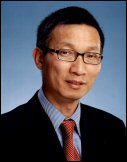
In the big-picture view of its relationship with the U.S., China is likely to be both a partner and a contender. Yet as Minxin Pei explained in an interview with Jim Lehrer on Newhour, any partnership between the two powers will be limited by the extent to which they have overlapping national interests. He presented a cautiously optimistic picture of U.S.-China relations in the wake of Obama’s visit to Asia, noting that the United States is likely to experience disappointment if it is overly optimistic about China’s willingness to cooperate. Such reluctance from the Chinese essentially stems from different values, as well as a lack strategic or fundamental political trust with the United States.
 

About the Author

Minxin Pei

Former Adjunct Senior Associate, Asia Program

Pei is Tom and Margot Pritzker ‘72 Professor of Government and the director of the Keck Center for International and Strategic Studies at Claremont McKenna College.

    Recent Work

  • In The Media
    How China Can Avoid the Next Conflict

      Minxin Pei

  • In The Media
    Small Change

      Minxin Pei

Minxin Pei
Former Adjunct Senior Associate, Asia Program
Minxin Pei
SecurityMilitaryForeign PolicyNorth AmericaUnited StatesEast AsiaChina

Carnegie does not take institutional positions on public policy issues; the views represented herein are those of the author(s) and do not necessarily reflect the views of Carnegie, its staff, or its trustees.
More Work from Carnegie Endowment for International Peace

  • Commentary
    Deciphering Europe’s Relationship with Turkey

    Debate is heating up on how Turkey could be integrated into a common European defense framework. Commercial and industrial deals offer a better chance at alignment than sweeping political efforts.

      Marc Pierini

  • Commentary
    Emerging From the “Zombie State” of Trade Agreements: The India-EU FTA

    The India–EU Free Trade Agreement (FTA) is shaping up to be one of the most consequential trade negotiations, both economically and strategically. But, what’s in the agreement, what’s missing, and what will determine its success in the years ahead

      Vrinda Sahai, Nicolas Köhler-Suzuki

  • Construction site
    Commentary
    Emissary
    The Iran War Isn’t the Only Challenge Facing Saudi Arabia’s Vision 2030

    As the monarchy appears to question its grandest projects, the state could do with more critical debate than rote cheerleading.

      • Andrew Leber

      Andrew Leber

  • Commentary
    Strategic Europe
    Taking the Pulse: Is it Worth it for Europeans to Placate Trump?

    After spending much of 2025 trying to placate Donald Trump, some European leaders are starting to change posture. But is even a hostile Washington still so important to Europe that the U.S. president’s outbursts are worth putting up with?

      • Rym Momtaz

      Rym Momtaz, ed.

  • Gas station attendant gesturing while a woman gets her motorcycle refilled
    Commentary
    Emissary
    Fuel Subsidies Are an Easy Fix for the Iran War’s Energy Price Shock—and the Wrong One

    Instead, governments should adopt climate-friendly measures to address the impact of rising prices.

      • Henok Asmelash

      Henok Asmelash

Get more news and analysis from
Carnegie Endowment for International Peace
Carnegie global logo, stacked
1779 Massachusetts Avenue NWWashington, DC, 20036-2103Phone: 202 483 7600
  • Research
  • Emissary
  • About
  • Experts
  • Donate
  • Programs
  • Events
  • Blogs
  • Podcasts
  • Contact
  • Annual Reports
  • Careers
  • Privacy
  • For Media
  • Government Resources
Get more news and analysis from
Carnegie Endowment for International Peace
© 2026 Carnegie Endowment for International Peace. All rights reserved.