Recently, calls for Prime Minister Vladimir Putin’s resignation were heard at rallies in different parts of Russia. Although unrelated, these gatherings underscore the growing cracks in the Kremlin’s political system of centralized power, opaque decision-making, and unaccountability.
Protests are Showing Cracks in Kremlin PolicyStreet protests are not uncommon in Russia, but with very few exceptions they are small and focused on local, socioeconomic issues. In the past month, however, calls for Prime Minister Vladimir Putin to resign were heard at rallies in different parts of Russia. These events -- one organized in late January in Kaliningrad, on Russia's western border; the other last week in the Siberian city of Irkutsk -- were not related and are not likely to evolve into a national political movement. But such gatherings underscore the cracks in the Kremlin political system of centralized power, opaque decision-making and unaccountability.
The government is generally tolerant of small-time gatherings. But it can also react fiercely, as when protesters at political rallies in Moscow are beaten and detained. In late 2008, when 5,000 in the Far East rallied against tightened restrictions on used-car imports and demanded that Putin resign, the Kremlin dispatched special police to rough up the protesters. The strong-arm tactics were designed to quell the movement, which indeed faded.
But recent protesters have gotten away with anti-Putin rhetoric, and more rallies are likely to follow.
The Kaliningrad rally of 10,000 was huge by Russian standards. Although economic frustrations sparked the gathering, participants carried signs calling for Putin and for Gov. Georgy Boos to resign. Kaliningrad is a western exclave with a kind of frontier spirit that is hard to find elsewhere in Russia. Border trade is active, and many residents travel to Poland or Germany more often than they go to Moscow.
Kaliningrad depends heavily on trade in used cars and was gravely hit by government constraints on automobile imports. When the Kremlin also raised the transport tax on car owners late last year, Kaliningraders had had enough. About 5,000 rallied in December. Rumors have it that the government simply overlooked those protests. On Jan. 30, twice as many amassed in the city square. The organizers' job was made easier by local residents' resentment of Boos. Since gubernatorial elections were canceled five years ago, Moscow has relied on a complex selection procedure that boils down to presidential appointments of local leaders. Boos had never lived in Kaliningrad, and many see him as caring not about the people but, rather, about perks of power for himself and those he has brought to the region.
The January rally drew figures from Moscow such as Boris Nemtsov, a defiant opponent of Kremlin policies. The political guests may not figure largely in national politics, but their fiery anti-Kremlin rhetoric was cheered. It was only a few minutes, one attendee told me, before demonstrators began to chant "Boos out!" and "Putin out!" But local police did not resort to violence.
The recent protest in Irkutsk was sparked by the reopening of a pulp factory on Lake Baikal. The world's deepest and biggest reservoir of fresh water, the lake is a point of pride for locals. In 2008, the factory was closed after a long environmental struggle. In January, however, Putin revoked the closure -- meaning that waste will again be discharged in Baikal.
Although Putin's decision will bring jobs back to the former factory workers, it caused outrage: Many people saw the lake's water quality sacrificed as a favor to Oleg Deripaska, the billionaire who owned the factory. Protesters in Irkutsk carried no political signs, but some in the crowd called for Putin's cabinet to resign. Irkutsk authorities (the region's governor, like Boos, is an outsider) were apparently alarmed that the protest came so soon after the one in Kaliningrad. Heavily armored vehicles were brought close to the square where about a thousand protesters had gathered. But the Irkutsk gathering also ended peacefully.
Events in Irkutsk and Kaliningrad were thoroughly covered by independent media outlets in Moscow, and video from the rallies is all over the Web. But the national TV channels did not broadcast the protests.
Control over mass-audience television enables the Kremlin to keep undesirable information from the majority. Control over decision-making makes it possible to raise taxes and tariffs or ignore environmental threats. Control over gubernatorial appointments means a governor can be replaced at any time. But when the economic crisis prompts unpopular decisions, resentment has festered into protests. And the unelected governors fail to connect with or quell their constituencies, especially if they lack regional roots.
Controlling the developments across Russia's 11 time zones is an increasing challenge for the centralized government. (President Dmitry Medvedev is adamant about retaining the system of unelected governors, but one of his recent proposals was to reduce the number of Russian time zones.) It was easy for the Kremlin to gloss over governance flaws when it could throw money at problems. But those days are over. The organizers of the Kaliningrad protests have announced plans for another rally in March.
In the meantime, about a thousand people gathered last week in the southeastern city of Samara; calls for the resignation of Putin as well as the local governor were also heard.
Former Scholar in Residence, Society and Regions Program, Editor in Chief, Pro et Contra, Moscow Center
Lipman was the editor in chief of the Pro et Contra journal, published by the Carnegie Moscow Center. She was also the expert of the Carnegie Moscow Center’s Society and Regions Program.
Carnegie does not take institutional positions on public policy issues; the views represented herein are those of the author(s) and do not necessarily reflect the views of Carnegie, its staff, or its trustees.
More Work from Carnegie Endowment for International Peace
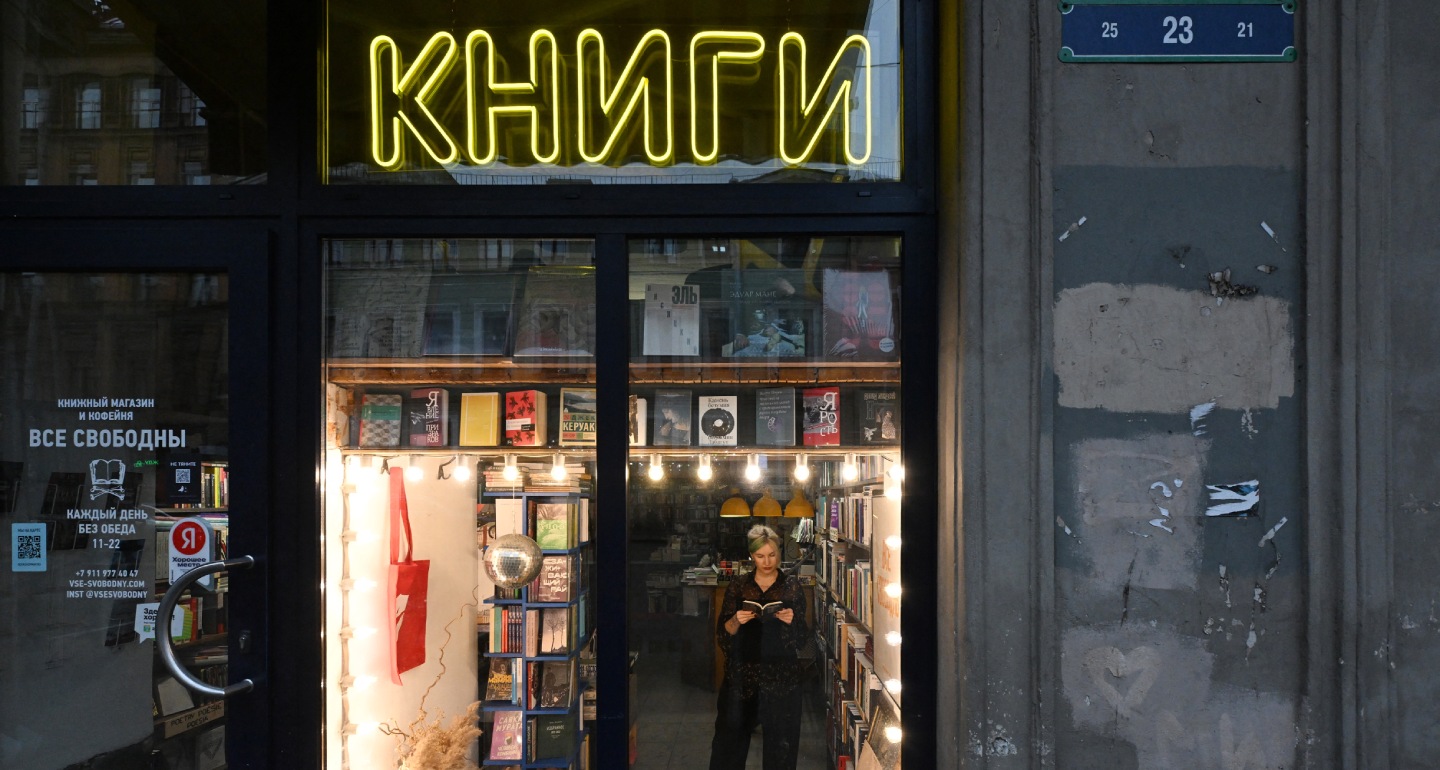
Political pressure and economic headwinds are closely intertwined problems for Russian publishers and booksellers. Together, they risk propelling Russia into a “post-literate” era.
China’s banking crisis in the 2000s was resolved by transferring the costs to households through financial repression—a decision that recapitalized the banks while exacerbating the structural imbalances that continue to shape the Chinese economy today.
While the Nazis rushed ahead in a revolutionary fervor, Russia’s modern crusaders against enemies of the state work methodically, giving their targets time to adjust to restrictions before closing the loopholes.