• Research
  • Emissary
  • About
  • Experts
Carnegie Global logoCarnegie lettermark logo
DemocracyIran
  • Donate
{
  "authors": [
    "Karim Sadjadpour"
  ],
  "type": "legacyinthemedia",
  "centerAffiliationAll": "dc",
  "centers": [
    "Carnegie Endowment for International Peace"
  ],
  "collections": [],
  "englishNewsletterAll": "menaTransitions",
  "nonEnglishNewsletterAll": "",
  "primaryCenter": "Carnegie Endowment for International Peace",
  "programAffiliation": "MEP",
  "programs": [
    "Middle East"
  ],
  "projects": [],
  "regions": [
    "Middle East",
    "Iran"
  ],
  "topics": [
    "Political Reform",
    "Foreign Policy",
    "Nuclear Policy",
    "Nuclear Energy"
  ]
}

Source: Getty

In The Media

Running a Marathon, Not a Sprint

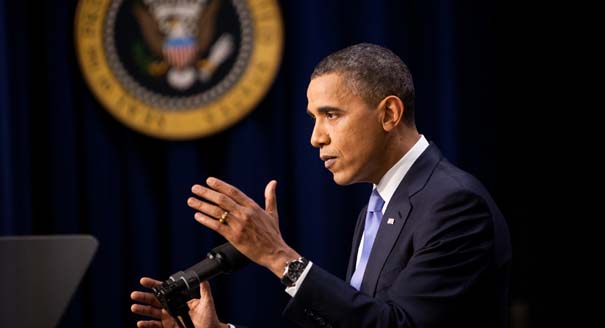
The Obama administration, thwarted in its attempts to engage Iran in serious negotiations on its nuclear ambitions, must now unite the international community behind targeted sanctions that will refrain from undermining Iran’s opposition movement.

Link Copied
By Karim Sadjadpour
Published on Feb 17, 2010
Program mobile hero image

Program

Middle East

The Middle East Program in Washington combines in-depth regional knowledge with incisive comparative analysis to provide deeply informed recommendations. With expertise in the Gulf, North Africa, Iran, and Israel/Palestine, we examine crosscutting themes of political, economic, and social change in both English and Arabic.

Learn More

Source: Der Spiegel

Running a Marathon, Not a SprintSPIEGEL ONLINE: US Secretary of State Hillary Rodham Clinton recently said that, as the Revolutionary Guards gain more and more power, Iran is moving toward a "military dictatorship." Do you share her dim view?

Karim Sadjadpour: Iran certainly resembles a military dictatorship more than it does an Islamic republic. However, I wouldn't argue that the Revolutionary Guards (IRGC) have supplanted Supreme Leader Ali Khamenei or President Mahmoud Ahmadinejad. I think both men have spearheaded Iran's transition to military dictatorship. Khamenei is the IRGC's commander-in-chief; he handpicks their top commanders and changes them frequently. Up until now, I haven't seen any evidence of the IRGC's being disloyal to him.

SPIEGEL ONLINE: Isn't Clinton's statement actually also an expression of frustration from within the Obama administration? After all, after one year of US "engagement," no progress has been made.
 
Sadjadpour: Not on the nuclear issue. But Iran's unwillingness to reciprocate US efforts has exposed Tehran as the intransigent actor in this equation -- not Washington. The American and European position has never been more cohesive and, in private conversations, even Russian and Chinese diplomats acknowledge this. More importantly, the Iranian government is in the middle of its greatest existential crisis since the 1979 revolution. US engagement played an important role in accentuating Iran's deep internal divides, both among political elites and between the population and the regime.
 
SPIEGEL ONLINE: The US will now apparently focus on "targeted sanctions," such as restricting the business activities of the Revolutionary Guards. Are these steps based on the insight that "crippling sanctions" would not get any support from Russia and/or China?
 
Sadjadpour: China and Russia are still instinctively opposed to the concept of sanctions, but Iranian intransigence has put them in a bind. My own view has always been that UN Security Council sanctions are more politically significant than they are economically -- to project international unity and make it more difficult for Iran to frame this as a struggle between Islam and the West.
 
SPIEGEL ONLINE: Won't China ultimately conclude that tougher sanctions would be better for their own country? After all, if there is a military strike on Tehran, oil prices will spike worldwide. That would be costly for China, which is so dependent on foreign energy.
 
Sadjadpour: I think China will ultimately conclude that the potential costs of supporting diluted sanctions at the United Nations Security Council are less than the potential costs of being the lone holdout. Also, Tehran could not easily retaliate by cutting its commercial and political ties with Beijing. They have put themselves in a position in which they're incredibly dependent on China.
 
SPIEGEL ONLINE: From the perspective of the Obama administration, are tougher sanctions also an attempt to silence people in the United States who are advocating even more aggressive measures, such as a military strike?
 
Sadjadpour: As long as Iran's internal opposition continues to agitate, there is less of a likelihood of a military strike. But if, by 2011, the opposition movement has faded, and Iran is defiantly moving forward -- toward a weapons capability -- the likelihood of such a strike goes up significantly. Unfortunately.
 
SPIEGEL ONLINE: Do you think the Americans will consider more comprehensive sanctions, such as restrictions on petrol? Could any of those bring the current Iranian regime back to the negotiating table?
 
Sadjadpour: Despite pressure from Congress, I don't think the Obama administration will pursue more comprehensive sanctions in the near term. It's one thing to bring Iran to the negotiating table and another thing to compel them to make meaningful, binding compromises that allay concerns about their nuclear ambitions. I think the former is very possible, but the latter is very unlikely. Sanctions will hurt the Iranian leaders, but they will not alter their nuclear calculations. The country is being run by a group of hardliners who are very good at escalating and very bad at de-escalating.
 
SPIEGEL ONLINE: Would more comprehensive sanctions help or hurt the opposition -- or Green Movement -- within Iran?
 
Sadjadpour: More comprehensive sanctions that hurt the Iranian people would be counterproductive for the Green Movement. I think it's paramount that we do no harm, and sanctions on petrol have unpredictable consequences. While I question the notion that sanctions will rally people around the government -- that hasn't been the case the last few decades in which sanctions have been in place -- -it's also true that Iran is going to be facing major economic challenges in the coming months. More comprehensive sanctions could offer Ahmadinejad a pretext for his disastrous management of the economy.
 
SPIEGEL ONLINE: Were you disappointed with the rather low opposition turnout on the anniversary of the Islamic revolution last week? Can that be seen as a victory for the regime?
 
Sadjadpour: I don't think we really have a complete picture of what happened during the anniversary. Private videos I've seen, as well as Google Earth images, seem to suggest that the government significantly exaggerated the size and enthusiasm of their crowds. However, I believe it was a tactical mistake by the opposition to build expectations too high. They know they're running a marathon, not a sprint, and the regime had weeks of preparation in order to fill the square with their loyalists and violently prevent opposition supporters from attending. By being too optimistic, the opposition unnecessarily dampened morale among their supporters.
 
Interview conducted by Gregor Peter Schmitz in Washington.

About the Author

Karim Sadjadpour

Senior Fellow, Middle East Program

Karim Sadjadpour is a senior fellow at the Carnegie Endowment for International Peace, where he focuses on Iran and U.S. foreign policy toward the Middle East.

    Recent Work

  • Q&A
    Iran Wanted to Survive the War. Now What?

      Suzanne Maloney, Aaron David Miller, Karim Sadjadpour

  • Q&A
    What’s Keeping the Iranian Regime in Power—for Now

      Aaron David Miller, Karim Sadjadpour, Robin Wright

Karim Sadjadpour
Senior Fellow, Middle East Program
Karim Sadjadpour
Political ReformForeign PolicyNuclear PolicyNuclear EnergyMiddle EastIran

Carnegie does not take institutional positions on public policy issues; the views represented herein are those of the author(s) and do not necessarily reflect the views of Carnegie, its staff, or its trustees.

More Work from Carnegie Endowment for International Peace

  • Commentary
    Carnegie Politika
    Parliamentary Elections in Occupied Ukraine Risk Backfiring for the Kremlin

    Despite unhappiness on the ground, Moscow is determined to use both carrot and stick to ensure there is record support for United Russia in occupied Ukraine.

      Konstantin Skorkin

  • Article
    From Hormuz to the Maghreb: The Geopolitical Reach of a Gulf Crisis

    Morocco and Algeria, each in its own way, are having to navigate the global economic fallout of the U.S.-Israeli military campaign against Iran.

      Yasmine Zarhloule

  • Commentary
    Emissary
    Nolan’s "The Odyssey" Has a Colonialism Problem

    Despite Morocco’s hopes that its film industry would reap rewards, the blockbuster’s success will be tainted by controversy surrounding filming in occupied Western Sahara.

      • Sarah Yerkes

      Sarah Yerkes

  • Iranian President Mahmoud Ahmadinejad (C) visits the Natanz uranium enrichment facilities April 8, 2008
    Paper
    Demystifying the Nuclear Threshold

    The nuclear weapons threshold is increasingly important for proliferation strategy and policy. Policymakers should better understand the implications of the threshold phenomenon in the current international security environment and plausible strategies to deal with the growing challenge that it presents.

      Ariel (Eli) Levite, Toby Dalton

  • Paper
    Securing America’s Near Abroad: Recalibrating U.S. Policy Toward Haiti

    Helping to stabilize Haiti is in the United States’ national interest and can be done by making wise use of various foreign policy tools in addition to supporting international security forces.

      Christopher Shell

Get more news and analysis from
Carnegie Endowment for International Peace
Carnegie global logo, stacked
1779 Massachusetts Avenue NWWashington, DC, 20036-2103Phone: 202 483 7600
  • Research
  • Emissary
  • About
  • Experts
  • Donate
  • Programs
  • Events
  • Blogs
  • Podcasts
  • Contact
  • Annual Reports
  • Careers
  • Privacy
  • For Media
  • Government Resources
Get more news and analysis from
Carnegie Endowment for International Peace
© 2026 Carnegie Endowment for International Peace. All rights reserved.