• Research
  • Emissary
  • About
  • Experts
Carnegie Global logoCarnegie lettermark logo
DemocracyIran
  • Donate
{
  "authors": [
    "Michael D. Swaine"
  ],
  "type": "legacyinthemedia",
  "centerAffiliationAll": "dc",
  "centers": [
    "Carnegie Endowment for International Peace"
  ],
  "collections": [],
  "englishNewsletterAll": "asia",
  "nonEnglishNewsletterAll": "",
  "primaryCenter": "Carnegie Endowment for International Peace",
  "programAffiliation": "AP",
  "programs": [
    "Asia"
  ],
  "projects": [],
  "regions": [
    "Middle East",
    "Iran",
    "East Asia",
    "China"
  ],
  "topics": [
    "Political Reform",
    "Security",
    "Military",
    "Nuclear Policy"
  ]
}
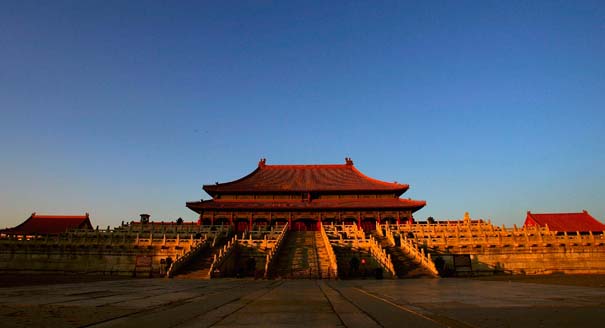
Source: Getty

In The Media

Beijing's Tightrope Walk on Iran

China must walk a tightrope in its policies toward Iran, cultivating useful economic and strategic ties with Tehran while also supporting nonproliferation efforts and maintaining friendly relations with Washington.

Link Copied
By Michael D. Swaine
Published on Jun 28, 2010
Program mobile hero image

Program

Asia

The Asia Program in Washington studies disruptive security, governance, and technological risks that threaten peace, growth, and opportunity in the Asia-Pacific region, including a focus on China, Japan, and the Korean peninsula.

Learn More

Source: China Leadership Monitor

Beijing's Tightrope Walk on Iran
In dealing with the Islamic Republic of Iran, as with the Democratic People’s Republic of Korea, China confronts yet another exquisite dilemma, albeit of a somewhat different type. Unlike Pyongyang, Tehran is not a long-time ally and critical security buffer along the Chinese border. It is, however, a major political and economic player in a region of increasing importance to Beijing, a significant source of vital oil supplies, and a close friend among developing nations. Unfortunately, as with Pyongyang, it is also most likely acquiring nuclear weapons capabilities in defiance of most of the international community and directly threatening the vital interests of the United States and the West. Hence, as with North Korea, the Chinese leadership must walk a diplomatic and political tightrope in its policies toward Iran, in this instance seeking to maintain increasingly lucrative and strategically useful economic and political ties to a major power and friend in a critical region of the world. At the same time, it must support international efforts to sustain the global nonproliferation regime, prevent the further destabilization of a highly volatile and critical region, and avoid antagonizing the United States and other key powers. 
 
This essay first examines China’s interests and policies toward Iran, especially as they affect the United States. It then takes a close look at the lines of apparent debate within China on the Iran nuclear issue and Chinese policy, and concludes with a few general observations.

About the Author

Michael D. Swaine

Former Senior Fellow, Asia Program

Swaine was a senior fellow at the Carnegie Endowment for International Peace and one of the most prominent American analysts in Chinese security studies.

    Recent Work

  • Other
    What Kind of Global Order Should Washington and Beijing Strive For?

      Michael D. Swaine

  • Commentary
    A Smarter U.S. Strategy for China in Four Steps

      Michael D. Swaine

Michael D. Swaine
Former Senior Fellow, Asia Program
Michael D. Swaine
Political ReformSecurityMilitaryNuclear PolicyMiddle EastIranEast AsiaChina

Carnegie does not take institutional positions on public policy issues; the views represented herein are those of the author(s) and do not necessarily reflect the views of Carnegie, its staff, or its trustees.

More Work from Carnegie Endowment for International Peace

  • Commentary
    Strategic Europe
    How to Join the EU in Three Easy Steps

    Montenegro and Albania are frontrunners for EU enlargement in the Western Balkans, but they can’t just sit back and wait. To meet their 2030 accession ambitions, they must make a strong positive case.

      Dimitar Bechev, Iliriana Gjoni

  • A demonstrator holds a tablet displaying a message as they occupy a road in protest against plans by the main opposition Kuomintang (KMT) and the Taiwan People's Party (TPP) to expand the parliamentary powers during the vote for the Parliament reform bill, outside the Parliament in Taipei on May 24, 2024. T
    Article
    Digital Hegemony and the Reification of Taiwan’s “Unification-Independence” Dichotomy

    Governments now deploy online platforms to shape public opinion and influence collective cognition. This is acutely apparent between China and Taiwan.

      Frank Cheng-Shan Liu

  • Article
    India’s Oil Security Strategy: Structural Vulnerabilities and Strategic Choices

    This piece argues that the present Indian strategy, based on opportunistic diversification and utilization of limited strategic reserves, remains inadequate when confronting supply disruptions. It evaluates India’s options in the short, medium, and long terms.

      Vrinda Sahai

  • flood wall
    Commentary
    Emissary
    BRIC Is Critical for U.S. National Security. After a Yearlong Legal Battle, It’s Back.

    Its reinstatement should be celebrated, but it retains some major shortcomings.

      Leonardo Martinez-Diaz

  • Article
    Leveraging Internal Security Cooperation with Vietnam Offers a Glimpse of Future Chinese Diplomacy with Southeast Asia

    Despite long-standing differences, China and Vietnam are reinforcing common ground for collaboration, especially in public security. This internal security–centered diplomacy offers a strengthened road map for how China moves forward with Southeast Asia.

      Sophie Zhuang

Get more news and analysis from
Carnegie Endowment for International Peace
Carnegie global logo, stacked
1779 Massachusetts Avenue NWWashington, DC, 20036-2103Phone: 202 483 7600Fax: 202 483 1840
  • Research
  • Emissary
  • About
  • Experts
  • Donate
  • Programs
  • Events
  • Blogs
  • Podcasts
  • Contact
  • Annual Reports
  • Careers
  • Privacy
  • For Media
  • Government Resources
Get more news and analysis from
Carnegie Endowment for International Peace
© 2026 Carnegie Endowment for International Peace. All rights reserved.