

In The Media
Minxin Pei
{
  "authors": [
    "Minxin Pei"
  ],
  "type": "legacyinthemedia",
  "centerAffiliationAll": "dc",
  "centers": [
    "Carnegie Endowment for International Peace"
  ],
  "collections": [],
  "englishNewsletterAll": "asia",
  "nonEnglishNewsletterAll": "",
  "primaryCenter": "Carnegie Endowment for International Peace",
  "programAffiliation": "AP",
  "programs": [
    "Asia"
  ],
  "projects": [],
  "regions": [
    "East Asia",
    "China"
  ],
  "topics": [
    "Foreign Policy"
  ]
}
Source: Getty
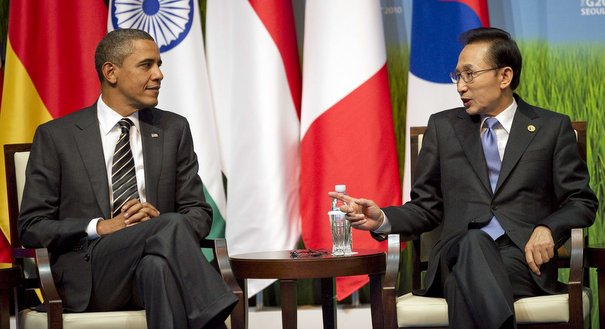
As long as the rapid shift in the balance of power between the West and China continues to shape Beijing’s definitions of its interests and Western responses, the world is likely to see repeated disagreements between China and major Western powers.
Source: The Diplomat

It’s doubtful that such adjectives would be applied to them today.
Economically, Beijing’s mercantilist trade policy is seen by many as one of the principal causes of global economic imbalances. Its foreign policy is criticized as assertive and bullying. Meanwhile, China’s harsh response to the awarding of the Nobel Peace Prize to Liu Xiaobo, a leading dissident languishing in a Chinese jail cell, has struck nearly everybody in the West as excessive and counterproductive.
So what’s going on? How could a country that had been relatively effective in calming fears of its growing power and portraying its rise as ‘peaceful’ so suddenly engage in such nasty disputes with the same Western powers that have played an essential role in its astonishing economic ascendance? Is this dramatic downturn in relations between China and the West a temporary aberration or a new normal state of affairs?
Before trying to answer this question, it’s necessary to point out that the Chinese themselves—both its leaders and ordinary citizens—don’t see their recent conduct as assertive at all. In their eyes, China has merely been defending its legitimate national interests. There’s nothing wrong with claiming the South China Sea as part of China’s ‘core interests,’ resisting US-led pressures for currency revaluation, confronting Japan over disputed islands, or expanding its economic reach in resource-rich developing countries.
And this is precisely where the problem lies. At one level, it can be seen as a problem of conflicting perceptions: the Chinese and the West simply see the same set of issues from starkly different perspectives. At a deeper level, however, the growing tensions between China and the West originate from more powerful and enduring dynamics. As long as such dynamics continue to shape Chinese definitions of their interests and Western responses, the world is likely to see repeated disagreements or even acrimonious confrontations between China and major Western powers.
The most important—and obvious—dynamic at work is the rapid shift of the balance of power between the West and China. An inevitable consequence of this shift, which has strengthened China rapidly in relative terms, is how Chinese elites perceive their interests and pursue them. Before China acquired its current economic, diplomatic and military capabilities, some realists in the West predicted that China would act like a great power when it became one, regardless of its rhetorical commitment to a ‘peaceful rise.’ Recent Chinese foreign policy conduct seems to have vindicated this forecast.
In addition, Beijing has also become more confident and assertive in recent years because some of the key constraints on the exercise of its power abroad have either weakened or disappeared. The wars in Iraq and Afghanistan have consumed so much US military and diplomatic energy that China evidently now enjoys a freer hand abroad and can project its power—mainly economic and diplomatic influence—into regions neglected by the United States since 9/11 (such as in Latin America, Africa and South-east Asia).
Even Taiwan, a perennial constraint on Chinese power, presents a much less serious challenge to Beijing after the defeat of the pro-independence Democratic Progressive Party in the presidential election in March 2008. Freed from the dire prospects of having to fight a war to prevent Taiwan from gaining de jure independence, China is now able to deploy its resources to address important territorial and sovereignty issues such as the South China Sea that had to be shelved when Taiwan topped the agenda.
Faced with China’s reassertion of its interests, it’s tempting to criticize Beijing for violating Deng Xiaoping’s grand strategy of ‘keeping a low profile and building strengths quietly.’ Clearly, China is no longer keeping a low profile—on the contrary, it’s flaunting its newly acquired power and status.
There are two explanations for Beijing’s abandonment of Deng’s strategy. Domestically, the Communist Party is eager to show the Chinese people its international prestige and influence as a source of political legitimacy (indeed it has been quite successful on this front). That’s why China hosted the Olympics and the Expo. The other reason is that China simply has little choice regarding its international profile. Unlike 30 years ago, when Deng set the ‘low-profile’ strategy, China today has global presence and interests—and must defend them. The expansion of China’s economic presence around the world makes disputes and conflicts with the West inevitable. China’s role in Africa is a case in point. Two decades ago you could hardly find a Chinese businessman there. Today it’s impossible to avoid bumping into one.
Finally, perception of Chinese assertiveness is likely a function of changing Western attitudes toward China. As the Chinese Communist Party knows, the democratic West has a political agenda for its economic engagement with China: changing its political system. But three decades of economic engagement hasn’t delivered the anticipated political dividends. Instead of an internally democratizing and externally cooperative great power, China now increasingly appears to be challenging not only Western economic and military supremacy, but also its core liberal values. So Western patience is wearing thin and its disillusionment with Beijing is growing. Awarding the Nobel Peace Prize to a jailed Chinese dissident would have been unthinkable a few years ago. Today, it’s celebrated throughout the West.
So what does it mean if all this is correct? It means that we are entering a prolonged period of elevated tensions and more frequent disputes between China and the West—the ‘new normal’ in geopolitics.
Former Adjunct Senior Associate, Asia Program
Pei is Tom and Margot Pritzker ‘72 Professor of Government and the director of the Keck Center for International and Strategic Studies at Claremont McKenna College.
Recent Work
Minxin Pei
Minxin Pei
Carnegie does not take institutional positions on public policy issues; the views represented herein are those of the author(s) and do not necessarily reflect the views of Carnegie, its staff, or its trustees.
The acknowledgment has sparked fears of a new arms race with China and Russia.

Chris O’Meara
Smaller powers cannot go it alone, but Canadian history shows that integration with the United States will not always be benign.
Paul Samson

The European Commissioner for Trade is headed to China. But after President Xi’s bridge-building visit to Washington, can a more isolated EU overcome Beijing’s stranglehold on critical raw materials? Who will blink first?

Rym Momtaz, ed.
The summit may be remembered as a fatal blunder, when Washington, Beijing, and the AI industry collectively chose ceremony over action.

Jeffrey Prescott

European NATO countries are wrestling with the possibility of U.S. disengagement from the alliance. With the continent’s security increasingly uncertain, governments must restore the credibility of their collective defense.



Hans-Dieter Lucas, Adam Thomson, Pierre Vimont