

In The Media
Shahram Chubin
{
  "authors": [
    "Shahram Chubin"
  ],
  "type": "legacyinthemedia",
  "centerAffiliationAll": "dc",
  "centers": [
    "Carnegie Endowment for International Peace",
    "Malcolm H. Kerr Carnegie Middle East Center",
    "Carnegie Europe"
  ],
  "collections": [],
  "englishNewsletterAll": "ctw",
  "nonEnglishNewsletterAll": "",
  "primaryCenter": "Carnegie Endowment for International Peace",
  "programAffiliation": "NPP",
  "programs": [
    "Nuclear Policy"
  ],
  "projects": [],
  "regions": [
    "Middle East",
    "Iran",
    "Gulf"
  ],
  "topics": [
    "Security",
    "Foreign Policy",
    "Nuclear Policy"
  ]
}
Source: Getty
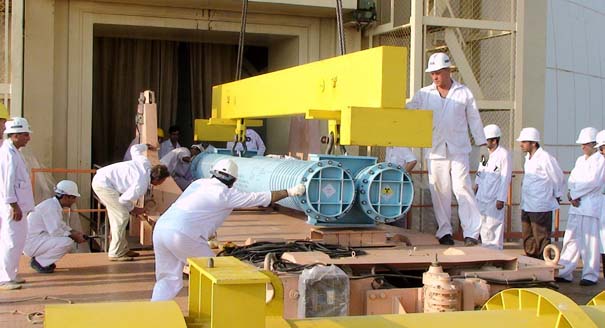
By focusing the new round of negotiations between Iran and the P5+1 on swapping nuclear materials in order to reduce Iran’s fissile stockpile, negotiators are engaging in stalling tactics rather than creating the foundation for a long-term solution.
Source: Le Temps

First, there is no common agreement on what purpose negotiations serve; for the P5+1 it is to test Iranian flexibility on limiting its nuclear programme, in light of the technical difficulties it is experiencing and the tightening of sanctions since June 2010.
For Iran, it is a way of demonstrating that it does not reject diplomacy, though it is not willing to make substantive concessions to make discussions productive.
The basic problem, besides mutual mistrust, is that their approaches are incompatible. The P5+1 want to make progress in small steps (e.g. a fuel swap) to build confidence and reduce the underlying mistrust to tackle the harder issues.
Iran, in contrast, sees compromise as denoting weakness leading inexorably to catastrophe. It therefore wants to be sure of the entire game-plan, the end point, and the road map toward an eventual grand bargain, before committing itself to anything.
Further complicating matters, the two sides do not agree on their respective power positions; each is convinced the other is weakened and, if pressed, will make concessions.
Both sides are also politically constrained. Ahmadinejad differentiated himself from his predecessors by scorning their attempts to meet the West halfway and demonstrated Iran had nothing to fear from ‘strategic defiance.’ His domestic critics are in no mood to reward him now by supporting his attempt at overtures to the West, designed to strengthen his position at home. The Obama administration is also unable to loosen its position for fear of domestic criticism (especially after the midterm election setbacks) as well as the reluctance of interested foreign hardliners such as Israel.
In principle the outline of an essential agreement is clear enough: engagement plus criticism on human rights, terrorism, etc. and acceptance of Iran’s right to determine its own system and to (some level of) enrichment but with intrusive inspections.
A functional equivalent of the Arab-Israel “Clinton parameters” needs to be devised and publicized. Interested parties like Israel, Saudi Arabia, and Russia need to have their input (but not a veto).
No Iranian government is likely to accept the renunciation of the right to enrichment, though a temporary ‘voluntary’ freeze is conceivable, if couched in the broader terms noted earlier.
For the P5+1 anything short of a halt to all enrichment is unlikely to create the necessary confidence in Iran’s intentions.
Any interim agreement on a swap of nuclear materials (which the current round focuses on), however desirable, will not deal with the underlying issue. If successful, by reducing Iran’s fissile stockpile it will be buying time. This will give space for diplomacy. But after eight years it is not time that has been lacking but the “will” of the two parties to settle matters peacefully.
Some long-range thinking has to replace the tactical approaches which are politically convenient for the US administration. No administration wants to have to choose between an Iranian bomb and bombing Iran. But faith in sanctions and internet attacks to stop/reverse the nuclear programme appear feckless in the extreme.
Iran’s continued recalcitrance is not an excuse. The US should devise and prepare a plausible diplomatic solution which it can sell domestically and its allies can live with. At worst, if rejected, it can then publicize the terms of its notional offer. Failure to prepare for a compromise solution suggests only a tepid interest in a peaceful settlement. Since there are domestic political risks whatever course is adopted, the suspicion must be that today’s policy of ‘running out the clock’ is the political path of least resistance. Later on, somebody else will have to take care of it. For an administration beleaguered by multiple crises, that must be tempting.
Former Nonresident Senior Fellow, Nuclear Policy Program
Chubin, who is based in Geneva, focuses his research on nonproliferation, terrorism, and Middle East security issues. He was director of studies at the Geneva Centre for Security Policy, Switzerland, from 1996 to 2009.
Recent Work
Shahram Chubin
Shahram Chubin
Carnegie does not take institutional positions on public policy issues; the views represented herein are those of the author(s) and do not necessarily reflect the views of Carnegie, its staff, or its trustees.
The current U.S. indifference to human rights means Astana no longer has any incentive to refuse extradition requests from its authoritarian neighbors—including Russia.

Temur Umarov
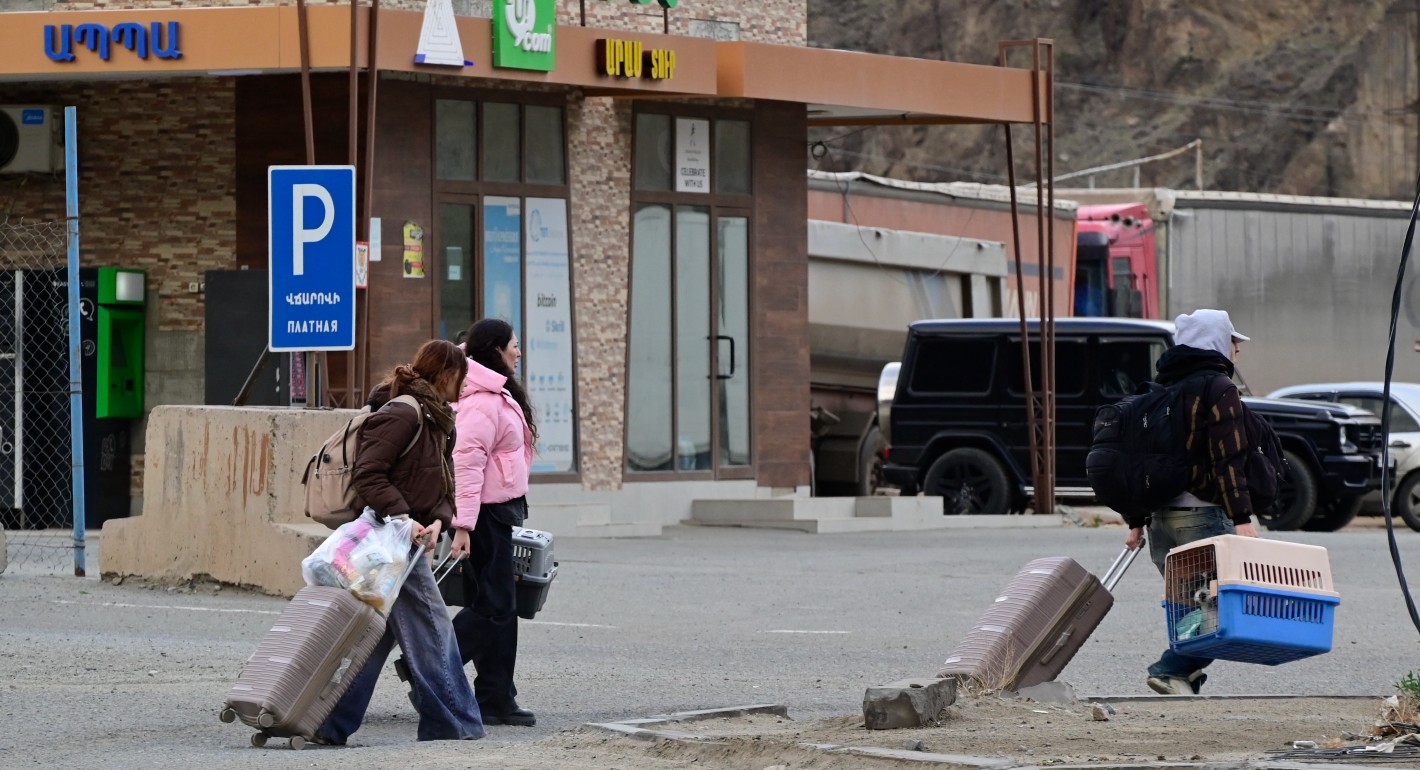
The conflict is threatening stability in Armenia and Azerbaijan.
Zaur Shiriyev

Stakeholders must demand major restructuring of the Board of Peace and robust oversight and transparency before engaging with it. Until then, rights-respecting existing platforms and mechanisms for multilateral peacemaking should be supported.

Zaha Hassan, Charles H. Johnson

Japan’s prime minister, Takaichi Sanae, may kickstart a discussion on Japan’s non-nuclear principles.
Shizuka Kuramitsu
The country’s strategy is no longer focused on deterrence and diplomacy, it’s about dominance and degradation.

Nathan J. Brown