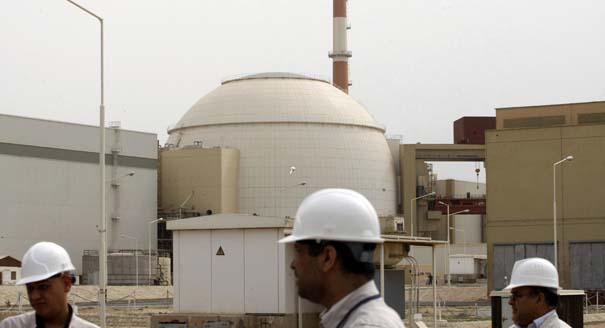
If strategy is the alignment of means and ends, and if the situation outlined by the authors is indeed as dire as they suggest, then surely a renewed effort at diplomacy is called for. The United States has not done as much as it could to avoid the awful choice between accepting a nuclear Iran or bombing the country.
The aim of U.S. diplomacy should be to reconcile Iran's nuclear ambitions with international concerns about proliferation and address the broader issues raised by Iran's regional behavior. The nuclear issue is a symptom of Iran's general antagonism with the West and its alienation from the international community. Since much of this is self-imposed, efforts at engagement have been met by suspicion and rejection in Tehran. Yet given the stakes, a serious, good-faith effort at reviving the moribund diplomatic track is necessary. At worst, a failed initiative would serve to demonstrate that the international community went the extra mile in pursuit of a peaceful accommodation.
At present, the international community does not know whether Iran seeks a latent nuclear capability or actual weapons, how Iran would behave with a nuclear capability short of operational weapons, how much popular support the regime enjoys for its confrontational policies, or how it defines what it considers to be its core rights, including "regime survival" and "legitimate security interests."
Washington does know that under pressure, the regime is pragmatic and sensitive to relative power balances, that it has trouble making major strategic decisions without pressure, and that an increasingly divided Iran will find it more difficult to sell and implement major foreign policy initiatives. U.S. policymakers also know that the regime tends to overplay its hand, fixate on tactical victories, and misjudge the diplomatic terrain.
Current U.S. policy is based on three assumptions: that sanctions will lead to a reversal of Iran's policy on uranium enrichment, that the cessation of enrichment must be a precondition for other negotiations, and that small confidence-building steps, such as the exchange of fissile material (for the Tehran Research Reactor), will buy time and lead to eventual movement in other areas. None of these assumptions is sustainable.
Iran has invested too much in its nuclear program to renounce enrichment altogether or suspend it indefinitely. A limited suspension in the context of an overall settlement, however, might be feasible. In that context, reconciling some Iranian enrichment with inspections to reassure the international community that Iran's program is peaceful might be possible. The aim would be to keep Iran as far away from the nuclear threshold as possible. But to be durable, such a settlement would require not only technical measures but also an agreement addressing the motives driving the program. The current Western step-by-step approach is mistaken because it ignores the need for a broad political settlement.
A grand bargain would be consistent with Iran's priorities in most international negotiations. Iran generally regards limited agreements as traps. It sees attempts to reach agreements on specific areas as dangerous and regards compromise as a sign of weakness that only invites further pressure, leading down a slippery slope toward regime extinction. It is difficult to induce Iran to make concessions unless it sees where these will lead and how a strong position in one area (such as the leverage it has in Afghanistan or Iraq) can translate into leverage or payoffs in another (such as the lifting of sanctions or the attainment of limited enrichment rights). What is needed is not necessarily more inducements but rather a road map that shows how the issues are linked and could be tackled sequentially in pursuit of a grand bargain.
Attempting such a difficult exercise requires accepting the prospect of some enrichment in Iran, which would mean that U.S. hard-liners would have to accept a deal. Meanwhile, U.S. allies, particularly Israel, would have to be reassured by the terms of any deal that it would not lead to clandestine enrichment. This will require leadership of a high order.
Tehran's Weak Spot
Seen from Tehran, the world today does not look as rosy as it did a few years ago. The United States has taken steps to offset and dilute any strategic benefits that Iran might gain from a nuclear capability. Crossing the nuclear threshold would create a more united Gulf Cooperation Council while solidifying and possibly increasing the U.S. military presence in the region. The status motivations for a nuclear capability seem questionable in light of North Korea's unenviable condition and its fellow failing nuclear state, Pakistan. The Iranian nuclear program itself is facing difficulties as a result of its patchwork sourcing, the tightening embargo on technology, and cyberattacks. Crossing the weaponization threshold would require a massive stock of indigenous fissile material, which in turn would spell the end of any future nuclear energy program, whereas stopping short of that threshold could still confer many of the assumed benefits of crossing it.
In the event of a strike on Iran's nuclear facilities, most of its potential avenues of retaliation would be either counterproductive (such as attacks on the Gulf states or the Strait of Hormuz) or difficult to carry out repeatedly (such as attacks by proxies). Meanwhile, Iran itself is in transition. The regime has swapped a degree of popular legitimacy for reliance on a more limited base and intensified repression. All political issues now revolve around succession struggles, namely, who will replace President Mahmoud Ahmadinejad and Supreme Leader Ali Khamenei. The Iranian government understandably feels vulnerable domestically due to generational and demographic changes and schisms among the elite. Under these circumstances, Iran's revolutionary model of strategic defiance may have begun to lose its appeal in the region. In Iran itself, bombastic rhetoric has largely been discredited in the eyes of citizens who prefer a government that can perform and deliver -- in short, Chinese-style performance-based legitimacy.
Iran is no longer riding a regional or domestic wave. This makes bold, confident, and politically courageous U.S. diplomacy even more necessary. To be sure, there are risks that Iran could use negotiations to string along the international community, seek to divide the United States and Europe with counterproposals, and deflect further sanctions. But a U.S. initiative could counter these Iranian moves. A generous offer that meets Iran's minimum demand -- for some enrichment -- would reassure the international community and transfer the responsibility for any failure to the Iranian regime itself. This would put an end to the narrative of a vengeful, arrogant U.S.-led coalition dictating terms as a substitute for forcing a regime change and put responsibility for the prolonged crisis and its consequences where it belongs, thereby signaling to the Iranian people that the nuclear dispute is about not Iran's rights but the regime's insistence on keeping control at home by ensuring continual crises abroad.