• Research
  • Emissary
  • About
  • Experts
Carnegie Global logoCarnegie lettermark logo
Democracy
  • Donate
{
  "authors": [
    "Lahcen Achy"
  ],
  "type": "legacyinthemedia",
  "centerAffiliationAll": "",
  "centers": [
    "Carnegie Endowment for International Peace",
    "Carnegie Europe",
    "Malcolm H. Kerr Carnegie Middle East Center"
  ],
  "collections": [],
  "englishNewsletterAll": "",
  "nonEnglishNewsletterAll": "",
  "primaryCenter": "Malcolm H. Kerr Carnegie Middle East Center",
  "programAffiliation": "",
  "programs": [],
  "projects": [],
  "regions": [
    "Levant",
    "Syria",
    "Middle East"
  ],
  "topics": [
    "Political Reform",
    "Economy"
  ]
}
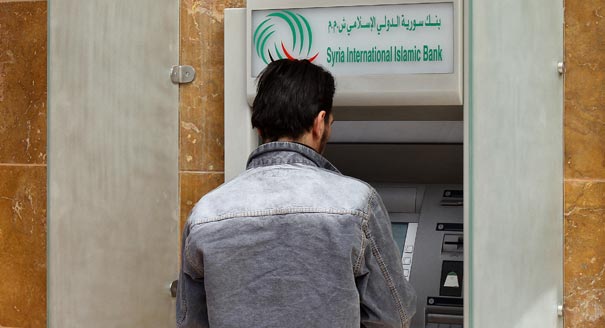
Source: Getty

In The Media
Malcolm H. Kerr Carnegie Middle East Center

Syria: Economic Hardship Feeds Social Unrest

Despite its annual economic growth, Syria’s poverty rate remains high. The Syrian government needs to enact further economic reforms in order to address some of the anger expressed by growing protests across the country.

Link Copied
By Lahcen Achy
Published on Mar 31, 2011

Source: Los Angeles Times

Syria: Economic Hardship Feeds Social Unrest
Syria's economic challenges are feeding the population's growing anger, which recently led to protests in the south and are creating a nationwide uprising.
 
Despite an impressive annual economic growth rate of 5% over the last five years, reforms to gradually shift from a state-led to a market-oriented economy, and a promising trade-diversification strategy, Syria faces critical economic and social challenges. Its poverty rate remains high, with one out of every three Syrians living below the poverty line, and social and regional inequalities are increasing.
 
The social contract that prevailed in the 1980s and 1990s -- in which the state guaranteed jobs to college graduates and offered free public services and cheap food for its population -- no longer holds.
 
Five factors are of particular concern:
 
First, with a steady population growth of 2.5% per year, about 250,000 job-seekers enter the labor market annually. The public sector, which employs about 30% of the workforce, has created about 20,000 jobs per year since the mid-1990s. Although the private sector has created jobs at two to three times this rate, it also has not kept up with population growth. The official unemployment rate is around 10% but one of two jobs is of poor quality, with low pay and no social protection. On the other hand, youth unemployment exceeds 30%.
 
Second, successive seasons of drought have led to a 25% decline in the agricultural sector's output, which provides jobs to 20% of the labor force and contributes a 20% share of the gross domestic product. To improve their living conditions, huge numbers of people have left their villages and migrated to the cities. As a result, the poverty rate in Syria's urban southern region has doubled during the last five years. Although the government recently put in place cash transfers to low-income households -- to offset the effect of reforms on their living conditions -- their affect has been limited.
 
Third, due to cumbersome bureaucratic procedures and a lack of transparent regulations, the private sector in Syria is dominated by large companies that are well connected to the regime or very small businesses forced to join the informal sector to escape administrative barriers. Corruption throughout the administration has become widespread, with decisions often made on an arbitrary basis. The private sector also faces challenges in securing credit to start businesses. Although 14 private banks operated in the country in 2010 -- compared with just three in 2004 -- access to capital by private entrepreneurs has not eased as banks continue to grant loans based on connections rather than the soundness of projects. The 2010 World Bank Doing Business report ranked Syria 181 out of 183 countries when it came to access to credit.
 
Fourth, the importance of oil revenues as a share of GDP is declining, as are the rents redistributed by the state. Oil revenues fell from more than 14% of GDP in the early 2000s to about 4% last year due to depleting reserves. So far, the poor have borne most of the burden from this decline through cuts in the government's social spending. The government has not been able to offset the loss of oil revenues with an increase in tax revenues, which represented about 11% of GDP during the last decade, compared with 15% in Egypt and 24% in Morocco.
 
Fifth, income inequality in Syria has increased during the last decade. Although the average monthly salary of employees jumped by more than 20% between 2006 and 2009, the increase was canceled out by excessive inflation. In addition, wage increases benefited those with higher-education degrees much more than less-educated people, who make up 60% of the labor force.
 
As Syria tries to address these economic problems, it faces several major challenges. One is the unequal distribution of services by region. The eastern and southern regions are the most vulnerable due to drought and poor infrastructure, and face declining economic opportunities, increasing child labor and rising deprivation.
 
Another challenge includes the transition to a market-oriented economy and the need to open trade and investment to competition. The Syrian government still needs to tackle the factors that inhibit a strong private sector by reducing corruption and administrative red tape and providing an efficient physical and technological infrastructure. Though this shift would provide a substitute to the rent-seeking private sector that has flourished, it could also impose new constraints on the government.
 
Finally, Syria needs to spend part of its sizable foreign assets -- which represent the equivalent of 10 months of imports -- and increase its debt, which is 27% of GDP, to help its population during the economic transition by spending more money on education and healthcare as well as providing safety nets to the poor. Syria's economic reforms will not only help reduce protesters' anger but could help give them the increased freedom that many citizens also seek.
Lahcen Achy
Former Nonresident Senior Associate, Middle East Center
Lahcen Achy
Political ReformEconomyLevantSyriaMiddle East

Carnegie does not take institutional positions on public policy issues; the views represented herein are those of the author(s) and do not necessarily reflect the views of Carnegie, its staff, or its trustees.

More Work from Carnegie Endowment for International Peace

  • U.S. and Indian flags on display.
    Paper
    Indian Americans in a Time of Turbulence: 2026 Survey Results

    A new Carnegie survey of Indian Americans examines shifting vote preferences, growing political ambivalence, and rising concerns about discrimination amid U.S. policy changes and geopolitical uncertainty.

      • +1

      Milan Vaishnav, Sumitra Badrinathan, Devesh Kapur, …

  • Commentary
    Strategic Europe
    How Europe Can Survive the AI Labor Transition

    Integrating AI into the workplace will increase job insecurity, fundamentally reshaping labor markets. To anticipate and manage this transition, the EU must build public trust, provide training infrastructures, and establish social protections.

      Amanda Coakley

  • BAGHDAD, IRAQ - OCTOBER 30: Turkish Trade Minister Omer Bolat (2nd L) and Iraqi Trade Minister Etir Davud Selman al-Greyri (3rd R) sign the JETCO 2nd Term Protocol and the Memorandum of Understanding on Cooperation in the Field of Exhibition Services during The 2nd Session Meeting of the Joint Economic and Trade Committee (JETCO), held to develop commercial and economic relations between Turkiye and Iraq in Iraq's Baghdad on October 30, 2025.
    Article
    The Evolving Middle Eastern Regional Order: Türkiye-Iraq Relations in Context

    In this moment of geopolitical fluidity, Türkiye and Iraq have been drawn to each other. Economic and security agreements can help solidify the relationship.

      • Meliha Altunışık

      Derya Göçer, Meliha Altunışık

  • Commentary
    Strategic Europe
    Can Europe Still Matter in Syria?

    Europe’s interests in Syria extend beyond migration management, yet the EU trails behind other players in the country’s post-Assad reconstruction. To boost its influence in Damascus, the union must upgrade its commitment to ensuring regional stability.

      Bianka Speidl, Hanga Horváth-Sántha

  • Commentary
    Carnegie Politika
    Where Does the Split in the Ruling Tandem Leave Kyrgyzstan?

    Despite its reputation as an island of democracy in Central Asia, Kyrgyzstan appears to be on the brink of becoming a personalist autocracy.

      Temur Umarov

Get more news and analysis from
Carnegie Endowment for International Peace
Carnegie global logo, stacked
1779 Massachusetts Avenue NWWashington, DC, 20036-2103Phone: 202 483 7600Fax: 202 483 1840
  • Research
  • Emissary
  • About
  • Experts
  • Donate
  • Programs
  • Events
  • Blogs
  • Podcasts
  • Contact
  • Annual Reports
  • Careers
  • Privacy
  • For Media
  • Government Resources
Get more news and analysis from
Carnegie Endowment for International Peace
© 2026 Carnegie Endowment for International Peace. All rights reserved.