

In The Media
Minxin Pei
{
  "authors": [
    "Minxin Pei"
  ],
  "type": "legacyinthemedia",
  "centerAffiliationAll": "dc",
  "centers": [
    "Carnegie Endowment for International Peace"
  ],
  "collections": [],
  "englishNewsletterAll": "asia",
  "nonEnglishNewsletterAll": "",
  "primaryCenter": "Carnegie Endowment for International Peace",
  "programAffiliation": "AP",
  "programs": [
    "Asia"
  ],
  "projects": [],
  "regions": [
    "East Asia",
    "China"
  ],
  "topics": [
    "Political Reform",
    "Democracy",
    "Economy"
  ]
}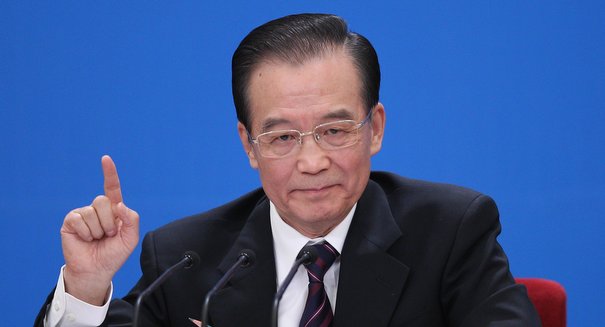
Source: Getty
Recent unrest in China's Inner Mongolia province and simmering resentment of Han majority control in other western provinces suggests that China should give more local political autonomy to ethnic minority groups.
Source: Financial Times

Last month, more than 2,000 Mongolian college students demonstrated in front of a local government building after a Han Chinese truck driver ran over and killed a Mongolian herder. Rumours of other demonstrations spread quickly on the internet, prompting the government to beef up security and cybercensorship.
Beijing may have contained the fall-out from this incident for now. But the underlying causes that have intensified ethnic grievances remain unchanged. China needs to review its policy towards ethnic minorities to stave off future, and possibly more radical, ethnic unrest in its most strategic border regions.
Unlike Tibet or Xinjiang, where ethnic minorities have been contesting Chinese rule for decades, Inner Mongolia has long been thought to be an area where China’s ethnic policy has been a success. Large Han inward migration has decisively altered the balance. Han Chinese make up nearly 80 per cent of the population. Economically, the region has been integrated with the rest of China. While Tibet and Xinjiang have organised separatist movements, Inner Mongolia has none.
But appearances of ethnic harmony can be deceiving. Some of the same forces that have fuelled ethnic antagonism in Tibet and Xinjiang are also at work in Inner Mongolia.
Topping the list must be the exploitation of natural resources in these regions. While ethnic minorities in China constitute only 8 per cent of the overall population, they inhabit vast areas rich in natural resources, especially energy and minerals. Inner Mongolia has rich coal deposits. Xinjiang is known to have China’s largest oil and gas reserves. As China’s economy booms, these regions have become more important economically. Because most natural resources are legally owned by the state, the bulk of the proceeds generated by their exploitation flows to the central government (and state-owned companies), not to the local population. Also, the environmental degradation that accompanies natural resource exploitation exacerbates tensions with ethnic minority groups.
Another source of grievance, far more acute in Tibet and Xinjiang, is the large flow of (mainly) Han migrants in search of jobs and business opportunities. Better endowed with business skills and capital, these Han entrepreneurs enjoy competitive advantages against local ethnic minority businessmen. The economic opportunities generated by the natural resource boom have attracted perhaps hundreds of thousands, if not millions, of entrepreneurs, traders and workers. (The Chinese government does not report the number of Han migrants.) The extension of China’s transport infrastructure to these previously inaccessible areas has greatly facilitated this migration. The economic benefits are considerable, but so are the tensions. Han Chinese businessmen are seen by ethnic minority groups as carpetbaggers, stealing their jobs and profits. What makes things even worse is the lack of sensitivity to minority customs and culture on the part of the Han Chinese, whose behaviour can easily be seen by locals as chauvinistic.
The fundamental cause of ethnic disharmony, however, is not economic or cultural but political. China’s ethnic policy may include some special benefits for ethnic minorities, who are exempt from the one-child policy. But they do not have much political power. In ethnic minority areas, the Communist party bosses – the most powerful local politicians – are invariably Han Chinese. They are appointed by Beijing, not elected by the local population.
After ethnic riots in Tibet in March 2008 and in Xinjiang in July 2009 shocked Beijing, Chinese leaders blamed a lack of economic opportunities and insufficient security as the causes. Subsequently, they have increased both investment and the deployment of security forces. These are the wrong prescriptions. They address symptoms without touching the causes. In the long run this will be costly and ineffective.
The alternative long-term strategy for China to consider is to grant minorities genuine local political autonomy. This is a high-risk strategy. It may inspire even more radical demands. But international experience shows that genuine local autonomy is the only solution to maintaining ethnic peace in divided societies.
Former Adjunct Senior Associate, Asia Program
Pei is Tom and Margot Pritzker ‘72 Professor of Government and the director of the Keck Center for International and Strategic Studies at Claremont McKenna College.
Recent Work
Minxin Pei
Minxin Pei
Carnegie does not take institutional positions on public policy issues; the views represented herein are those of the author(s) and do not necessarily reflect the views of Carnegie, its staff, or its trustees.

Fatima El Mansouri is the country’s first female prime minister. She’s also a privileged insider in a largely ceremonial position.

Sarah Yerkes

The acknowledgment has sparked fears of a new arms race with China and Russia.

Chris O’Meara

The European Commissioner for Trade is headed to China. But after President Xi’s bridge-building visit to Washington, can a more isolated EU overcome Beijing’s stranglehold on critical raw materials? Who will blink first?

Rym Momtaz, ed.
The summit may be remembered as a fatal blunder, when Washington, Beijing, and the AI industry collectively chose ceremony over action.

Jeffrey Prescott

The domestic impacts of how long it is taking to end the war in Ukraine have pushed the French electorate to the political extremes and compromised the country’s diplomatic capacity.
Rym Momtaz