

Research
- +10
Rosa Balfour, Frances Z. Brown, Yasmine Farouk, …
{
  "authors": [
    "Moisés Naím"
  ],
  "type": "legacyinthemedia",
  "centerAffiliationAll": "",
  "centers": [
    "Carnegie Endowment for International Peace"
  ],
  "collections": [],
  "englishNewsletterAll": "",
  "nonEnglishNewsletterAll": "",
  "primaryCenter": "Carnegie Endowment for International Peace",
  "programAffiliation": "",
  "programs": [],
  "projects": [],
  "regions": [
    "Middle East",
    "Iran",
    "North America"
  ],
  "topics": [
    "Security"
  ]
}
Source: Getty
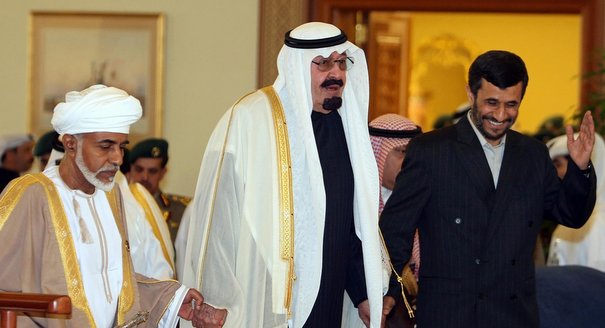
Iran is facing a number of domestic and regional pressures that might have been the motivation behind the alleged plot to assassinate the Saudi ambassador to the United States.
Source: El País

The US government says that Jack was contacted by his cousin, Abdul Reza Shahlai, a senior officer in the Al Qods unit. They had a brilliant plan: to kill the ambassador of Saudi Arabia to the United States. A good way of doing this, they decided, was to bomb a restaurant that the ambassador frequented. The fact that blasting a popular Washington restaurant would result in the loss of many innocent lives was also discussed. Jack's opinion? "No big deal."
But the brilliant ideas of Jack, Abdul Reza and Golam didn't stop there; they had more. Like, for example, outsourcing the assassination to the Zetas, a Mexican drug cartel. Once the idea was approved in Teheran and the money started flowing from an Iranian bank, Teheran's James Bond got to work. He searched for, and identified, the Mexican "service providers," negotiated the fees ($1.5 million), discussed and agreed on the modus operandi (bomb), timing (as soon as possible) and future collaboration (bombing embassies in Washington and Buenos Aires, deeds on which Iran already had some experience). The only small problem in this plan was that, in this case, the Mexican "service provider" had other clients, for example the US government, or, more specifically the Drug Enforcement Administration (DEA). As a result, the FBI captured Jack and put together a 21-page complaint that it presented to a judge in New York describing the plot in great detail (you can read it here)
For some, this accusation is simply another trick by the same country that lied about invading Iraq. Such is the opinion of Iran's supreme leader, Ayatollah Ali Khamenei. He thinks that the accusation stems from the fact that the Occupy Wall Street movement is about to topple the US government.
"The merciless American government is trying to repress the movement, but it will not succeed... [The movement] will continue to grow and will bring down capitalism and the West with it," he said. The ayatollah is concerned about the fierce repression by the New York police. "They are treating the demonstrators harshly, and in ways that we have not even seen in underdeveloped countries run by dictators" (Whoever could he have been thinking of?).
For the Supreme Leader, the US lie has an obvious reason: US President Barack Obama needs to distract the world from the imminent American collapse. And what better distraction than accusing the mullahs, who have never resorted to violence at home or abroad, of trying to assassinate the Saudi ambassador?
What is the real story here? We will not know for a while. But this we do know: 1) Every time that the US government has manipulated information to justify invading another country, the truth has eventually surfaced. Obama knows that he would be committing political suicide if he tried to emulate George W. Bush. 2) The conflict between Saudi Arabia and Iran over influence in the Middle East has reached unprecedented levels. 3) The Ayatollah (who controls the Al Quds unit) and President Ahmadinejad are locked in a bitter fight for political power. 4) Bad economic policies and international sanctions have hit Iran's economy hard, exacerbating political infighting. 5) During periods of crisis idiots are more likely to make important decisions without much supervision. 6) The Occupy Wall Street movement will not topple Obama, or the West.

Distinguished Fellow
Moisés Naím is a distinguished fellow at the Carnegie Endowment for International Peace, a best-selling author, and an internationally syndicated columnist.
Recent Work



Rosa Balfour, Frances Z. Brown, Yasmine Farouk, …
Moisés Naím
Carnegie does not take institutional positions on public policy issues; the views represented herein are those of the author(s) and do not necessarily reflect the views of Carnegie, its staff, or its trustees.

Are Germany’s economic, industrial, and political struggles becoming a liability for the EU’s ability to rise to the geopolitical moment?

Rym Momtaz, ed.

China’s police training infrastructure construction projects provide benefits to recipient countries, promote China’s image as a major global security provider, and are likely to reinforce alignment between Beijing’s security priorities and those of countries in the Global South.


Cameron Waltz, Sheena Chestnut Greitens, Kim Nguyen, …
They face an uphill climb, but they could draw on a strategy that other diplomats have used in the past.


Shana Tabak, Alejandro Martin Rodriguez
Understanding the climatic pain points is necessary for policymakers hoping to minimize the war’s negative environmental consequences.


Alejandro Martin Rodriguez, Joy Arkeh, Sarah Yerkes

Huawei pushed hard to enter the Egyptian data centers market, until the Americans made a better offer.

Angie Omar