

Q&A
Suzanne Maloney, Aaron David Miller, Karim Sadjadpour
{
  "authors": [
    "Karim Sadjadpour"
  ],
  "type": "legacyinthemedia",
  "centerAffiliationAll": "dc",
  "centers": [
    "Carnegie Endowment for International Peace",
    "Malcolm H. Kerr Carnegie Middle East Center"
  ],
  "collections": [],
  "englishNewsletterAll": "menaTransitions",
  "nonEnglishNewsletterAll": "",
  "primaryCenter": "Carnegie Endowment for International Peace",
  "programAffiliation": "MEP",
  "programs": [
    "Middle East"
  ],
  "projects": [],
  "regions": [
    "Middle East",
    "Iran",
    "Gulf"
  ],
  "topics": [
    "Political Reform",
    "Foreign Policy"
  ]
}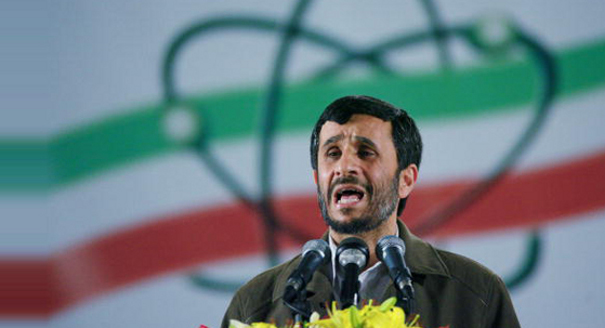
Source: Getty
In “The Twilight War,” government historian David Crist examines Washington's missed opportunities with Iran and the problematic fact that Iranians who want to talk to America can’t deliver, and those who can deliver don’t want to talk to America.
Source: New York Times

For the United States and Iran the 1979 Iranian revolution — which replaced an American-allied monarchy with a virulently anti-American theocracy — has proved to be the geopolitical divorce from hell. For over three decades, as the two sides have engaged in an ugly battle for patronage over a volatile Middle East, Washington has hoped in vain that Tehran would change its ways. “The Twilight War,” David Crist’s painstakingly researched and elegantly written account of the United States-Iran cold war, is an earnest chronicle of this shadowy history.
Mr. Crist’s position as a government historian and adviser to the United States Central Command, which oversees all American combat forces in the Middle East and which his father used to lead, has afforded him unique access to government officials and classified intelligence. Nonetheless he proves himself a dispassionate narrator. While no apologist for the Iranian regime, Mr. Crist pulls no punches in pointing out America’s strategic and sometimes moral failings in dealing with Iran.
Other books, notably Kenneth Pollack’s “Persian Puzzle” and David Sanger’s “Confront and Conceal,” have ably covered American foreign policy toward Iran. Mr. Crist’s stands out for its focus on the troubled relationship’s military context. For much of the 20th century, including the first decade after the 1979 revolution, Washington’s chief concern was that Iran could fall sway — or prey — to the Soviet Union. Mr. Crist reveals military contingency plans to occupy and even use nuclear weapons on Iranian soil in the event of a Soviet incursion. As one C.I.A. official observed, “We now had a plan to defend those who don’t want to be defended against those who are not going to attack.”Since radical Islam replaced Communism as America’s chief ideological foe, Washington’s concern is no longer Iran’s vulnerabilities but its nefarious capabilities. Mr. Crist’s assessment that policies meant to counter Iranian influence, most notably the 2003 removal of Saddam Hussein, have often had the opposite effect isn’t a novel argument.
What distinguishes “The Twilight War” is its granularity — the book is based on more than 300 interviews and has 45 pages of endnotes — which will reward careful readers with revealing anecdotes. When the former United States ambassador to Iraq Ryan C. Crocker expresses surprise that the Iraqi prime minister, Nouri al-Maliki, considered by many to be an Iranian lackey, doesn’t speak Persian, Mr. Maliki responds, “You don’t know how bad it can be until you’re an Arab forced to live with the Persians!”
There are no sacred cows in Mr. Crist’s rendering of this cold war. He paints Ronald Reagan as a dithering commander in chief who refused to hit back despite clear evidence that Iran, through its Hezbollah proxy, was responsible for the death of 241 Americans, mostly Marines killed in Beirut in 1983. “Hezbollah’s success,” Mr. Crist writes, “emboldened Iran on the value of terrorism and the poor man’s precision weapon — the truck bomb — as instruments for successfully beating a superpower.”
Skeptics of American foreign policy, both from the left and the right, will find ample fodder in “The Twilight War.” Mr. Crist offers a detailed account of how America aided and abetted Saddam Hussein during the Iran-Iraq war. He writes of how C.I.A. carelessness led to the exposure — and subsequent execution — of dozens of C.I.A. assets in Iran, including a patriotic Iranian Navy captain, Touradj Riahi, whose bravery had helped save American lives. As one disillusioned C.I.A. operative recounted to Mr. Crist, “We eat people alive, spit them out,” and then don’t care about them afterward.
Nonetheless, with the exception of George W. Bush, whose administration spurned Iranian overtures after Sept. 11, every president since 1979 saw it in America’s national interests to try and mend relations with Tehran. Reagan wrote three letters to Iran’s leaders, urging them to improve ties with the United States. The Iranian government never responded. George H. W. Bush once spent 29 minutes talking on the phone with Hashemi Rafsanjani, then the Iranian president, only to find out that it was a prank call from an Iranian seeking to embarrass Mr. Rafsanjani. Bill Clinton famously loitered in the basement of the United Nations during the 1999 General Assembly, hoping for an encounter with the reformist Iranian president Mohammed Khatami, who demurred.
Most recently, in 2009, President Obama sent two letters to Iran’s supreme leader, Ali Khamenei, in the hope of creating a process that would lead to a rapprochement. Rather than focus on the future, Mr. Khameni’s response was to complain about past American policies.
While Washington can also be accused of missing opportunities, “The Twilight War” correctly emphasizes one of the perennial challenges in dealing with Iran: The men who actually run Tehran — the Revolutionary Guards and hard-line clergy — are largely inaccessible. Mr. Khamenei, 72, hasn’t left the country since 1989. Herein lies the conundrum: Iranians who want to talk to America can’t deliver, and those who can deliver don’t want to talk to America.
The later chapters of “The Twilight War” sometimes suffer as a result of this dynamic. Lacking the declassified intelligence and multiple sourcing of other chapters, Mr. Crist is forced to rely too heavily on information provided to him by smooth-talking but powerless Iranian officials, opportunistic Iranian exiles and former American officials with an ax to grind. Mr. Crist’s chapter on George W. Bush’s presidency lacks some of the nuance of previous chapters. And he sometimes makes peculiar assertions about Iranian domestic politics, for example referring to Iran’s fundamentalist president Mahmoud Ahmadinejad — who has denied the Holocaust and the existence of gay people in Iran — as “urbane” and a “political secularist.”
Still, Mr. Crist’s book deserves a spot on the short list of must-read books on United States-Iran relations. Its most important reader is not President Obama, however, but Ali Khamenei. The book isn’t likely to change his views about American policies, but it will help him understand them.

Senior Fellow, Middle East Program
Karim Sadjadpour is a senior fellow at the Carnegie Endowment for International Peace, where he focuses on Iran and U.S. foreign policy toward the Middle East.
Recent Work


Suzanne Maloney, Aaron David Miller, Karim Sadjadpour

Aaron David Miller, Karim Sadjadpour, Robin Wright
Carnegie does not take institutional positions on public policy issues; the views represented herein are those of the author(s) and do not necessarily reflect the views of Carnegie, its staff, or its trustees.
Ongoing uncertainty in the Middle East allows Moscow to both increase its influence in Tehran and continue to enjoy the financial windfall of higher oil prices.

Nikita Smagin

To carry out its global AI agenda, Washington will need strategic relationships with emerging markets in Africa, starting with Kenya.

Jane Munga

Europe’s industrial supply chains leave it vulnerable to global shocks. The EU needs a pragmatic green industrial strategy that balances durable partnerships and bolsters homegrown clean tech without sacrificing low-carbon ambition.


Milo McBride, Pauline Gerard
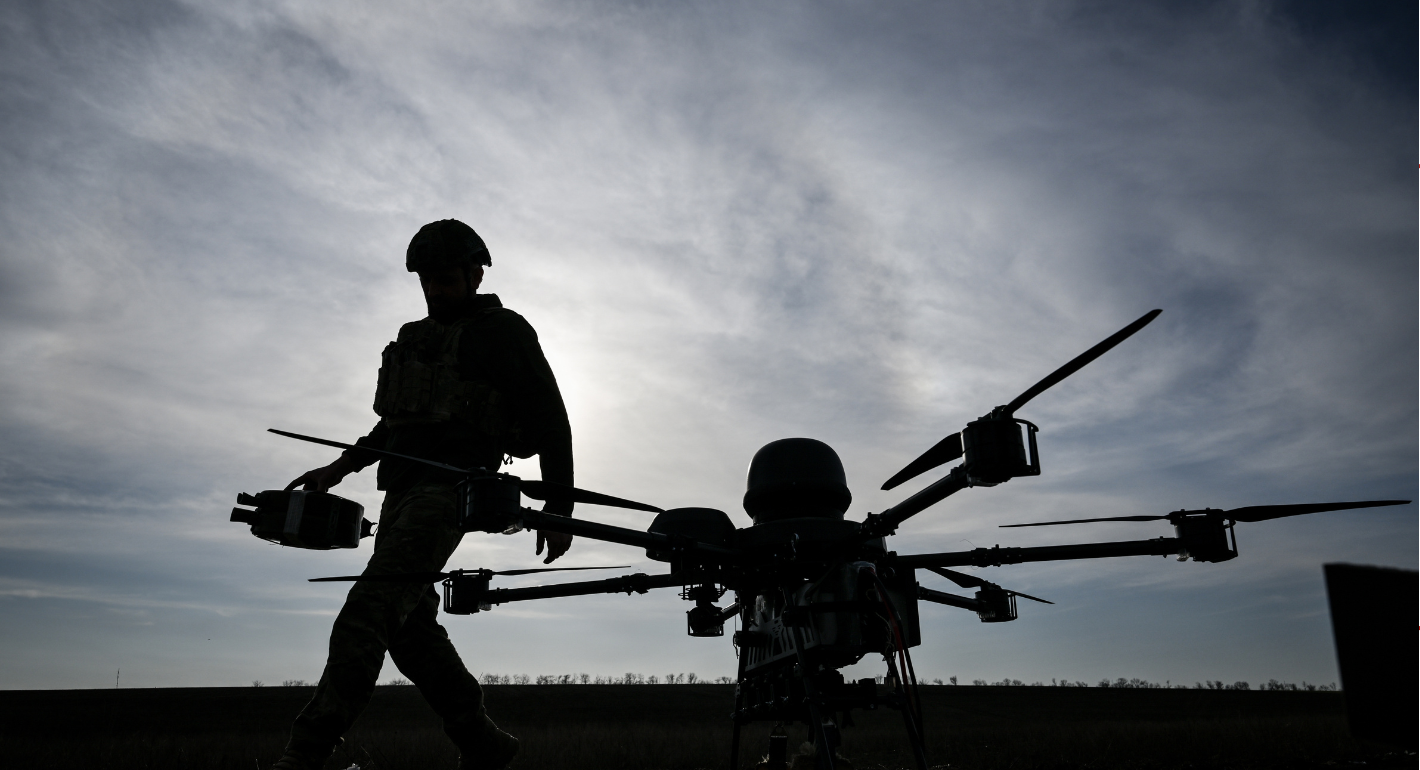
Defense tech innovations will be at the heart of Europe’s new security strategy. But so far, Brussels has been making moves without a broader plan, undermining readiness and credibility.

Raluca Csernatoni
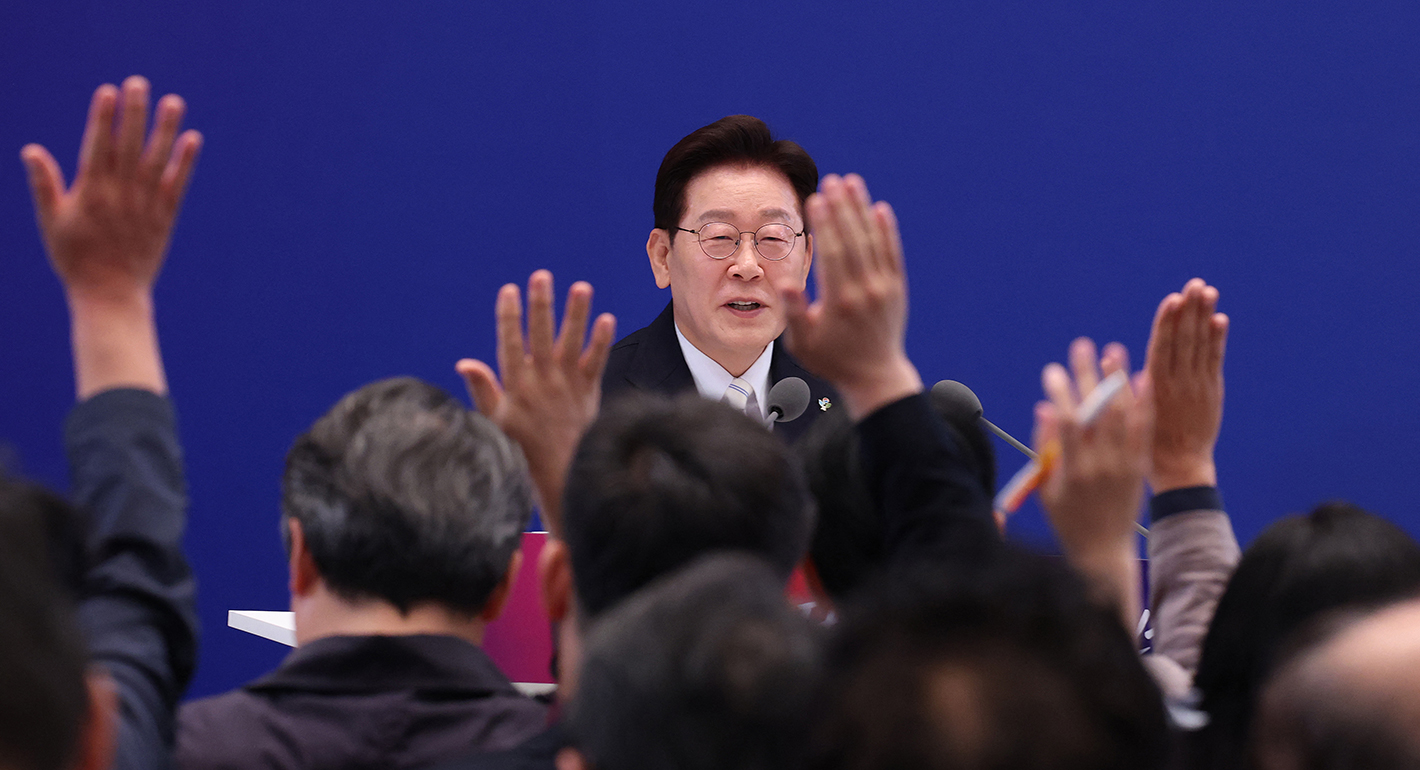
President Lee marked his first year in office after one of the most tumultuous periods in South Korean politics. Though Lee has enjoyed a high approval rating, a large majority in the National Assembly, and foreign policy victories, Lee and his party’s political fortunes depend on generating economic growth, learning the right lessons from the recent local elections, and managing contentious factional strife within his political base.
Chung Min Lee