• Research
  • Emissary
  • About
  • Experts
Carnegie Global logoCarnegie lettermark logo
DemocracyIran
  • Donate
{
  "authors": [
    "Yukon Huang"
  ],
  "type": "other",
  "centerAffiliationAll": "dc",
  "centers": [
    "Carnegie Endowment for International Peace"
  ],
  "collections": [],
  "englishNewsletterAll": "asia",
  "nonEnglishNewsletterAll": "",
  "primaryCenter": "Carnegie Endowment for International Peace",
  "programAffiliation": "AP",
  "programs": [
    "Asia"
  ],
  "projects": [],
  "regions": [
    "East Asia",
    "China"
  ],
  "topics": [
    "Political Reform",
    "Economy"
  ]
}
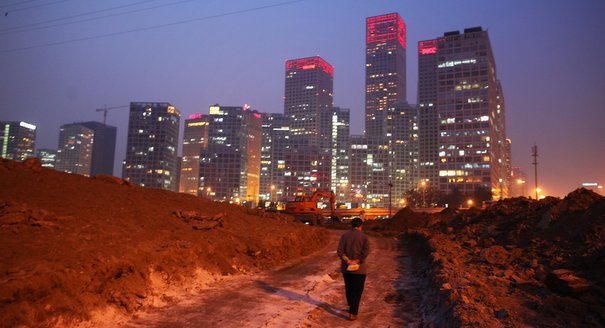
Source: Getty

Other

China's Conflict Between Economic and Political Liberalization

China’s impressive growth record has been facilitated by a unique relationship between Beijing and the provinces that encourages experimentation and incentivizes officials for driving economic growth.

Link Copied
By Yukon Huang
Published on Dec 31, 2012
Program mobile hero image

Program

Asia

The Asia Program in Washington studies disruptive security, governance, and technological risks that threaten peace, growth, and opportunity in the Asia-Pacific region, including a focus on China, Japan, and the Korean peninsula.

Learn More

Source: SAIS Review

China’s impressive growth record has been facilitated by a unique relationship between Beijing and the provinces that encourages experimentation and incentivizes officials for driving economic growth—and for the most part this helped maintain political stability. While these arrangements spurred economic liberalization, political liberalization was put on hold. But rapid growth has not spared China from increasing social unrest given frustrations over widening disparities both in opportunities and outcomes and mounting conflicts over use of resources. Some now question the regime’s capacity to deal with society’s concerns. This paper examines recent politically charged events that have intensified discussions about the potential for economic and political reforms that would be acceptable to the Communist Party and still supportive of China’s broader objectives.

Three decades of economic liberalization have restored much of the vibrancy that China last displayed two centuries ago when it accounted for a significant share of the world’s economy. Yet its political system seems to have been caught in a time warp. Ever since the Arab Spring began dominating headlines, there has been renewed speculation that social unrest could foment a similar cascade of change in China. Even Premier Wen Jiabao concluded at last March’s National People’s Congress that dealing with pressures for political reform will be a high priority for the future leadership. But the Bo Xilai affair significantly escalated what is at stake by casting the issue as a conflict between reformers and those wedded to the past. This is now seen as influencing the transition to China’s next generation of senior leaders.

Discussions about China’s political evolution are normally grounded in debates over democratization, military security, and human rights. More attention, however, needs to be given to whether the nature of China’s economic transformation, supported by its unique form of regional decentralization, has contributed to a stalemate regarding political liberalization.

Read the full paper in the SAIS Review.

About the Author

Yukon Huang

Senior Fellow, Asia Program

Huang is a senior fellow in the Carnegie Asia Program where his research focuses on China’s economy and its regional and global impact.

    Recent Work

  • Commentary
    Three Takeaways From the Biden-Xi Meeting

      Yukon Huang, Isaac B. Kardon, Matt Sheehan

  • Commentary
    Europe Narrowly Navigates De-risking Between Washington and Beijing

      Yukon Huang, Genevieve Slosberg

Yukon Huang
Senior Fellow, Asia Program
Yukon Huang
Political ReformEconomyEast AsiaChina

Carnegie does not take institutional positions on public policy issues; the views represented herein are those of the author(s) and do not necessarily reflect the views of Carnegie, its staff, or its trustees.
More Work from Carnegie Endowment for International Peace

  • A boat, with smoke in the background
    Commentary
    Emissary
    The Gulf Monarchies Are Caught Between Iran’s Desperation and the U.S.’s Recklessness

    Only collective security can protect fragile economic models.

      • Andrew Leber

      Andrew Leber

  • Commentary
    Sada
    Duqm at the Crossroads: Oman’s Strategic Port and Its Role in Vision 2040

    In a volatile Middle East, the Omani port of Duqm offers stability, neutrality, and opportunity. Could this hidden port become the ultimate safe harbor for global trade?

      Giorgio Cafiero, Samuel Ramani

  • An elderly woman walks past a poster at a health centre in Gunwi, some 200 kilometres south of Seoul
    Paper
    Governing Aging Economies: South Korea and the Politics of Care, Safety, and Work

    South Korea’s rapid demographic transition previews governance challenges many advanced and middle-income economies will face. This paper argues that aging is not only a care issue but a structural governance challenge—reshaping welfare, productivity, and fiscal sustainability, and reorganizing responsibilities across the state, private sector, and society.

      Darcie Draudt-Véjares

  • Forbidden City on a cloudy day
    Commentary
    Emissary
    Beijing Doesn’t Think Like Washington—and the Iran Conflict Shows Why

    Arguing that Chinese policy is hung on alliances—with imputations of obligation—misses the point. 

      Evan A. Feigenbaum

  • Commentary
    Carnegie Politika
    The Kremlin Is Destroying Its Own System of Coerced Voting

    The use of technology to mobilize Russians to vote—a system tied to the relative material well-being of the electorate, its high dependence on the state, and a far-reaching system of digital control—is breaking down.

      Andrey Pertsev

Get more news and analysis from
Carnegie Endowment for International Peace
Carnegie global logo, stacked
1779 Massachusetts Avenue NWWashington, DC, 20036-2103Phone: 202 483 7600Fax: 202 483 1840
  • Research
  • Emissary
  • About
  • Experts
  • Donate
  • Programs
  • Events
  • Blogs
  • Podcasts
  • Contact
  • Annual Reports
  • Careers
  • Privacy
  • For Media
  • Government Resources
Get more news and analysis from
Carnegie Endowment for International Peace
© 2026 Carnegie Endowment for International Peace. All rights reserved.