

Commentary
Dmitri Trenin
{
  "authors": [
    "Dmitri Trenin"
  ],
  "type": "legacyinthemedia",
  "centerAffiliationAll": "",
  "centers": [
    "Carnegie Endowment for International Peace",
    "Carnegie Russia Eurasia Center"
  ],
  "collections": [],
  "englishNewsletterAll": "",
  "nonEnglishNewsletterAll": "",
  "primaryCenter": "Carnegie Russia Eurasia Center",
  "programAffiliation": "",
  "programs": [],
  "projects": [],
  "regions": [
    "North America",
    "United States",
    "Russia"
  ],
  "topics": [
    "Security",
    "Foreign Policy"
  ]
}
Source: Getty
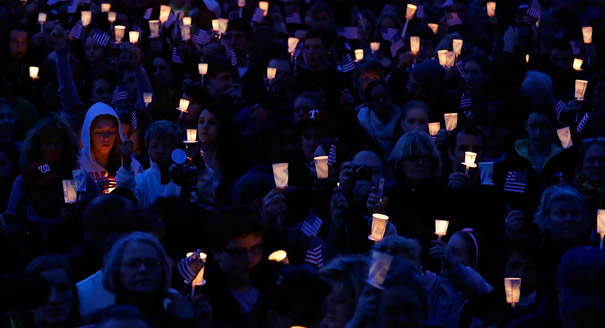
There is little Russia could have done to help the United States prevent the Boston bombings, but Washington and Moscow should restart and enhance international antiterrorist cooperation.
Source: Foreign Policy
So, there are Chechen terrorists and there are terrorists who just hail from Chechnya.
Reports indicate that the Tsarnaev brothers are Chechens who lived in both the former Soviet republic of Kyrgyzstan and the Republic of Dagestan in the Russian North Caucasus. In 2002 or 2003, they sought and obtained political asylum in the United States. On September 11 of last year, Dzhokhar, the 19-year-old who, as I write this, is still at large, became a naturalized American citizen; 26-year-old Tamerlan, who was killed last night, had applied to be a permanent legal resident.
There is no indication that the brothers stayed in Chechnya during the war that raged in the region until 2002. There is no doubt that their early lives were distorted by that conflict, but their background does not explain why they appear to have turned against Americans, whose country gave refuge to their family and gave them an opportunity to realize the American Dream.That opportunity has become a nightmare -- the bombing in which the Tsarnaevs are suspects marred hundreds of lives, and the violence committed during the manhunt has been shocking. The investigation will establish the milestones in the process by which these young people have become alleged terrorists. At this point, one can only guess at motivations. Had the Boston bombings been simply a distant echo of the Chechen war, the perpetrators would probably have chosen different targets. As committed, the Boston Marathon bombing was directed against modern civilization itself.
Recently, amid the condemnations of the "global war on terror," it has become fashionable to say that there is no such thing as international terrorism. Diverse groups of terrorists, their loose alliances, and their franchises operate in particular environments, fight against certain kinds of enemies, and pursue political goals. Links among those groups certainly exist, but their collaboration does not reach the level of joint planning, strategizing, and execution. Moreover, there is some disagreement even among Western nations about who should be branded a terrorist, and who should not.
This disagreement is particularly stark when it comes to Russia. Generally, Chechen terrorists have been treated in the West as a special case -- desperate and misguided souls responding to their enemy's brutal force. Usually, the numerous terrorist strikes in Russia have not been included in the short list of major terrorist acts -- America's 9/11, London's 7/7, Madrid's 3/11, and the attacks in Mumbai and Bali. Instead, Russia was placed in a different category, where, like in Israel, terrorism was deemed a response to the government's repression, rather than an attack against humanity as such. When Vladimir Putin, then in his first term as president, reached out to George W. Bush on 9/11, the United States accepted Russia as part of the global anti-terrorist coalition. The coalition, however, did not last long.
With Russia's image increasingly suffering from accusations of rising authoritarianism and the United States having developed its own strategies of dealing with terrorists and insurgents in Iraq and Afghanistan, U.S.-Russian cooperation has weakened dramatically. Some U.S. allies, like the United Kingdom in the wake of the Litvinenko case, severed their links with the Russian security agencies altogether. The Russians, not to be outdone, paid in kind. The so-called anti-Magnitsky list recently passed by the State Duma contains the names of several U.S. officials responsible for the Guantanamo prison. There have been, of course, individual examples of successful Russian-Western cooperation on fighting terror, but they have been the exception not the rule.
International cooperation can only accomplish so much. There is little Moscow could have done to help the United States prevent the Boston bombings, both suspects having left Russia more than a decade ago. Yet, some lessons can be learned from the experience of the past several years, and acted upon:
What happened in Boston will not be forgotten. Whether it will push the United States and others toward closer international cooperation in the fight against terrorism remains an open question.
Former Director, Carnegie Moscow Center
Trenin was director of the Carnegie Moscow Center from 2008 to early 2022.
Recent Work
Dmitri Trenin
Dmitri Trenin
Carnegie does not take institutional positions on public policy issues; the views represented herein are those of the author(s) and do not necessarily reflect the views of Carnegie, its staff, or its trustees.
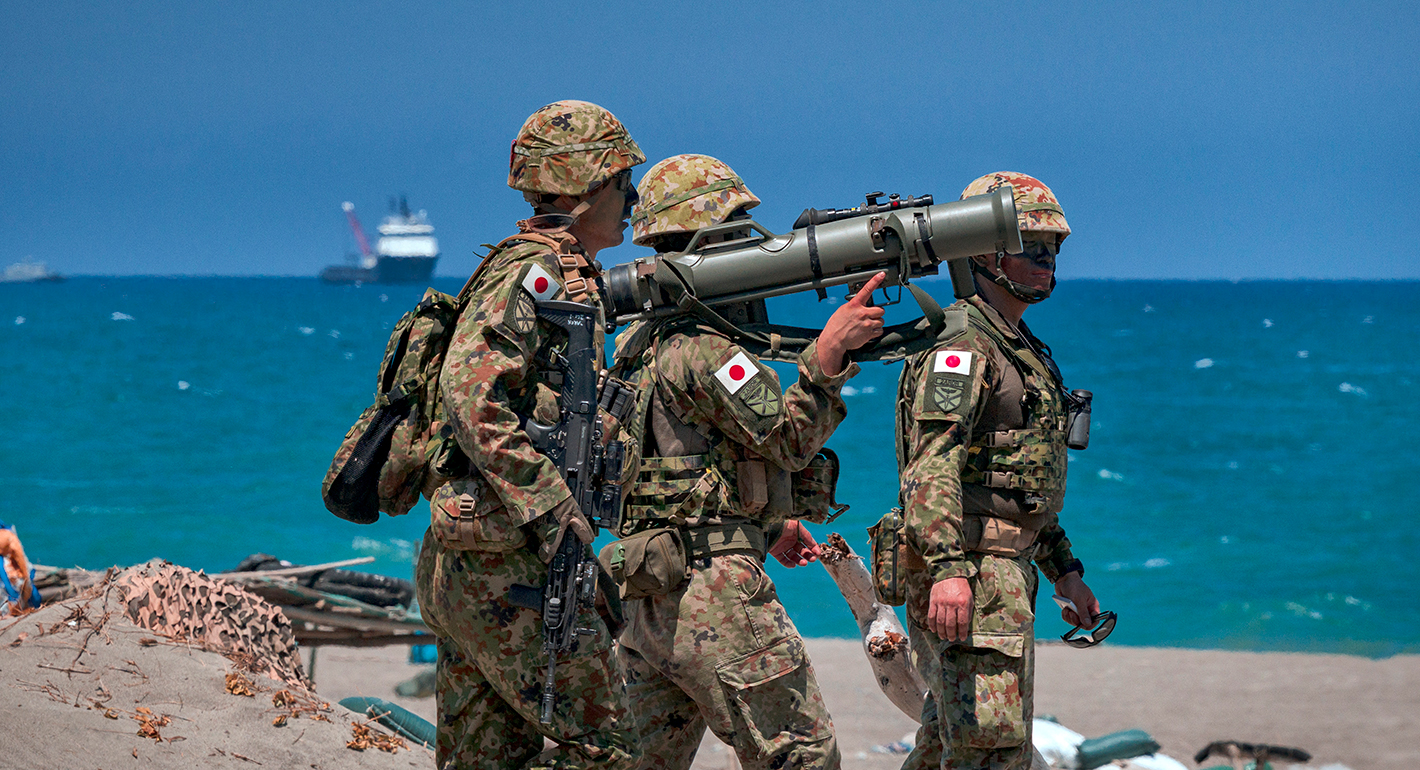
Japan’s revision of its three strategic documents reflects an intention to keep the United States engaged in the region while Japan fills any vacuums of U.S. power to preserve the Indo-Pacific order.
Ryo Sahashi

In the discussions made possible by the State Duma election campaign, one question is being asked more and more loudly. “What next?”

Andrey Pertsev

Over the past decade, China has moved from marginal player to major producer of all things batteries. The United States, Europe, and others are aiming to balance the market.

Milo McBride

The DFC should focus on advanced, low-carbon energy sources, prioritizing areas where the United States has comparative advantages.
Noah Gordon, Liana Schmitter-Emerson

While the Nazis rushed ahead in a revolutionary fervor, Russia’s modern crusaders against enemies of the state work methodically, giving their targets time to adjust to restrictions before closing the loopholes.

Leonid Bershidsky