

Paper
Douglas H. Paal
{
  "authors": [
    "Douglas H. Paal"
  ],
  "type": "legacyinthemedia",
  "centerAffiliationAll": "dc",
  "centers": [
    "Carnegie Endowment for International Peace",
    "Carnegie China"
  ],
  "collections": [
    "China’s Foreign Relations"
  ],
  "englishNewsletterAll": "asia",
  "nonEnglishNewsletterAll": "",
  "primaryCenter": "Carnegie Endowment for International Peace",
  "programAffiliation": "AP",
  "programs": [
    "Asia"
  ],
  "projects": [],
  "regions": [
    "East Asia",
    "South Korea",
    "China",
    "Japan",
    "North Korea"
  ],
  "topics": [
    "Security",
    "Military",
    "Foreign Policy",
    "Nuclear Policy",
    "Arms Control"
  ]
}
Source: Getty
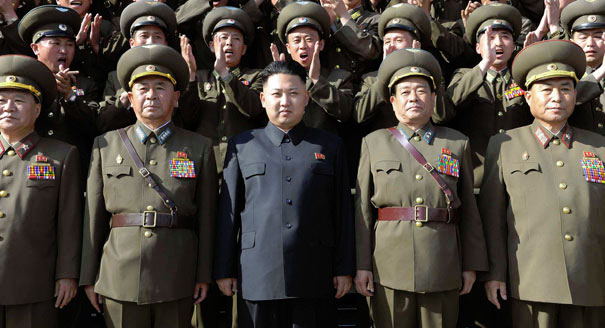
In China, Kerry needs to focus on the broader context of the U.S.-China strategic relationship and how North Korea will harm this relationship.
Source: BBC World News
Speaking with BBC World News, Douglas Paal argued that North Korea is unlikely to change its course of action anytime soon and that the U.S. message is mainly intended for China to reconsider the risks of Kim Jong Un's actions.
Meanwhile, Paal continued, there is not much more that can be done with sanctions at this stage. The primary way that North Korea may alter its course is if Kim Jong Un fails to prove himself as the leader that his grandfather was, by failing to deliver goods, fuel, and food to the North Korean people.
As to Kerry's visit to Asia, Paal noted that the secretary of state needs to reaffirm the U.S. alliance with Seoul and Tokyo. In China, Kerry needs to rise above the short tactical measures preoccupying the Western media and focus on the broader context of the U.S.-China strategic relationship and how North Korea will harm this relationship.

Distinguished Fellow, Asia Program
Paal previously served as vice chairman of JPMorgan Chase International and as unofficial U.S. representative to Taiwan as director of the American Institute in Taiwan.
Recent Work
Douglas H. Paal

Douglas H. Paal, Tong Zhao, Chen Qi, …
Carnegie does not take institutional positions on public policy issues; the views represented herein are those of the author(s) and do not necessarily reflect the views of Carnegie, its staff, or its trustees.

Understanding the climatic pain points is necessary for policymakers hoping to minimize the war’s negative environmental consequences.



Alejandro Martin Rodriguez, Joy Arkeh, Sarah Yerkes

Huawei pushed hard to enter the Egyptian data centers market, until the Americans made a better offer.

Angie Omar

The books, podcasts, and films that explain the world it made.

Andrew Leber
U.S. trading partners in Asia are closely watching the dispute for signs of how it may affect their own interests.

Barbara Weisel

The aftermath of the Ceuta crisis shows Europe has drawn the wrong lessons. Rather than doubling down on failed migration policies, the EU needs to address the underlying roots of such episodes.

Richard Youngs