

Commentary
Yezid Sayigh
{
  "authors": [
    "Yezid Sayigh"
  ],
  "type": "legacyinthemedia",
  "centerAffiliationAll": "",
  "centers": [
    "Carnegie Endowment for International Peace",
    "Malcolm H. Kerr Carnegie Middle East Center",
    "Carnegie Russia Eurasia Center"
  ],
  "collections": [
    "Arab Awakening"
  ],
  "englishNewsletterAll": "",
  "nonEnglishNewsletterAll": "",
  "primaryCenter": "Malcolm H. Kerr Carnegie Middle East Center",
  "programAffiliation": "",
  "programs": [],
  "projects": [
    "Eurasia in Transition"
  ],
  "regions": [
    "Egypt",
    "North Africa"
  ],
  "topics": [
    "Political Reform",
    "Economy"
  ]
}
Source: Getty
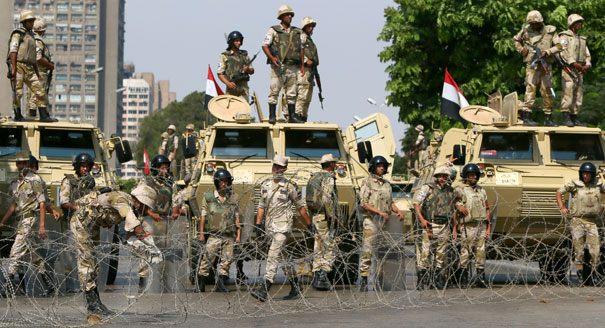
Egypt’s interim government promises to restore social peace, political stability, and create an economic roadmap amid a constitutional crisis and a growing tendency towards violence.
Source: Al-Hayat
The promise of Egypt’s interim “technocratic” government to restore social peace and political stability and to rescue the economy is luring for a country mired in a protracted constitutional crisis and a growing tendency to violence, amidst entrenched social grievances and economic inequalities. Quick financial fixes are certainly possible, thanks to the award of aid worth $12 billion from Saudi Arabia, the UAE, and Kuwait and the possibility of securing a $4.8 billion loan from the IMF. This will enable the interim government to control the budget deficit, increase foreign exchange reserves, slow inflation, and bolster investor confidence in the short term.
But achieving more ambitious goals such as combating unemployment and improving living standards, encouraging small and medium enterprises and increasing domestic investment, and raising economic productivity and bureaucratic efficiency will prove much harder, if not impossible.
This is not for lack of policy prescriptions. Rather, it is because neither the interim government nor its successor, which is to be formed following parliamentary and presidential elections provisionally scheduled for late 2014, can embark on the administrative and economic reforms necessary to resolve Egypt’s deeper structural problems without colliding head-on with the extensive military networks and interests embedded throughout the massive state apparatus and the large state-owned sectors of the economy.This “officers’ republic” will hobble the performance of any democratically elected civilian government that seeks to transform the country’s administration and economy, no matter what its political or ideological orientation. President Mohammad Morsi and the Muslim Brotherhood were particularly inept at governing Egypt, but even the most liberal or secular government will find its popular legitimacy undermined, exposing it to unrest and leaving it permanently dependent on the very institution–the armed forces–whose penetration of the state and economy is a key factor in Egypt’s deepening socio-economic crisis.
The ouster of President Mohammad Morsi reflects how close the Egyptian military is to formally institutionalizing its political suzerainty over the Egyptian state and, by extension, perpetuating the officers’ republic. The new constitution approved by national referendum in December 2012 enshrined the complete autonomy of the armed forces from civilian control, removed the defense budget and military enterprises from even nominal parliamentary oversight, and prohibited the prosecution of military personnel–both active and retired–in civilian courts even for crimes that come under the civilian criminal code. These provisions were approved by the Morsi administration, and are not disputed by the political forces that were arrayed against it, with the exceptions of the revolutionary youth and liberal leader Mohammad al-Baradei.
Armed forces officers moreover form a majority in the National Defense Council, which was reactivated by the ruling military council in June 2012. This is the only body explicitly authorized to review the defense budget even in broad terms, and effectively entitles the armed forces to oversee policy spheres deemed relevant to national security. The principal effect is to further constrain the powers of the presidency and the government.
Today, military power is clearly invested in Colonel-General Abdul-Fattah al-Sisi, defense minister and commander-in-chief of the armed forces. This was demonstrated in the removal of the head of the General Intelligence Service (GIS), Major-General Mohammad Ra’fat Shihata, on July 5, 2013. Shihata was the first officer to rise through the ranks of the GIS to head the agency, which until then was always headed by officers from Military Intelligence. He had only been in his post for nine and a half months, and there was no compelling reason to remove him, but this was deemed important enough for interim president Adly Mansour to decree immediately on taking office. By replacing Shihata with Major-General Mohammad Farid Tahamy, a former military intelligence officer, Sisi reasserted the dominance of the latter agency–which he had commanded until his appointment as defense minister in August 2012–and of the armed forces more generally.
Tahamy is especially interesting, however, because he previously headed the Administrative Monitoring Authority, the country’s leading watchdog agency that reports exclusively to the president, during the last seven years of the Mubarak era. Mubarak used the Authority, which is supposed to combat corruption in any civilian entity, whether public or private, to deter opponents with the threat of criminal investigations and reward political and business cronies by having investigations into their affairs closed. Tahamy clearly proved loyal, as his tenure was renewed four times after his initial four-year term ended in 2008, until he was dismissed by Morsi in September 2012 after being accused by other Authority officers of corruption.
Whatever the truth of the accusations against Tahamy, his reincarnation as head of the GIS reveals much about how the officers’ republic works. It has a lot at stake. In a refreshingly frank newspaper interview in May 2013, Tahamy’s successor, Major-General Mohammad Omar Wehby Heiba, acknowledged the “marriage” of capital and power that had impeded the Authority’s work under Mubarak, and revealed that Morsi had made the presidency subject to its audit for the first time ever. Heiba then identified the state agencies most affected by corruption: local government; public investment bodies and holding companies; and the departments of customs, tax, and social insurance.
Whether Heiba intended to draw a connection or not, the first two categories he listed–local government, and public investment bodies and holding companies–employ large numbers of retired officers, running into the thousands. So do numerous other sectors of the civil service, with especially significant concentrations of former officers in ministries and agencies that deal with land-related sectors such as housing, real estate management, public works, agricultural development and reclamation, and tourism. Senior retired officers enjoy a sinecure, with each branch of the armed forces monopolizing the distribution of posts in particular governorates, holding companies, and public utilities that lie within its technical or geographical sphere.
The Egyptian armed forces additionally boast of being able to provide large infrastructure projects at less cost than private sector companies, supply low-cost consumer commodities including manufactured goods and food, and bestow “gifts to the Egyptian people” ranging from food parcels for the poor to bridges and water treatment plants. But this is false economics, that disregards the military’s tax-free status, reduced import duties, favorable exchange rates for its hard currency needs, free or cheap labor, and heavily subsidized energy. The military economy’s supposed commercial competitiveness and munificence are based on a sleight of hand, in which it is the public treasury that incurs the real costs, through a reduction in revenue.
Egypt’s interim government has stated that it intends to devise an economic roadmap for structural reform. It seeks to invest in infrastructure projects, privatize certain state-owned companies, and generally offer greater opportunities for the private sector to compete and invest. These are worthy goals that have been announced many times by previous governments, but they disregard the fundamentally extractive, rent-seeking nature of the military’s relationship to the Egyptian state, public finances, and economy. This is a relationship that will last so long as the institution that created the Egyptian republic in 1952–the armed forces–is allowed to use that historical legacy to justify its abrogation of the right to define the national interest and identity and to place itself above the state and beyond the legal and judicial frameworks that bind citizens and their democratically elected civilian authorities.

Senior Fellow, Malcolm H. Kerr Carnegie Middle East Center
Yezid Sayigh is a senior fellow at the Malcolm H. Kerr Carnegie Middle East Center in Beirut, where he leads the program on Civil-Military Relations in Arab States (CMRAS). His work focuses on the comparative political and economic roles of Arab armed forces, the impact of war on states and societies, the politics of postconflict reconstruction and security sector transformation in Arab transitions, and authoritarian resurgence.
Recent Work
Yezid Sayigh
Yezid Sayigh
Carnegie does not take institutional positions on public policy issues; the views represented herein are those of the author(s) and do not necessarily reflect the views of Carnegie, its staff, or its trustees.

A partnership between India, a country of subcontinental size, and Africa, a continent of fifty-four countries, may seem asymmetric until one notes that both are home to nearly the same number of people—1.4 billion. This essay spells out the existing challenges to the partnership, its optimal potential, and the possible pathways to realize it over the next quarter-century.

Rajiv Bhatia
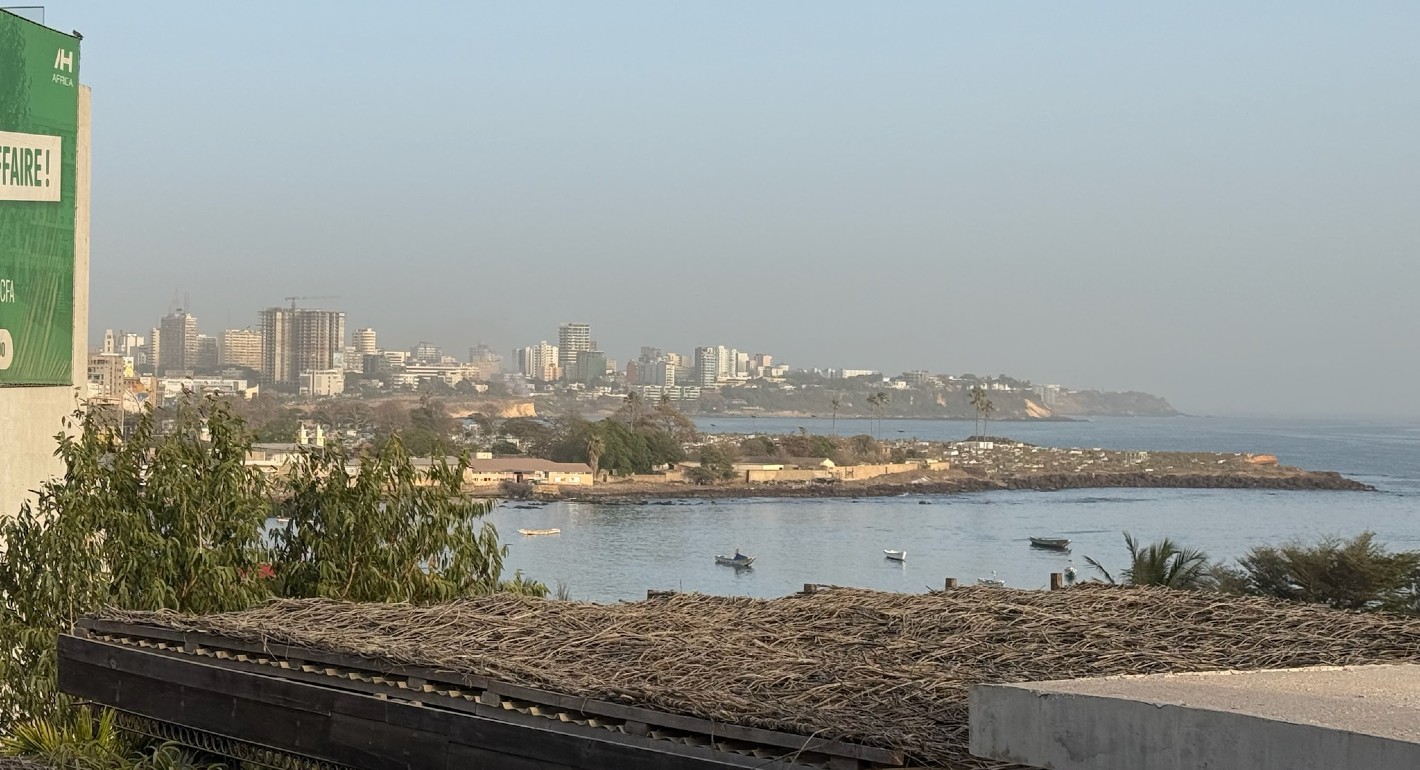
During our visit, we observed a democracy that has learned from its difficult past and is working toward an even more dynamic future.

Sarah Yerkes, Natalie Triche

The cost of air defense has become an unregistered tax on revenue for businesses. While military rents are consolidated in the federal budget, the costs of defense are being spread across the balance sheets of companies and regional governments.

Alexandra Prokopenko

Cities across the United States facilitate investment in American communities. Yet, because global attention remains focused on U.S. trade policy, their distinctive and bold local approaches to international trade and investment promotion are often underappreciated.


Wyatt Frank, Marissa Jordan
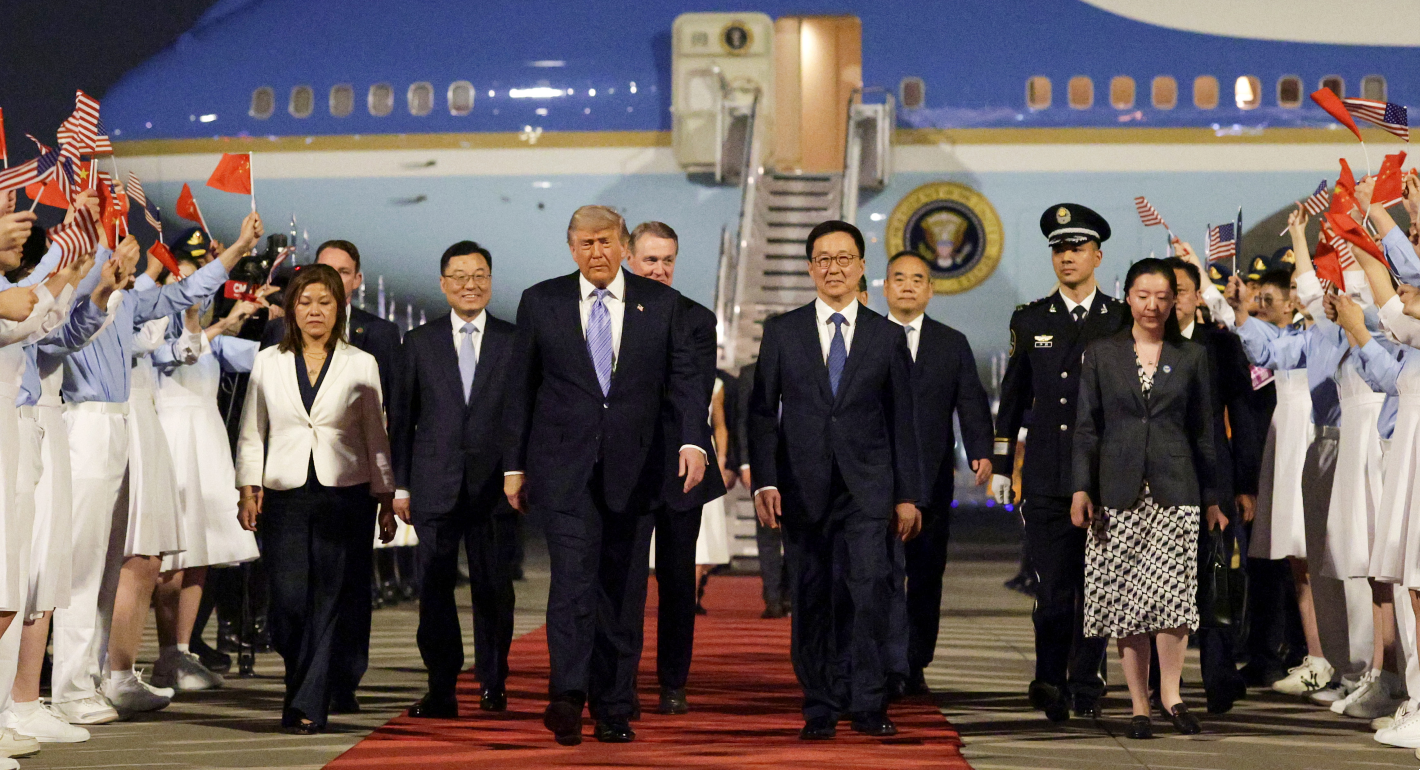
Why the outcomes of the U.S.-China meetings may be limited.

Aaron David Miller, David Rennie