

Commentary
Nathan J. Brown
{
  "authors": [
    "Nathan J. Brown"
  ],
  "type": "legacyinthemedia",
  "centerAffiliationAll": "dc",
  "centers": [
    "Carnegie Endowment for International Peace",
    "Malcolm H. Kerr Carnegie Middle East Center"
  ],
  "collections": [
    "Arab Awakening"
  ],
  "englishNewsletterAll": "menaTransitions",
  "nonEnglishNewsletterAll": "",
  "primaryCenter": "Malcolm H. Kerr Carnegie Middle East Center",
  "programAffiliation": "MEP",
  "programs": [
    "Middle East"
  ],
  "projects": [],
  "regions": [
    "North Africa",
    "Egypt"
  ],
  "topics": [
    "Political Reform"
  ]
}
Source: Getty
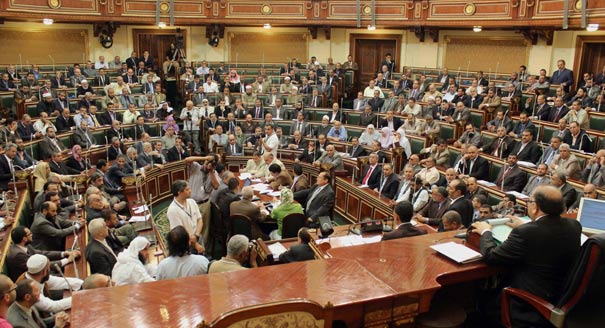
Egypt’s committee of 50 drafting constitutional amendments is showing surprising signs of life, but it is not likely to change the underlying political dynamics.
Source: Foreign Policy
There have been more stirring declarations of independence, but in Egypt's constricted political environment, this one was still bold. Article 18 of the bylaws of Egypt's "committee of 50" drafting constitutional amendments proudly proclaims that the committee will complete its work in 60 days "not counting official holidays."
The 50 members now hard at work in Egypt are assigned the task of taking the very extensive list of amendments drafted by an earlier committee (consisting of 10 jurists) and developing a proposed text to submit to voters in a couple months. All committee members were appointed by interim President Adli Mansour, himself appointed by the military. The composition of the committee reflects a cross-section of Egyptian society but hardly a representative one. The last parliamentary elections resulted in a body that was two-thirds Islamists, but Islamist parties claim only one seat in the current committee. Various unions, syndicates, and state bodies were allowed to choose their own representatives, and the president peppered the body with some prominent politicians and intellectuals.
The decision by the committee of 50 to stop its 60-day clock each Friday essentially extends the life of the committee by over a week beyond what the president and precedent would seem to have granted it. The matter is a minor one, but it seems to be a way for the committee to say that it takes orders from nobody. (There are legal grounds for a court or the president to overrule the committee, but that seems very unlikely politically.) Egypt's committee of 50 is showing surprising signs of life -- but while this vitality will make for a lively debate and a less predictable (and probably better) constitution, it is not likely to change the underlying political dynamics or counteract the reestablishment of a semi-authoritarian order.To be fair to the committee, while its toying with the timeline may be its most audacious move (since it offers an implausible application of what was, after all, a presidentially-decreed constitutional document), the more significant aspects of the bylaws and operations lie in three other areas. Understanding each area requires -- to mix a metaphor -- a fairly deep dive into some very dry legal ground. When we come up afterward, however, it will not be clear how much effect the committee's daring will have on Egypt.
First, the committee is only outwardly respectful of the work of the earlier "committee of 10" (the jurists who came up with the first draft of the constitutional amendments). In reality it shows that body much less deference than was anticipated. The president ordered the committee of 50 to begin with the draft prepared by the committee of 10 and one member of that latter committee modestly suggested that the larger body did not need to make any changes at all in the jurists' work. From the beginning the committee of 50 sent signals that it would not be a rubber stamp. An initial draft of the committee of 50 bylaws made clear that the jurists' work would merely be consulted; the final bylaws hew more faithfully to the president's instructions by saying that the committee would use the jurists' suggestions as "the basis for work." Yet in its actual operation, it is clear that the committee is going clause by clause, effectively starting from scratch and writing a new constitution rather than amending the 2012 one or tweaking the jurists' draft amendments. And the members of the committee of 10 -- who may attend committee of 50 sessions but may not vote -- are clearly having trouble guiding the various committees of the larger committee as they had thought they would do. The committee of 50 clarified an ambiguity in the president's constitutional declaration about who would approve the final text before forwarding it to the president -- by awarding that authority to itself rather than the jurists from the committee of 10.
Second, the committee of 50 has decided to move by consensus and supermajorities in a manner that will facilitate logrolling among its disparate members. The committee itself is populated by a few very strong egos and independent figures; a smattering of party leaders; and a whole host of representative of various bodies, many from within the state apparatus. Many of those actors have very particular demands (such as regarding the electoral system, judicial rights, labor organizations, and the like). With these institutional interests strongly represented but generally focusing on distinct clauses, a dynamic exists for most of them to get what they want -- perhaps making the constitution more like a Christmas tree on which everyone hangs his or her favorite ornament than a comprehensively-designed sculpture. Not every member is likely to get what he or she wants -- the sole member of an Islamist party in the body is far more likely to be an Egyptian Jeanette Rankin (the sole U.S. member of Congress to vote against declaring war after Pearl Harbor) than its James Madison (perhaps the most influential member of the U.S. constitutional convention). On religious issues, the outcome instead will be hammered out between the non-Islamist majority and the representatives of official Islam; al-Azhar will likely have a dominant voice and Islamic social and political actors virtually none. The committee is likely to have a far freer hand -- not tied down by particular interests -- when debating general and ideological matters (like the preamble) as well as in some of the rights provisions, motivated generally by a desire to show that it can outperform its 2012 predecessor.
Third, the committee is already treading on some very sensitive turf, including military trials of civilians and human rights protections. The precise doings of the committee -- and its subcommittees -- is not completely clear from the public record, but it has started tweeting a steady stream of topics discussed, clauses debated, and committees deliberating. Those brief messages -- along with public comments by some members -- suggest that at least some committee members are anxious to show independence and refusal to honor taboos. The role of the military, the electoral system, religion and state, social justice, gender equality, the authority of the president, the nature of rights protections -- all these are issues that have provoked tremendous debate inside Egypt over the past years that are now being debated inside the committee of 50 and its subcommittees. Rather than accepting what the earlier committee of jurists devised, the larger committee seems determined to reopen every issue for discussion. Journalists, for instance, complained that the jurists had ignored all of their suggestions; the committee of 50 is trying to communicate that it will accept most of them. Of course, not all such discussion is liberal or democratic: a representative of the ministry of interior showed up to explain that the police should be loyal only to the people (i.e. outside of the political and constitutional order).
Yet for all its daring, it seems unlikely that Egypt's 2013 constitution will counteract the authoritarian practices that never disappeared and that are once again becoming thoroughly routinized in Egyptian political life. Critical state actors -- the military and the security forces most obviously -- will not be hamstrung or held accountable according to the text produced; what indications exist right now are that most other state actors will get what they want because of their presence in the chamber, the likely logrolling behavior of the committee, and the general counterrevolutionary spirit.
Where the committee might have some leeway is over rights provisions, the electoral system, and the distribution of powers in what is likely to be a semi-presidential system. But even here the impact will be limited. The precise language of rights provisions matters, but generally less than the mechanisms chosen to enforce them (where there is likely to be little change save to make the judiciary even more self-perpetuating than it already is). System of government provisions also matter, but it is extremely difficult to say in advance how they will work without knowing something about the parties and personalities involved.
Do these flaws matter? Yes, over the short term. Those who hope for either a liberal or democratic political system to come out of this process are likely to be deeply disappointed. The longer term is less clear. The dirty -- and often unspoken -- secret among comparative constitutional scholars is that the viability and operation of a constitution are far less connected to the circumstances of its birth than all the current attention to the drafting process suggests. There is no doubt that over the past two and a half years, Egyptians have done virtually everything that such scholars would have told them not to do. So the 2013 constitution may eventually deliver benefits to a later generation, but if that happens, it will be luck rather than wisdom that will have to take the credit.

Nonresident Senior Fellow, Middle East Program
Nathan J. Brown, a professor of political science and international affairs at George Washington University, is a distinguished scholar and author of nine books on Arab politics and governance, as well as editor of five books.
Recent Work
Nathan J. Brown
Nathan J. Brown
Carnegie does not take institutional positions on public policy issues; the views represented herein are those of the author(s) and do not necessarily reflect the views of Carnegie, its staff, or its trustees.

Huawei pushed hard to enter the Egyptian data centers market, until the Americans made a better offer.

Angie Omar

In the tenth year of his presidency, President Mirziyoyev’s system is becoming even more personalized than that of his predecessor Karimov.

Galiya Ibragimova
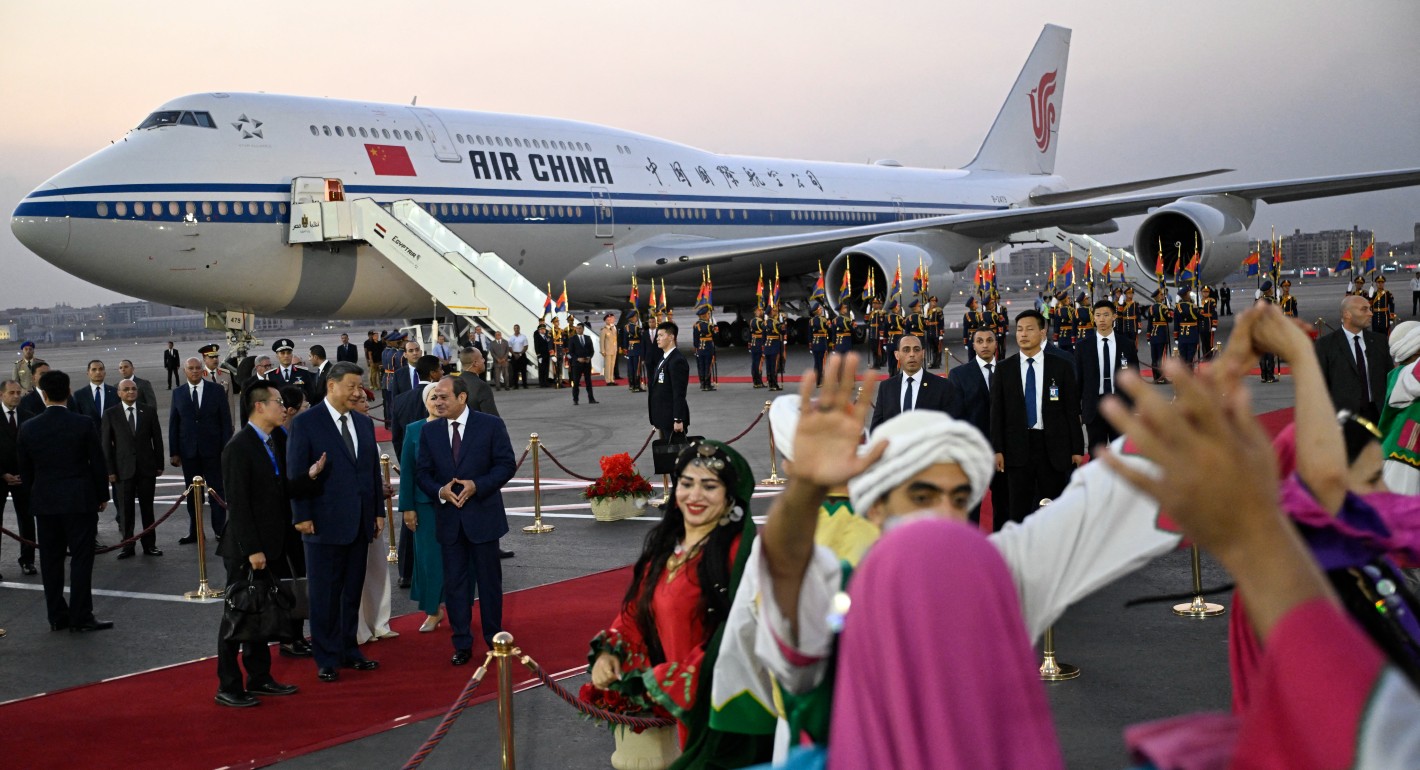
Amid celebrations of bilateral ties was a deeper focus on stability in the Middle East.

Amr Hamzawy
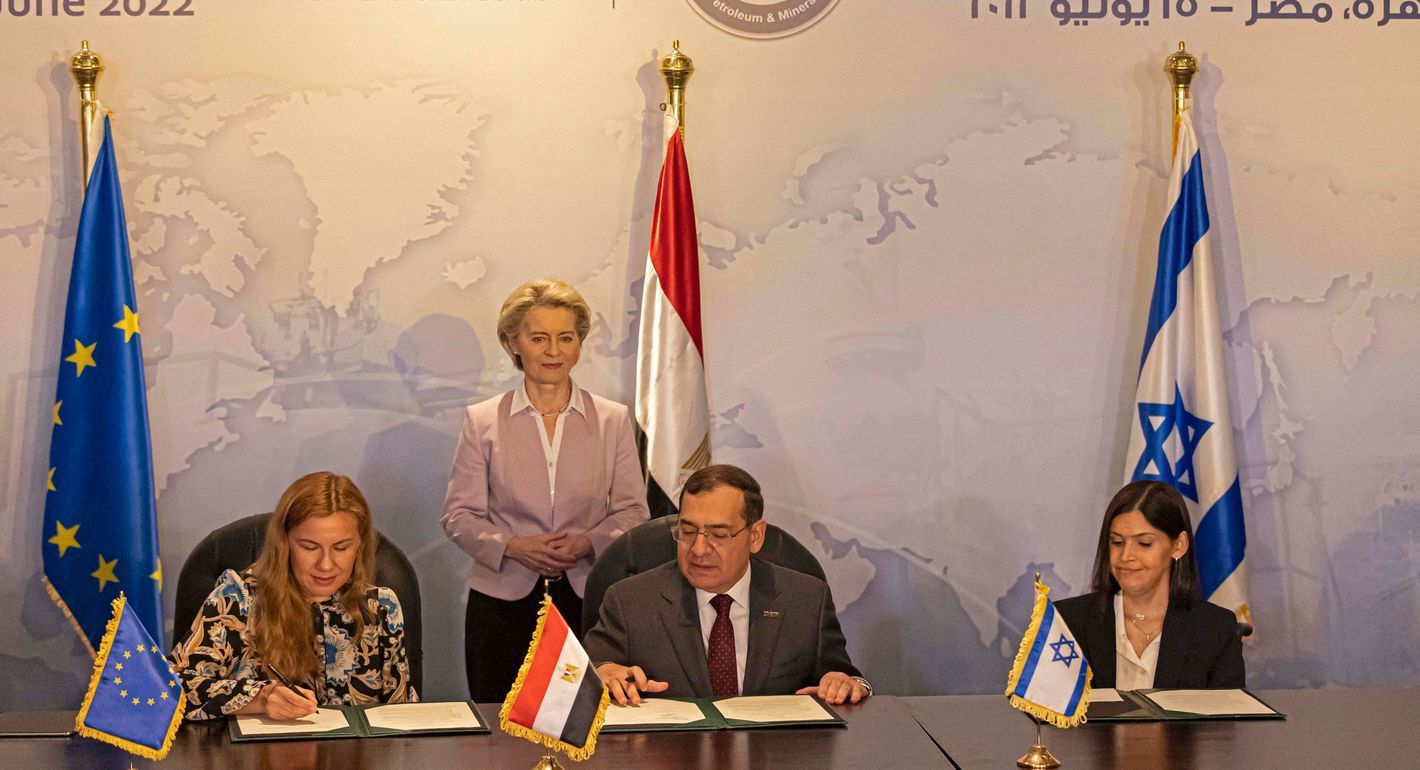
Can economic ties help contain conflict between Egypt and Israel, or do they simply postpone confrontation? Drawing on the German-Russian experience, the article examines how the gas deal creates mutual dependence, keeps channels of cooperation open, and raises the cost of conflict, without necessarily delivering lasting peace.

Nourhan Hefzy

The greater threat to Zelensky comes not from Fedorov alone, but from the convergence between the former defense minister’s political campaign and the anti-corruption investigations moving ever closer to the presidential administration.

Balázs Jarábik