

Research
- +10
Rosa Balfour, Frances Z. Brown, Yasmine Farouk, …
{
  "authors": [
    "Moisés Naím"
  ],
  "type": "legacyinthemedia",
  "centerAffiliationAll": "",
  "centers": [
    "Carnegie Endowment for International Peace"
  ],
  "collections": [],
  "englishNewsletterAll": "",
  "nonEnglishNewsletterAll": "",
  "primaryCenter": "Carnegie Endowment for International Peace",
  "programAffiliation": "",
  "programs": [],
  "projects": [],
  "regions": [
    "North America",
    "South America"
  ],
  "topics": [
    "Political Reform",
    "Foreign Policy"
  ]
}
Source: Getty
The enormous influence that Cuba has gained in Venezuela is one of the most underreported geopolitical developments of recent times.
Source: Financial Times
The enormous influence that Cuba has gained in Venezuela is one of the most underreported geopolitical developments of recent times. It is also one of the most improbable. Venezuela is nine times bigger than Cuba, three times more populous, and its economy four times larger. The country boasts the world’s largest oil reserves. Yet critical functions of the Venezuelan state are either overseen or directly controlled by Cuban officials.
Venezuela receives Cuban health workers, sports trainers, bureaucrats, security personnel, militias and paramilitary groups. “We have over 30,000 members of Cuba’s Committees for the Defence of the Revolution in Venezuela,” boasted Juan José Rabilero, then head of the CDR, in 2007. The number is likely to have increased further since then.
A growing proportion of Venezuela’s imports are channelled through Cuban companies. Recently, Maria Corina Machado, an opposition leader, revealed the existence of a large warehouse of recently expired medicines imported through a Cuban intermediary – drugs allegedly purchased on the international market at a deep discount and resold at full price to the government.The relationship goes beyond subsidies and advantageous business opportunities for Cuban agencies. Cuban officers control Venezuela’s public notaries and civil registries. Cubans oversee the computer systems of the presidency, ministries, social programmes, police and security services as well as the national oil company, according to Cristina Marcano, a journalist who has reported extensively on Cuba’s influence in Venezuela.
Then there is military co-operation. The minister of defence of a Latin American country told me: “During a meeting with high-ranking Venezuelan officers we reached several agreements on co-operation and other matters. Then three advisers with a distinctive Cuban accent joined the meeting and proceeded to change all we had agreed. The Venezuelan generals were clearly embarrassed but didn’t say a word . . . Clearly, the Cubans run the show.”
Why did the Venezuelan government allow this lopsided foreign intervention? The answer is Hugo Chávez. During his 14-year presidency he enjoyed absolute power thanks to his complete control of every institution that could have constrained him, from the judiciary to the legislature. He could also use Venezuela’s oil revenues at will.
One of the most transformational ways in which Chávez used the complete power he wielded was to let the Cubans in. He had many reasons to throw himself into the arms of Fidel Castro. He felt a deep affection, admiration and trust for the Cuban leader, who became a personal adviser, political mentor and geopolitical guide. Mr Castro also fed Chávez’s conviction that his many enemies – especially the US and the local elites – were out to get him and that his military and security services could not be trusted to provide the protection he needed. But the Cubans could reliably offer these services. Cuba also provided a ready-to-use international network of activists, non-government organisations and propagandists who boosted Chávez’s reputation abroad.
In return, Chávez instituted a programme of financial largesse that keeps Cuba’s economy afloat to this day. Caracas ships about 130,000 barrels of oil a day to the island on preferential terms – a small part of an aid programme that remains one of the world’s largest.
The extent to which Chávez was beholden to the Cuban regime was dramatically illustrated by the way in which he dealt with the cancer that would eventually kill him last year: he trusted only the doctors whom Mr Castro recommended, and his treatment mostly took place in Havana under a veil of secrecy.
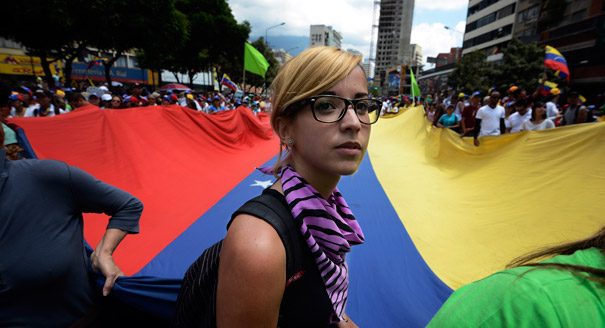
Chávez’s successor, Nicolás Maduro, has deepened Caracas’s dependency on Havana even further. As students have taken to the streets in protest against an increasingly authoritarian regime the government has responded with a brutal repression that relies on many of the tools and tactics perfected by the police state that has run Cuba for too long.
This article was originally published in the Financial Times.

Distinguished Fellow
Moisés Naím is a distinguished fellow at the Carnegie Endowment for International Peace, a best-selling author, and an internationally syndicated columnist.
Recent Work



Rosa Balfour, Frances Z. Brown, Yasmine Farouk, …
Moisés Naím
Carnegie does not take institutional positions on public policy issues; the views represented herein are those of the author(s) and do not necessarily reflect the views of Carnegie, its staff, or its trustees.

The books, podcasts, and films that explain the world it made.

Andrew Leber
U.S. trading partners in Asia are closely watching the dispute for signs of how it may affect their own interests.
Barbara Weisel

The aftermath of the Ceuta crisis shows Europe has drawn the wrong lessons. Rather than doubling down on failed migration policies, the EU needs to address the underlying roots of such episodes.

Richard Youngs
By abandoning past U.S. pro-democracy policies and adopting several lines of pro-autocratic action, the Trump administration has fundamentally repositioned the United States vis-à-vis democracy in the world.

Thomas Carothers
Chinese strategists are once again debating whether American power is declining and whether U.S. hegemony is experiencing irreversible decay.
Wu Xinbo