

Commentary
The Bureau of Industry and Security needs to adjust its focus and practices to maintain its position as the U.S. government’s primary champion of international technological competition.
Geoffrey Irving
{
  "authors": [
    "Milan Vaishnav",
    "Danielle Smogard"
  ],
  "type": "legacyinthemedia",
  "centerAffiliationAll": "dc",
  "centers": [
    "Carnegie Endowment for International Peace"
  ],
  "collections": [],
  "englishNewsletterAll": "ctw",
  "nonEnglishNewsletterAll": "",
  "primaryCenter": "Carnegie Endowment for International Peace",
  "programAffiliation": "SAP",
  "programs": [
    "South Asia"
  ],
  "projects": [
    "India Decides 2014"
  ],
  "regions": [
    "South Asia",
    "India"
  ],
  "topics": [
    "Political Reform",
    "Economy"
  ]
}
Source: Getty
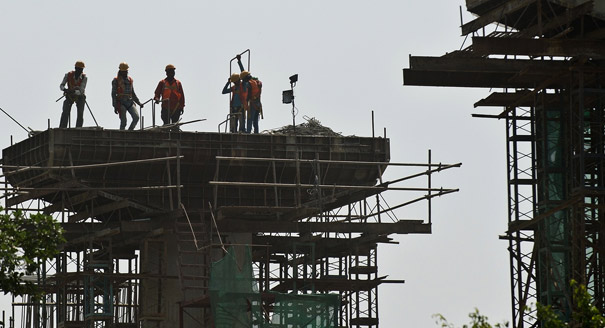
One of the previous Indian government’s most glaring legacies was the deep sense of uncertainty that pervades the economy. Remedying this policy paralysis and uncertainty must be the next government’s number one priority.
Source: India Today
May 16 marks the conclusion of India’s interminable election season. It also signals the formal end of the UPA 2 government, which has slumped, rather than raced, toward the finish line. The battered incumbent was attacked from all sides, accused of having engaged in rampant malfeasance, weakened public sector institutions, and indulged in profligate spending.
One of its most glaring legacies was the hardest to measure: the deep sense of uncertainty that pervades the economy—an affliction Indians have dubbed “policy paralysis.” This uncertainty marred India’s business climate, stopped investment dead in its tracks, and contributed to India’s worst growth performance in a quarter century. Remedying this sense of uncertainty must be the next government’s number one priority.The roots of India’s policy paralysis are myriad. Corruption scandals, policy missteps on investment and tax policy, and a divided Congress leadership all played starring roles. The relationship between the state and private capital came undone and could not be easily fixed, especially as the safety valves of India’s democracy—the courts, the media and civil society—kicked into gear.
Quantifying the impact of this paralysis is tricky, but a new measure developed by economists at Stanford and University of Chicago sheds light. The measure is a composite index of economic forecasts and press reports; it combines the realities of the Indian economy and—crucially—perceptions about those realities.

The data reveal that policy uncertainty vastly increased at the end of UPA’s first term, thanks to a rupture in the ruling alliance over the U.S.-India civil nuclear deal and, of course, the global economic crisis. However, uncertainty actually diminished at the start of UPA 2’s term only to rebound again within two years, remaining consistently high through the end of 2013. The global economic slowdown alone cannot account for the swell; rather, it appears domestic factors are largely to blame.
The costs of this uncertainty have been significant. Confusion over policies governing land, infrastructure, mining and power has led to a backlog of delayed approvals, stalled projects and a shelving of new investments. A recent paper by the International Monetary Fund reveals a close association between rising uncertainty and the glacial pace of infrastructure investment. A second study argues that if the economic uncertainty present in India today were to decline to 2005 levels, the country’s Gross Domestic Product (GDP) growth would automatically increase by more than half a percentage point.
A change in government alone will not produce a sustained reduction in uncertainty; the next government must have a clear economic vision, tailored for the short, medium and long runs.
In the short run, the next government must send a signal to private capital, including foreign investors, that it is open for business. An early priority must be finding a swift resolution to a series of high-profile tax disputes, including shutting the door on the contentious and damaging issue of retrospective taxation.
Of course, encouraging business without changing the way business interacts with government, risks perpetuating rampant cronyism. It is no secret that sectors where state regulation is most intense are where the biggest rent-seeking opportunities have flourished since 1991. Hence, the “License Raj” morphed into the “Resources Raj.” The next government must invest in the design of transparent policy frameworks for the management and allocation of natural resources.
But the new dispensation should not lose sight of the bigger picture. The most vital reform priority is to rebuild the very foundations of the Indian state that govern its internal workings and relationship with private capital. Here, the most critical task is not economic, but political: restoring the credibility of the rule of law. The shortcomings in the making of laws, their enforcement, and the resolution of disputes over their application have helped fuel an environment of paralysis. Reversing the trend of neglect and inefficiency which marks India’s rule of law institutions, from the judiciary to the police, is a task that cannot be completed in a single term, which explains why such reforms are so fitfully pursued.
To reduce uncertainty, the sheer willpower of a decisive leader is insufficient. This task requires rejuvenating India’s moribund public sector institutions, a decidedly unglamorous endeavor. Too often India has relied on ad hoc solutions, be it fast track courts to skirt hopelessly backlogged benches or centrally sponsored schemes to circumvent state-level delivery systems. Leaders at the top come and go, but the institutions they leave behind tend to stick around.

Director and Senior Fellow, South Asia Program
Milan Vaishnav is a senior fellow and director of the South Asia Program and the host of the Grand Tamasha podcast at the Carnegie Endowment for International Peace. His primary research focus is the political economy of India, and he examines issues such as corruption and governance, state capacity, federalism, and electoral behavior. He also conducts research on the Indian diaspora.
Danielle Smogard
Former Junior Fellow, South Asia Program
Carnegie does not take institutional positions on public policy issues; the views represented herein are those of the author(s) and do not necessarily reflect the views of Carnegie, its staff, or its trustees.

The Bureau of Industry and Security needs to adjust its focus and practices to maintain its position as the U.S. government’s primary champion of international technological competition.

Geoffrey Irving

Depleted financial reserves and a shrinking tax base mean it is no longer possible to simultaneously deliver high defense spending, price stability, and economic growth.

Alexandra Prokopenko
U.S. trading partners in Asia are closely watching the dispute for signs of how it may affect their own interests.

Barbara Weisel

In the tenth year of his presidency, President Mirziyoyev’s system is becoming even more personalized than that of his predecessor Karimov.

Galiya Ibragimova

With the growth in points of friction between the great powers, organizations like the SCO will continue to play a role in the strategic adaptation of the smaller powers caught between them.

Temur Umarov