

Article
Japan’s revision of its three strategic documents reflects an intention to keep the United States engaged in the region while Japan fills any vacuums of U.S. power to preserve the Indo-Pacific order.
Ryo Sahashi
{
  "authors": [
    "Yan Xuetong",
    "Koichi Furuya"
  ],
  "type": "legacyinthemedia",
  "centerAffiliationAll": "",
  "centers": [
    "Carnegie Endowment for International Peace",
    "Carnegie China"
  ],
  "collections": [
    "U.S.-China Relations",
    "China’s Foreign Relations"
  ],
  "englishNewsletterAll": "",
  "nonEnglishNewsletterAll": "",
  "primaryCenter": "Carnegie China",
  "programAffiliation": "",
  "programs": [],
  "projects": [],
  "regions": [
    "East Asia",
    "China"
  ],
  "topics": [
    "Arms Control",
    "Security",
    "Economy",
    "Foreign Policy"
  ]
}
Source: Getty
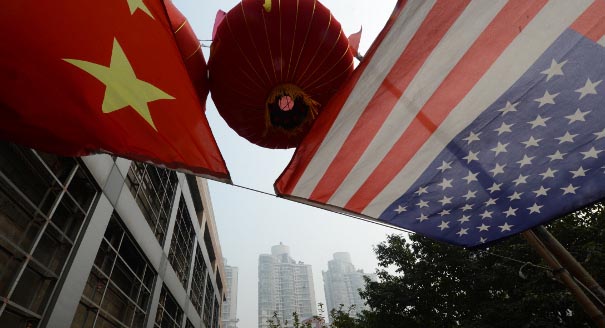
The concept of “conflict control” should play a key role in bilateral relations at a time when China’s rise is driving a sea change in the world order.
Source: Asahi Shimbun
Restoring China’s national pride is a primary concern for President Xi Jinping as he seeks to establish a "new type of great power relationship" with the United States, according to a scholar who influences Beijing’s policy with Washington.
In a recent interview with The Asahi Shimbun, Yan Xuetong, dean of Tsinghua University’s Institute of Modern International Relations, also said the concept of “conflict control” should play a key role at a time when China’s rise is driving a sea change in the world order.
Excerpts of the interview follow:
Why does Hollywood go after China? That’s because China buys its films. It all started with the economy, but China’s value system will exert a strong influence in world affairs in the end.
A: Japan’s trade surplus is a major reason the Japanese yen has failed to grow into an international currency that is used in foreign reserves as the U.S. dollar has done. The yen will not go out as long as Japan is selling more than it buys. The strength of the U.S. dollar derives from the country’s trade deficit. The renminbi will spread across the world for the same reason. The United States and China will be competing partly over which country will be importing more.
A: That will be inevitable. Japan clashed with the United States in the 1980s over corporate culture and other problems. There will certainly be an increasing number of similar clashes between the United States and China.
But armed conflict should be averted at all costs. That’s the idea of “conflict control,” which is a key term. Recent talk of a “new type of great power relationship” between the United States and China is based on implementing control to avoid military conflict, although there will be no control over cultural and ideological conflict.
A: China has four categories of bilateral ties according to levels of friendship: a “relationship of friendship and cooperation” with Russia and other countries; “normal ties” with France, Germany and other countries; the “new type of great power relationship” with the United States; and finally, a “relationship of rivalry,” which describes current ties with Japan. The new type of great power relationship involves no confrontation but does involve competition, and it is even lower than normal ties in terms of the degree of friendship. It is only slightly better than the relationship of rivalry.
The new type of great power relationship between Washington and Beijing has so far remained in a state of “superficial friendship,” but that does not mean it will remain so forever. The new type of great power relationship could involve true rivalry between false friends. Using cooperative ties to control the competition between the United States and China: That’s what the “new type” is all about.
A: I don’t know what “Cool War” means. In terms of temperature, “Cool War” should be between “Hot War” and “Cold War.” “Cool War” should mean that China-U.S. relations are more confronting than those between the United States and the former Soviet Union. I think “Cool War” is a wrong description of the current China-U.S. relationship. I would say today’s China-U.S. relationship is much less tense than the past Soviet-U.S. relationship. We are so frozen up that we cannot engage in war. I would call that an “Ice War.”
A: It is a foreign policy aimed at achieving Chinese national rejuvenation. China’s economic status has risen, but the country has yet to garner commensurate respect from the international community. To take the example of passports, those of Japan are under much less restrictions than Chinese ones (resulting in a higher degree of freedom of journeys), although China has surpassed Japan in terms of gross domestic product.
We have few friends. We are the world’s second largest economy, but we have fewer friends than the United States does. Washington may have about 40 allies, but we have (virtually) zero.
A: If China were to remain nonaligned, some countries would begin to fear they could bear the brunt of its immense military power. China will be able to guarantee, by entering alliances with smaller countries in its neighborhood, that it will not present a security threat to them. Without alliances, it would be natural for neighboring nations to feel frightened.
A: It doesn’t matter if they wish to be allied with us. It’s about whether China wants to be allied with them. No country would be averse to being patronized as long as China is putting up money.
A: The United States was the foremost priority in China’s foreign policy in the past, but the emphasis will shift to neighboring countries in the future. For example, we, in principle, will be siding with Russia when Washington is at odds with Moscow. We will at least not be siding with the United States. The situation in Syria is a typical example.
A: Sino-Japanese relations are very important. We are refusing to interact with the Japanese administration of Prime Minister Shinzo Abe because we believe that Abe has no intention to improve bilateral ties.
A: Washington and Beijing have begun discussing rules of control over maritime safety. Beijing is calling for rules to be worked out (between the United States and China) to cover not just the South China Sea but the entire world. But Washington is loath to answer those calls and insists that China is not a global naval power.
But China's Navy will be strengthened, and its fleet will only grow, as time passes. Washington will certainly agree to expand the scope of discussions from the South China Sea to the East China Sea, and even to the Pacific.
A: China and the United States are vying with each other not only in Southeast Asia but also in many other parts of the world. Southeast Asian nations are facing the choice of siding with Beijing or siding with Washington. More and more countries will be facing that situation as the world becomes more bipolar (with the United States and China on both sides).
A: That can’t be helped. The global framework is shifting from being unipolar to being bipolar, not multipolar. That change derives from an objective shift in power.
***
Born in 1952, Yan Xuetong studied at the University of International Relations in Beijing, the University of California at Berkeley and elsewhere before joining Tsinghua University. An expert in relations with the United States, Yan was appointed dean of the Institute of Modern International Relations in 2010.
Yan has served on the intergovernmental New Japan-China Friendship Committee for the 21st Century and in other posts. He serves in many concurrent positions, one of which is a vice president of the China National Association for International Studies.
This interview was originally published in the Asahi Shimbun.
Yan Xuetong
Former President, Carnegie China Management Board, Carnegie-Tsinghua Center for Global Policy
Yan Xuetong was president of the Carnegie-Tsinghua Center Management Board until June 2020.
Koichi Furuya
Carnegie does not take institutional positions on public policy issues; the views represented herein are those of the author(s) and do not necessarily reflect the views of Carnegie, its staff, or its trustees.
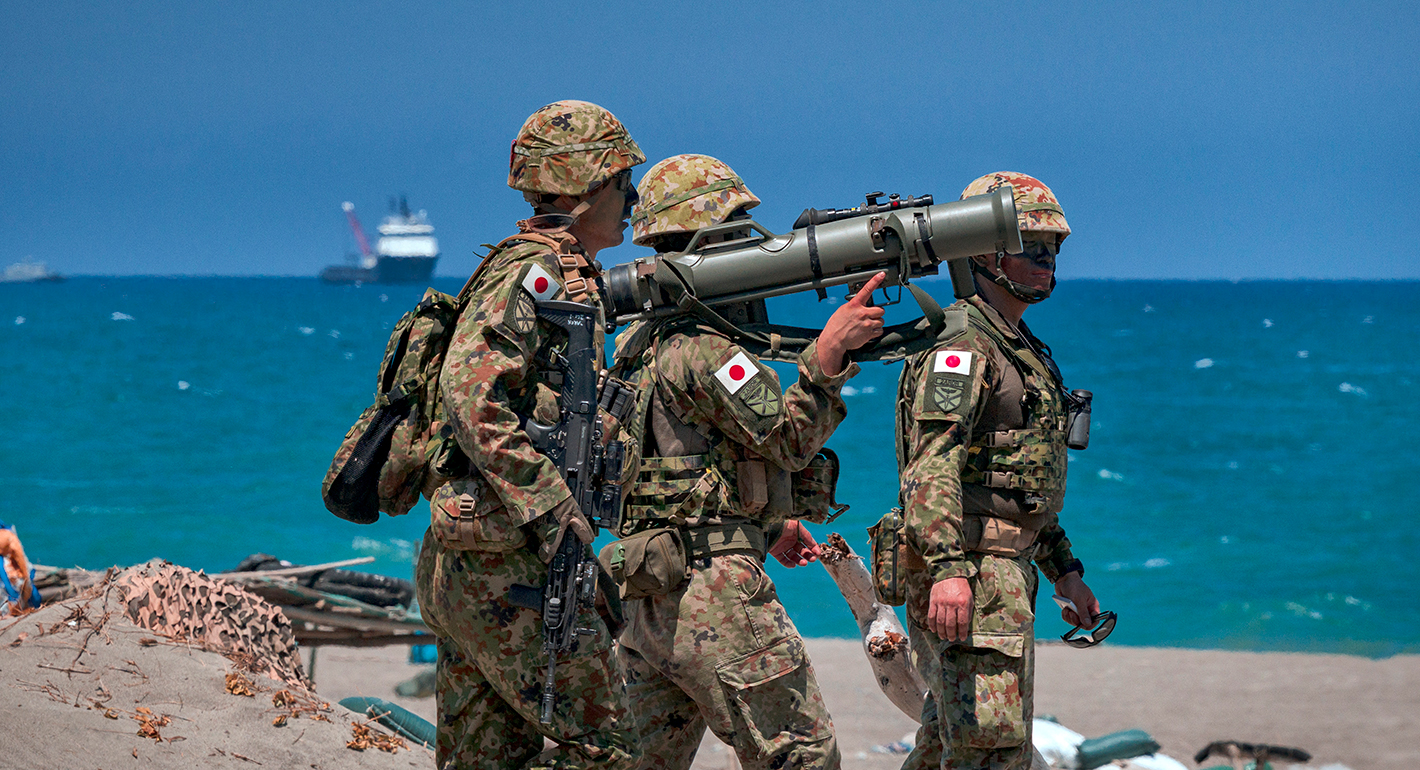
Japan’s revision of its three strategic documents reflects an intention to keep the United States engaged in the region while Japan fills any vacuums of U.S. power to preserve the Indo-Pacific order.
Ryo Sahashi

Chinese biotech companies have been on the receiving end of U.S. economic coercion. Yet their responses have differed significantly because firm and state interests are not uniformly aligned. For Washington, treating all Chinese tech firms the same, irrespective of their actual interests, risks pushing them farther into Beijing’s corner.

Xue Gong
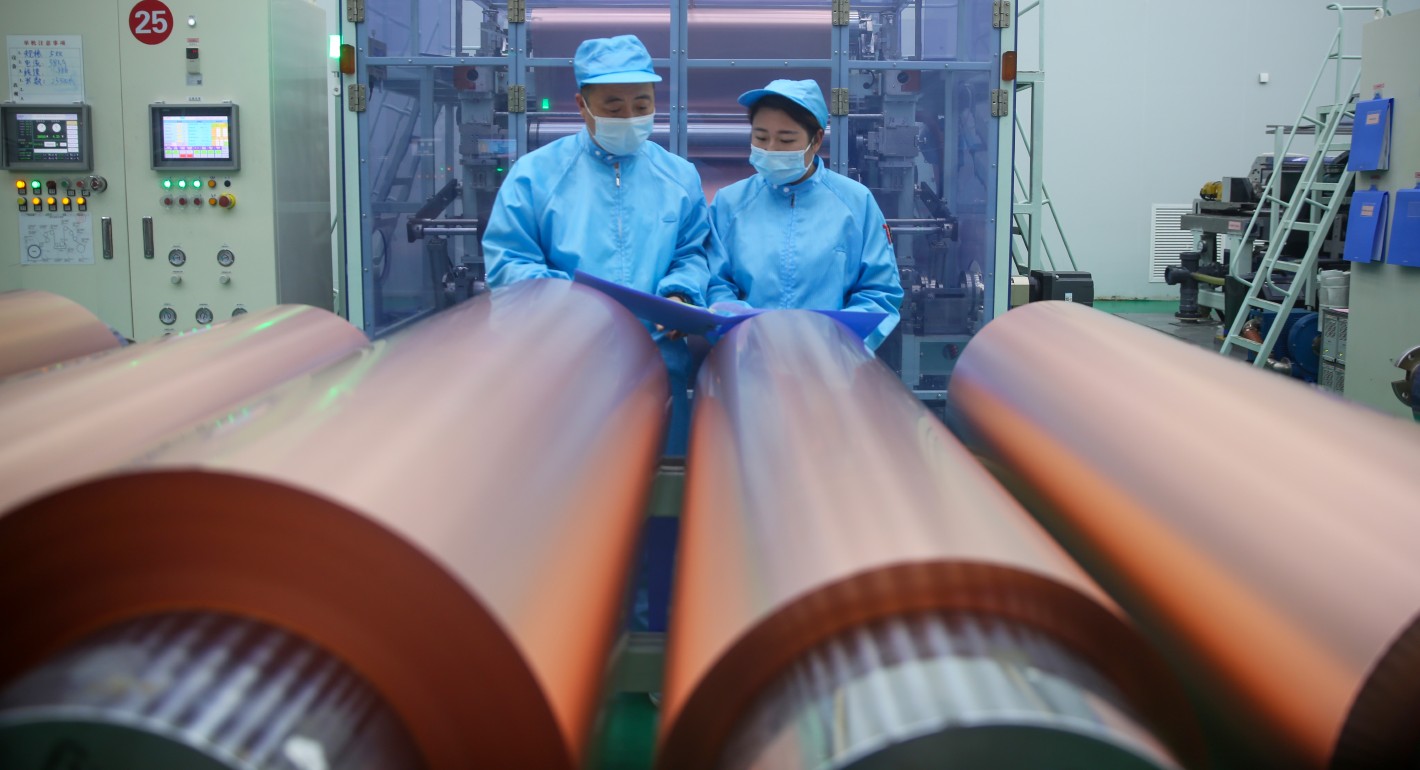
Over the past decade, China has moved from marginal player to major producer of all things batteries. The United States, Europe, and others are aiming to balance the market.

Milo McBride
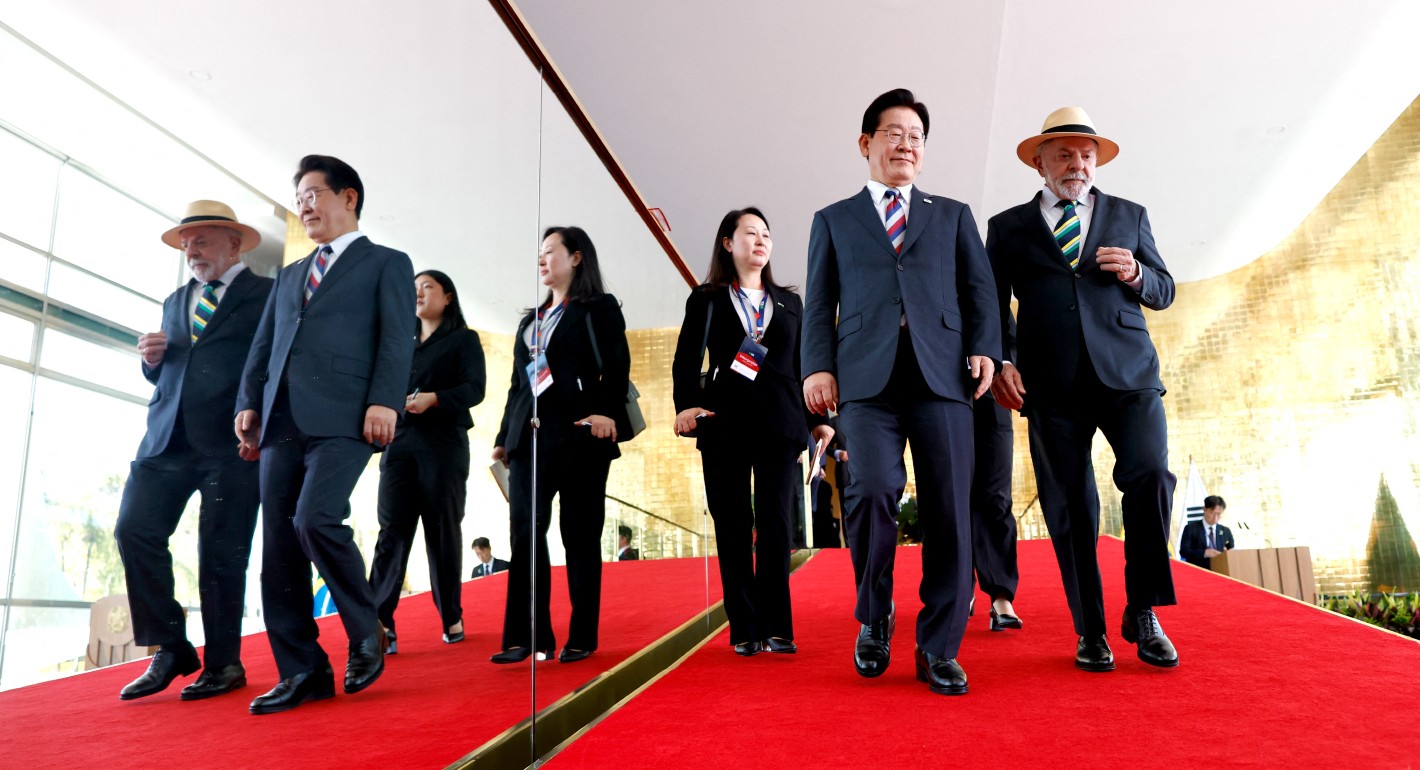
Lee’s tour shows how Seoul is reorganizing its diplomacy away from Pyongyang and toward industrial networks and the geography of the compute economy.

Darcie Draudt-Véjares

Most migrants may have left Ceuta, but the effects may linger.


Alejandro Martin Rodriguez, Sarah Yerkes