

Article
Thomas de Waal
{
  "authors": [
    "Thomas de Waal"
  ],
  "type": "commentary",
  "centerAffiliationAll": "",
  "centers": [
    "Carnegie Endowment for International Peace",
    "Carnegie Europe",
    "Carnegie Russia Eurasia Center"
  ],
  "collections": [],
  "englishNewsletterAll": "",
  "nonEnglishNewsletterAll": "",
  "primaryCenter": "Carnegie Europe",
  "programAffiliation": "",
  "programs": [],
  "projects": [],
  "regions": [
    "Caucasus",
    "Russia"
  ],
  "topics": [
    "Political Reform",
    "Democracy"
  ]
}
Source: Getty
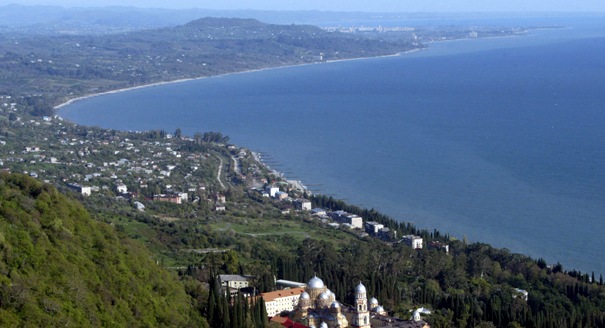
On June 1 Abkhaz President Alexander Ankvab was forced to resign. The next Abkhaz leader will rule a state that most of the world does not regard as legitimate. He will also struggle to win the same legitimacy at home as his predecessors enjoyed.
After Abkhazia’s embattled President Alexander Ankvab finally resigned on June 1, many analysts were still scrambling to find a geopolitical significance in the crisis which was not really there.
Both Ankvab and the opposition which forced him from office are loyal to Russia, Abkhazia’s only security and economic patron. There is no evidence that Moscow was backing one side or the other in the dispute, although some Russian officials undoubtedly had allies in each camp.
Ankvab had alienated many in Moscow—as well as in Abkhazia itself—with what was seen as a high-handed and personalized style of rule, which meant that the Kremlin did not rush to save him. But that is not the same thing as saying that Russia engineered his downfall.
Abkhaz have a tradition of popular assemblies ("skhod" in the Russian word) where collective decisions are made on matters of national import. At times of crisis, Abkhaz assemble at a sacred grove near the village of Lykhny to make collective decisions. In 1931, as Timothy Blauvelt has described, they rallied against collectivization.
In 1989 they gathered to demand enhanced status for Abkhazia in the Soviet system.
This tradition has a counterpart in Chechnya where decisions were always taken collectively in what has been described as "mountain democracy."
This is still democracy with limitations. It is a male-dominated affair. And it is based on ethnicity rather than on citizenship. In this crisis, Abkhazia's many Armenians and Russians were not consulted. They are still barely represented in parliament, even though in combined numbers they probably outnumber the Abkhaz. And there was no absolutely no way the Georgians of Gali, who live precariously under the de facto jurisdiction of the Abkhaz authorities, could make their views felt: they are the object of Abkhaz political debate, not a subject in it.
In 2004, Abkhazia shadowed Ukraine's Orange Revolution. There was a disputed election, popular protests and multiple legal and constitutional moves and counter-moves. The process was all the more amazing to watch because no one internationally (not even Russia at that point) recognized the legitimacy of the election. Yet the Abkhaz political class went through the process with utmost seriousness and the eventual victor, Sergei Bagapsh, came out on top with great public respect.
Last week's public gathering was a much less edifying spectacle. It ended with the president being chased out of his office and forced to resign. However unpopular Ankvab may have been, there was no proper process and the best that could be said about it was that there was no violence. This bodes badly as the republic tries to elect a new leader in August. The next Abkhaz leader will rule a state that most of the world does not regard as legitimate. There is nothing new in that, but he will also struggle to win the same legitimacy at home as his predecessors enjoyed.

Senior Fellow, Carnegie Europe
Thomas de Waal is a senior fellow at Carnegie Europe, specializing in Eastern Europe and the Caucasus.
Recent Work
Thomas de Waal
Thomas de Waal
Carnegie does not take institutional positions on public policy issues; the views represented herein are those of the author(s) and do not necessarily reflect the views of Carnegie, its staff, or its trustees.
Despite myriad challenges and occasional stumbles, the new Hungarian government is moving ahead with energy and conviction to uproot years of illiberalism and corruption and rebuild Hungarian democracy.

Thomas Carothers

European Commission President Ursula von der Leyen is about to give her annual address on the state of the EU. Here’s what she won’t—but should—say.

Rym Momtaz

Depleted financial reserves and a shrinking tax base mean it is no longer possible to simultaneously deliver high defense spending, price stability, and economic growth.

Alexandra Prokopenko

Radical-right parties are expected to do well in upcoming elections in four of the EU's biggest member states. If successful, they could prevent the union from addressing key challenges ahead.

Stefan Lehne
Blurring the line between humans and animals is a long-standing tradition in social utopian prose. In his latest novel, Leonid Bershidsky reminds us that in social experiments, people are often treated no differently than animals.

Alexander Baunov