

Commentary
Thomas de Waal
{
  "authors": [
    "Thomas de Waal"
  ],
  "type": "commentary",
  "centerAffiliationAll": "",
  "centers": [
    "Carnegie Endowment for International Peace",
    "Carnegie Europe",
    "Carnegie Russia Eurasia Center"
  ],
  "collections": [],
  "englishNewsletterAll": "",
  "nonEnglishNewsletterAll": "",
  "primaryCenter": "Carnegie Europe",
  "programAffiliation": "",
  "programs": [],
  "projects": [],
  "regions": [
    "Caucasus",
    "Russia",
    "Georgia"
  ],
  "topics": [
    "Political Reform",
    "Foreign Policy"
  ]
}
Source: Getty
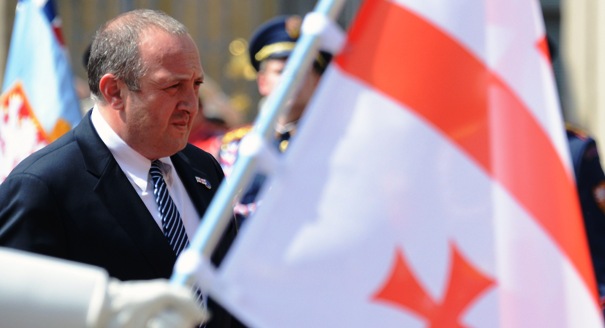
An exertion of soft power by stealth is Russia's best chance of re-establishing influence in Georgia. And its only chance of success is if the new economic relationship between the EU and Georgia fails to deliver results.
"What will the Russians do next?" This is the question I heard debated in multiple conversations in Georgia earlier this month.
Friday June 27 is a big day for Georgia, Moldova, and Ukraine, as their leaders travel to Brussels to sign Association Agreements with the European Union and agreements on deeper economic ties known as the Deep and Comprehensive Free Trade Area.
Moscow has already registered its disapproval. The Russian government has weapons to hand it can use in Moldova and Ukraine to try to slow the two countries' progress towards European integration. Ukraine is in a protracted crisis, largely of Russia's making. Moldova has a parliamentary election later this year in which the pro-Russian Communist Party is a major contender.
In a recent paper, Sergi Kapanadze, a former Georgian deputy foreign minister who now runs a think-tank in Tbilisi, has compiled a useful list of the "pressure points" that Russian can use to squeeze Georgia if it wants to.
They include expelling Georgian migrant workers from Russia, as happened in 2007; cutting off the large remittance flows; re-imposing a ban on Georgian exports of wine and agricultural products. Russia could also invite South Ossetia to call a referendum on unification with North Ossetia and the Russian Federation. This is the desire of the new majority party in the South Ossetian parliament and was discussed with Kremlin envoy Vladislav Surkov over the last few days.
The trouble with these measures, from Moscow's point of view, is that they would most likely produce the opposite effect of what was intended, further alienating Georgians from Russia.
Russia still has a much weaker foundation in Georgia than in either Moldova or Ukraine. In Georgia's recent municipal elections the party of former speaker of parliament Nino Burjanadze, who positioned herself as "the only opposition" with a pro-Russia and anti-Europe program won only 12 percent of the vote.
Years of aggressive behavior have reduced support for Russia amongst Georgians, despite many historical and religious ties.
That is why we can expect Russia to continue to use more carrots than sticks in Georgia.
A new rapprochement with Moscow since the Georgian Dream coalition took office in October 2012 has had results. Georgian wine has now recovered its position in the Russian market and more than 15 million bottles were sold in the first quarter of this year. Georgia took part in the Sochi Winter Olympic Games. Negotiations are taking place about easing visa restrictions.
Moscow will try to build a new support-base using friendly businesses, non-governmental organizations and elements in the church. Pro-Russian actors will portray the EU as a purveyor of decadence and a threat to Georgian traditional values. And they will try to exploit inevitable disappointment that the new free trade agreement with the EU is not providing instant relief from high unemployment.
In short, an exertion of soft power by stealth is Russia's best chance of re-establishing influence in Georgia. And its only chance of success is if the new economic relationship between the EU and Georgia fails to deliver results.

Senior Fellow, Carnegie Europe
Thomas de Waal is a senior fellow at Carnegie Europe, specializing in Eastern Europe and the Caucasus.
Recent Work
Thomas de Waal
Thomas de Waal
Carnegie does not take institutional positions on public policy issues; the views represented herein are those of the author(s) and do not necessarily reflect the views of Carnegie, its staff, or its trustees.

In an interview, Ian Lustick and Eli Clifton discuss their new book on why a prominent ally has so much influence in America.

Michael Young
Germany, India, and other middle powers can’t build frontier AI alone, and they risk being cut off if they depend on the United States or China. The way through is to build the capacity for a frontier sprint while hoping never to use it.

Anton Leicht, Sam Winter-Levy

Sergei Kiriyenko used Russia’s parliamentary vote to further hone his strategy of corporate mobilization that is designed to maximize votes for United Russia.

Andrey Pertsev

Before the next wave of EU enlargement takes place, the union needs to grapple with thorny questions of how power is distributed among its members.


Emil Sondaj Hansen, Ditte Brasso Sørensen
The real test may come after the leaders leave the room.



Sheena Chestnut Greitens, Oriana Skylar Mastro, Yukon Huang, …