

In The Media
Vikram Nehru
{
  "authors": [
    "Vikram Nehru"
  ],
  "type": "legacyinthemedia",
  "centerAffiliationAll": "dc",
  "centers": [
    "Carnegie Endowment for International Peace"
  ],
  "collections": [],
  "englishNewsletterAll": "asia",
  "nonEnglishNewsletterAll": "",
  "primaryCenter": "Carnegie Endowment for International Peace",
  "programAffiliation": "AP",
  "programs": [
    "Asia"
  ],
  "projects": [],
  "regions": [
    "Southeast Asia",
    "Indonesia"
  ],
  "topics": [
    "Political Reform",
    "Democracy"
  ]
}
Source: Getty
Tensions between the presidential candidates will test not only Indonesia’s democratic institutions but also the democratic credentials of its leaders and their followers.
Source: Nikkei Asian Review
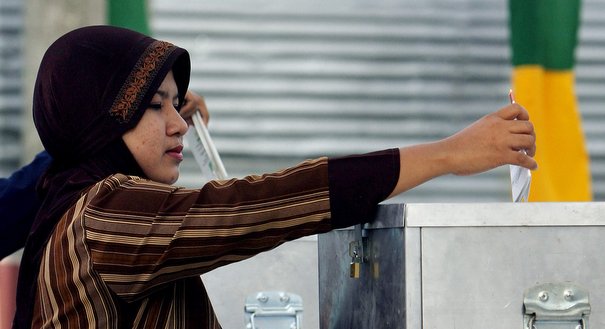
Indonesia's July 9 presidential election was a remarkable event. It was well organized, free of tension and violence, remarkably transparent, and implemented with immense civic pride. It was a celebration of democracy and an impressive display of political maturity.
Unfortunately, what followed has been less worthy of celebration. Indonesia's maturing democracy now faces its sternest test. Both candidates -- Joko "Jokowi" Widodo, Jakarta's enormously popular governor, and Prabowo Subianto, an ex-general -- have each claimed victory. Both have pointed to "quick counts" -- statistical projections of the official outcome by private survey agencies. Virtually all the reputed ones with strong track records for accuracy showed a Widodo win by a margin of 3-5 percentage points. A few with little or no track record and questionable antecedents showed a Subianto win.
The national focus has now shifted to the counting process. By July 12, votes had been tallied at the 478,685 polling stations. In coming days, these tallies will be tabulated and aggregated manually at five different levels -- village, sub-district, district, province and national. The aggregation at each level is designed to be transparent and robust, but will only be as good as the people running it. Tampering with the aggregation undetected will be almost impossible but cannot be dismissed altogether. Both candidates will have representatives present at every stage to make sure the system is followed. This phase, scheduled for completion by July 22, is widely expected to show that Widodo won the election.It is at the next stage where the electoral process could be more vulnerable. If he is designated the loser, Subianto will almost certainly challenge the official count in the Constitutional Court, although he has stated he will abide by the results of the official process. His campaign manager, Mahfud MD, was chief justice of the constitutional court at one time and could mount a formidable case. He will have considerable material from which to work. There were undoubtedly many polling teams that deviated from prescribed procedure, not for malafide reasons but on account of poor training or practical constraints. Each instance would be insufficient to overturn the result, but when taken together, a skilled judicial challenge could make much of them.
Mahfud will apply his skills on a weakened Constitutional Court after its chief justice, Akil Mochtar, was in June handed a life sentence for corruption. The beleaguered institution will now have to withstand intense political pressure and scrutiny while adjudicating challenges to the electoral process. Its role will be pivotal. The Constitutional Court's decision is final and not subject to appeal.
So Indonesia's electoral limbo will last not just until July 22, as some have suggested, but could continue until Aug. 24, the date by which the Constitutional Court must render its final verdict.
The aftermath of the Constitutional Court's decision will be just as crucial. Not only must both candidates accept the decision, so must their followers. Notwithstanding the request by outgoing President Susilo Bambang Yudhoyono for restraint by both sides, temperatures are likely to rise as the process grinds forward. The country is divided. Passions are running high.
The conduct of the two candidates over the next six weeks will be an important factor. Overt -- or covert -- signals to undermine the tabulation process will be met with fierce resistance. Much is at stake. The two candidates have offered very different views of Indonesia's future. Political and financial fortunes of powerful individuals and groups will be made and lost on the election's outcome. Neither side will give up easily.
Such extraordinary tensions will test not only Indonesia's democratic institutions but also the democratic credentials of its leaders and their followers. It pays to remember that Indonesia's democracy is barely 15 years young. The institutions underpinning its democracy have been maturing, but their competence and independence remain doubtful and have never been tested in the way they are being tested now.
Yudhoyono, whose two-term limit ends in October, has an important stake in ensuring that the electoral process for choosing his successor must not only be fair but be seen to be fair. Despite a reputation for indecisiveness, he has successfully managed Indonesia's emergence as a vibrant democracy, a strong economy and a respected member of the Group of 20 countries. He would not want to see his legacy tarnished by missteps in the transition to Indonesia's next leader. To safeguard that legacy, Yudhoyono should do everything in his power to give the country's Election Commission and the Constitutional Court the space, backbone and independence to do a credible job.
Indonesia is entering yet another short but momentous period that will temper its democracy and signify the direction it wants to take as a nation. It has been through worse in the past and emerged the better for it. For the sake of its people, the region and the world, let's hope it can do so again.
This article was originally published in the Nikkei Asian Review.
Former Nonresident Senior Fellow, Asia Program
Nehru was a nonresident senior fellow in the Carnegie Asia Program. An expert on development economics, growth, poverty reduction, debt sustainability, governance, and the performance and prospects of East Asia, his research focuses on the economic, political, and strategic issues confronting Asia, particularly Southeast Asia.
Recent Work
Vikram Nehru
Vikram Nehru
Carnegie does not take institutional positions on public policy issues; the views represented herein are those of the author(s) and do not necessarily reflect the views of Carnegie, its staff, or its trustees.

In the discussions made possible by the State Duma election campaign, one question is being asked more and more loudly. “What next?”

Andrey Pertsev
Saied’s main accomplishment has been to destroy a decade’s worth of democratic progress.

Sarah Yerkes
As India undergoes a demographic transition, its cities will be its economic powerhouse—but only if it accurately captures city growth and empowers cities to support their citizens.
Apoorva Jadhav
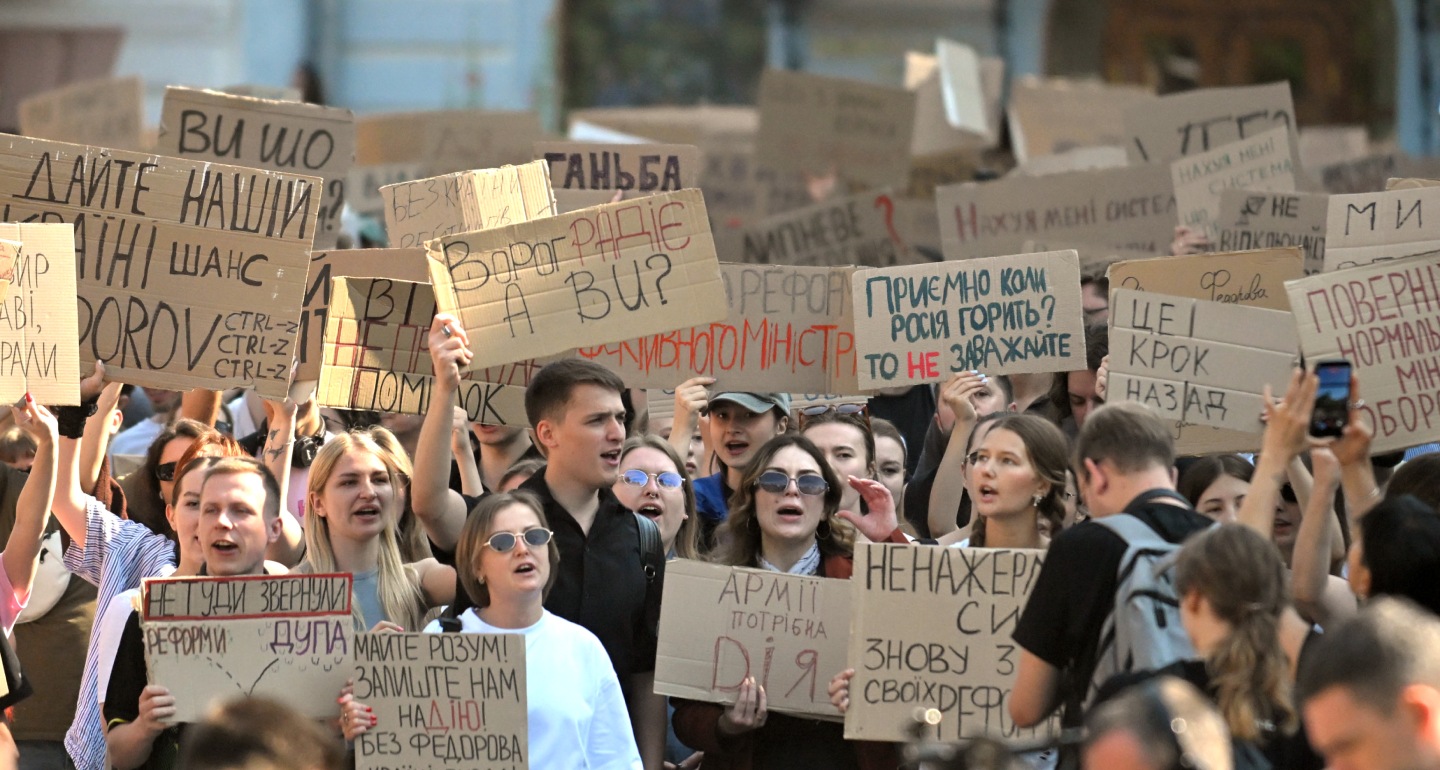
Even if the terms of a ceasefire or peace settlement are satisfactory to most Ukrainians, the country’s democracy will face its fair share of challenges.
Petro Burkovskyi, Olexiy Haran

The hybrid warfare landscape is evolving rapidly, leaving policymakers without clear strategies. To better inform their work in addressing emerging challenges, governments must dig deeper into the underlying dynamics at play.


Raluca Csernatoni, Alicia Wanless