

Article
Wang Tao
{
  "authors": [
    "Wang Tao"
  ],
  "type": "legacyinthemedia",
  "centerAffiliationAll": "",
  "centers": [
    "Carnegie Endowment for International Peace",
    "Carnegie China"
  ],
  "collections": [],
  "englishNewsletterAll": "",
  "nonEnglishNewsletterAll": "",
  "primaryCenter": "Carnegie China",
  "programAffiliation": "",
  "programs": [],
  "projects": [],
  "regions": [
    "East Asia",
    "China"
  ],
  "topics": [
    "Climate Change"
  ]
}
Source: Getty
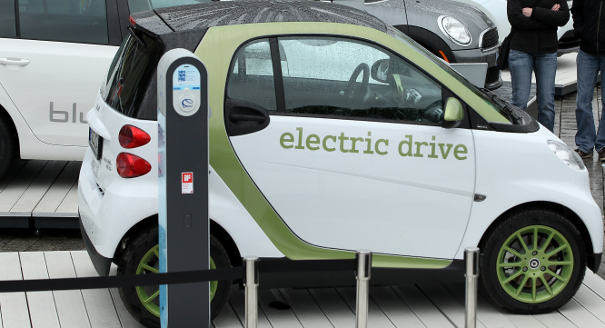
Beijing is implementing a policy to bring five million electric vehicles to Chinese roads by 2020.
Source: CCTV
Appearing on CCTV, Carnegie–Tsinghua’s Wang Tao discussed Beijing’s policy to bring five million electric vehicles to Chinese roads by 2020. The government is also introducing incentives to stimulate production and working towards expanding electric vehicle infrastructure, including charging stations, he said. Although these policies have helped increase electric vehicle purchases, Wang explained that most consumers remain concerned about the user experience and personal convenience of using electric vehicles and that there is currently a mismatch between those buying electric vehicles and the policies being introduced by the government. For example, he added, it costs more to purchase a private charging post than the electric vehicle itself and most public charging stations remain in the Beijing suburbs, not in the heart of the city where they are needed.
Former Nonresident Scholar, Carnegie-Tsinghua Center for Global Policy
Wang Tao was a nonresident scholar in the Energy and Climate Program based at the Carnegie–Tsinghua Center for Global Policy.
Recent Work
Wang Tao
Wang Tao, Yang Yifang
Carnegie does not take institutional positions on public policy issues; the views represented herein are those of the author(s) and do not necessarily reflect the views of Carnegie, its staff, or its trustees.

By focusing only on hard security, the Shield ignores the conditions that fuel cartel power.


Alejandro Martin Rodriguez, Kayly Ober

China’s banking crisis in the 2000s was resolved by transferring the costs to households through financial repression—a decision that recapitalized the banks while exacerbating the structural imbalances that continue to shape the Chinese economy today.

Michael Pettis
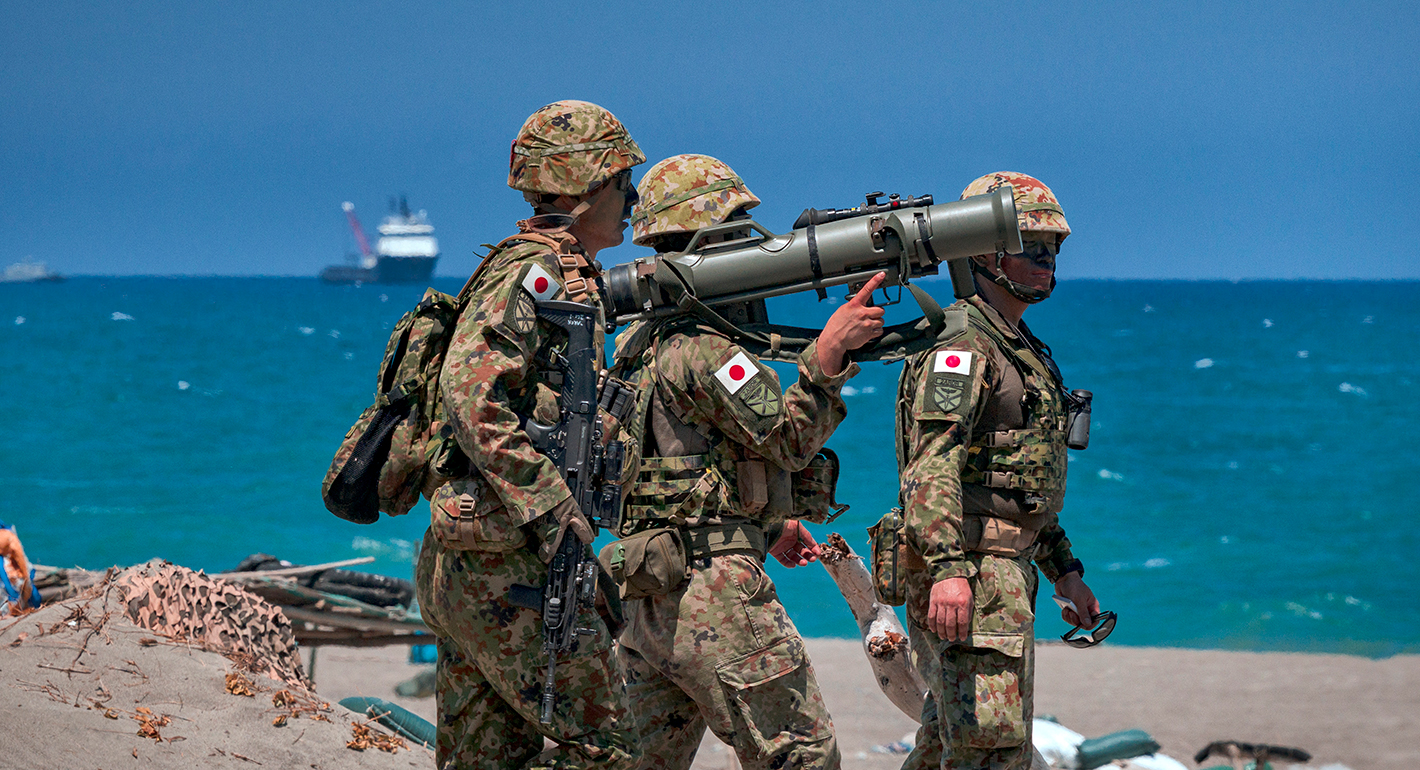
Japan’s revision of its three strategic documents reflects an intention to keep the United States engaged in the region while Japan fills any vacuums of U.S. power to preserve the Indo-Pacific order.
Ryo Sahashi

Chinese biotech companies have been on the receiving end of U.S. economic coercion. Yet their responses have differed significantly because firm and state interests are not uniformly aligned. For Washington, treating all Chinese tech firms the same, irrespective of their actual interests, risks pushing them farther into Beijing’s corner.

Xue Gong
Over the past decade, China has moved from marginal player to major producer of all things batteries. The United States, Europe, and others are aiming to balance the market.

Milo McBride