

In The Media
Lina Khatib
{
  "authors": [
    "Lina Khatib"
  ],
  "type": "legacyinthemedia",
  "centerAffiliationAll": "dc",
  "centers": [
    "Carnegie Endowment for International Peace",
    "Malcolm H. Kerr Carnegie Middle East Center"
  ],
  "collections": [],
  "englishNewsletterAll": "menaTransitions",
  "nonEnglishNewsletterAll": "",
  "primaryCenter": "Malcolm H. Kerr Carnegie Middle East Center",
  "programAffiliation": "MEP",
  "programs": [
    "Middle East"
  ],
  "projects": [],
  "regions": [
    "Gulf",
    "Levant",
    "Syria",
    "Iraq",
    "Middle East"
  ],
  "topics": [
    "Political Reform",
    "Security"
  ]
}
Source: Getty
Hostages have become a key tool of both propaganda and war for the Islamic State. However, the global response is failing to curb this terrorist strategy.
Source: BBC News
Hostages have become a key tool of both propaganda and war for the Islamic State (IS). Starting with the murder of local hostages from Syria and Iraq last year, IS has now expanded its wave of beheadings to include other Arab and Western hostages, sparking anger and disbelief across the world. However, the global response is failing to curb this terrorist strategy.
There appears to be little international co-ordination on the release of hostages.
The coalition that has been formed to fight IS may be synchronizing air strikes and training for the Syrian opposition, but it does not seem to have a harmonized plan in place for dealing with hostages.A number of states are said to have paid significant sums of money in ransom for their kidnapped nationals, while others have agreed to prisoner-exchange deals. The United States attempted to rescue some of its held citizens through a military operation but it failed due to unreliable intelligence about their location.
The lack of a coherent strategy in this regard is enabling IS to continue to try to increase its demands in return for releasing detainees. Meanwhile, relatives of a number of hostages are at a loss regarding where and how to work towards getting their loved ones released.
With no government schemes in place to offer support and guidance to those relatives, they have desperately resorted to public campaigns to draw attention to the plight of the hostages.
But public campaigns, well-meaning as they are, carry two significant risks.
First, they make the hostages in question more covetable as “prizes” by IS: The higher the profile a hostage appears to have, the more notoriety IS gains from their execution (or ransom money from their exchange).
Second, the more the media broadcast messages by families of hostages pleading for their release, the more empowered IS feels.
Videos of frail parents, wives, and friends talking about their loved ones as “good people” fail to move an organization that dehumanizes its enemies.
Instead of viewing those families as individuals, IS sees them as representatives of its degenerate adversary, their pleas illustrations of the enemy begging on its knees.
In addition, pleading messages have unfortunately rarely worked as a method of releasing hostages held by terrorist organizations.
Campaigns led by Muslim figures are also failing to push IS to release hostages.
The beheading of Alan Henning on the eve of the Eid al-Adha holiday, despite a widespread campaign emphasizing his respect for Islam, should be a wake-up call to those who assume that IS might be swayed by calls for compassion.
Muslim-led campaigns should not be directed at IS but at Muslims at large, carrying a message of defiance and condemnation, not humiliation.
Defiance would directly serve to delegitimize IS, which derives much of its strength from cultivating an image as an unchallengeable organization.
And here the media are inadvertent culprits.
The global media have been reproducing propaganda material disseminated by IS. This is only giving the group free publicity, particularly as IS relies on the mainstream media to bolster its image in its bid to increase its worldwide recruitment.
Although Western news channels are not broadcasting the videos of beheadings, they continue to show stills from the videos.
Images showing black-clad IS fighters towering over kneeling hostages dressed in orange jumpsuits reinforce the idea of IS as powerful.
The color of the jumpsuits has been deliberately chosen by the group to resemble that worn by detainees in Guantanamo Bay, thereby signaling a reversal of power dynamics.
Every time such an image is shown, it signals to IS sympathizers that the group indeed prevails and is engaged in acts of revenge against the injustice of the West and its “Crusader” allies.
It is now time for both governments and media organizations to reflect on their indirect role in reinforcing the messages of IS.
Hostage crises are at the heart of a debate that should urgently take place.
Measures such as media blackouts, government outreach and guidance to hostage families, and international cooperation on how to deal with individual hostage cases should be priorities for countries of the anti-IS coalition.
There is a wealth of useful information available from those who have successfully negotiated the release of hostages and from released detainees.
Only when IS begins to see that hostage-taking is no longer an effective political and propaganda tool will the current wave of beheadings begin to wane.
The international policy and media community shares the responsibility for driving this forward.
Former Director, Middle East Center
Khatib was director of the Carnegie Middle East Center in Beirut. Previously, she was the co-founding head of the Program on Arab Reform and Democracy at Stanford University’s Center on Democracy, Development, and the Rule of Law.
Recent Work
Lina Khatib
Lina Khatib
Carnegie does not take institutional positions on public policy issues; the views represented herein are those of the author(s) and do not necessarily reflect the views of Carnegie, its staff, or its trustees.
The decision of Lebanon’s parliament may look exceptional, but in reality it is not.
Issam Kayssi
The countries in the region are managing the fallout from Iranian strikes in a paradoxical way.

Angie Omar

French President Emmanuel Macron has unveiled his country’s new nuclear doctrine. Are the changes he has made enough to reassure France’s European partners in the current geopolitical context?

Rym Momtaz, ed.
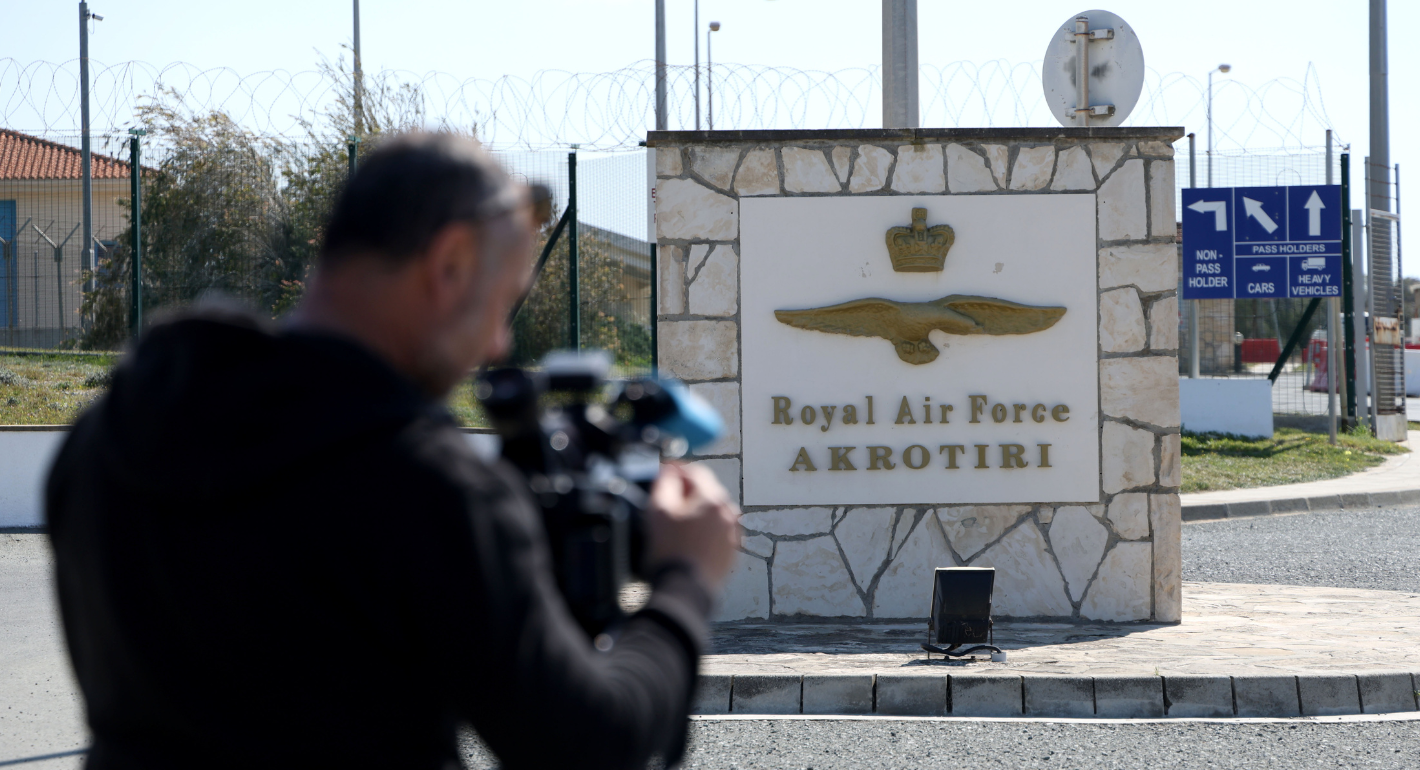
The drone strike on the British air base in Akrotiri brings Europe’s proximity to the conflict in Iran into sharp relief. In the fog of war, old tensions in the Eastern Mediterranean risk being reignited, and regional stakeholders must avoid escalation.

Marc Pierini

In an interview, Hassan Mneimneh discusses the ongoing conflict and the myriad miscalculations characterizing it.

Michael Young