

Paper
Ashley J. Tellis
{
  "authors": [
    "Ashley J. Tellis"
  ],
  "type": "legacyinthemedia",
  "centerAffiliationAll": "dc",
  "centers": [
    "Carnegie Endowment for International Peace"
  ],
  "collections": [],
  "englishNewsletterAll": "ctw",
  "nonEnglishNewsletterAll": "",
  "primaryCenter": "Carnegie Endowment for International Peace",
  "programAffiliation": "SAP",
  "programs": [
    "South Asia"
  ],
  "projects": [],
  "regions": [
    "North America",
    "United States",
    "South Asia",
    "India"
  ],
  "topics": [
    "Foreign Policy"
  ]
}
Source: Getty
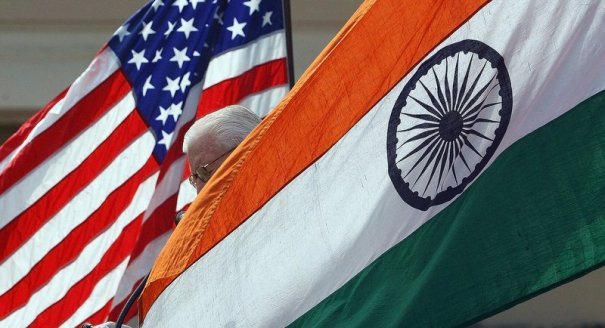
Barack Obama’s return to India as the first U.S. president invited to India’s Republic Day celebrations promises to rejuvenate the bilateral relationship.
Source: Economic Times
Barack Obama’s return to India as the first ever US president invited to India’s Republic Day celebrations promises to rejuvenate the bilateral relationship. As the first American president to also visit India twice during his term, Obama’s journey to New Delhi signifies the enormous transformation in bilateral ties that has occurred since George W Bush completely changed the way the United States and India have engaged one another. Ever since India’s independence, New Delhi and Washington have struggled to build a productive partnership that serves their common interests. Although this task is still incomplete, the world’s largest and oldest democracies today are closer than they have ever been to realising that objective.
In contemporary times, the Indian leader who deserves disproportionate credit for courageously reimagining the relationship is Atal Bihari Vajpayee. Vajpayee not only brushed aside the old shibboleths of nonalignment to boldly declare the two nations “natural allies”, his term in office actually exemplified that vision, proving through numerous actions that India could match, if not exceed, the American desire for a robust strategic partnership. Equally importantly, he pursued this ambition entirely from the vantage point of advancing India’s own strategic interests, a policy that his successor, Manmohan Singh, also made his own.
The biggest surprise in this context has been Narendra Modi. Modi’s long grievances against official Washington prior to becoming prime minister are well known. Yet to the dismay of many of his supporters, who had desired his continued pique towards the United States, Modi reciprocated Obama’s overtures early and dramatically. Why he did so will continue to evoke speculation. It may have been, as some have suggested, a way to refute many of the ogreish perceptions about him that had grown roots in Washington. Or it may have been because it provided an opportunity to reward his many diaspora supporters who had loyally stood by him over the years.Whatever the truth, there was probably a simpler and more direct calculation as well: like Vajpayee before him, Modi discerned that the United States and India stood to profit from close and productive bilateral ties. In fact, the success of his “India First” policy actually required a durable partnership with both America’s society and its state. Consequently, the faster bilateral relations were put back on track, the better. Given what has happened since Modi triumphantly strode into New York City and out of Washington, DC, there is even more reason to believe that, at the end of the day, his dramatic outreach to the United States has been driven by a singularly patriotic judgment: close ties with America are unusually good for India — the rest simply does not matter.
The remarkable rapport he has developed with Obama, thanks to the president’s extraordinary courtesies towards him in Washington, has only strengthened his conviction about the importance of strong US-Indian ties for aiding India’s transformation at home. His surprise invitation to Obama to come back to India as the chief guest for its Republic Day celebrations, then, serves notice powerfully — to his party, country, and the world at large — that the United States looms large in his vision of what contributes to India’s comprehensive success.
Given this proclamation, the widespread inquisitiveness about the visit’s “deliverables” in New Delhi and Washington risks missing the larger point. To be sure, both countries ought to discuss seriously how their relationship can be advanced in practical ways. And they will — leading to many initiatives on defence, energy, environment and economic cooperation that will be announced during the president’s trip. But even these subjects in their ambitious totality ought not to detract from the central issue: that after long anxiety about how Modi would view the United States, his invitation to Obama signals beyond a shadow of doubt not only that he cherishes his personal relationship with the president but also that Washington remains of exceptional importance to New Delhi.
Oddly, in Modi’s case, his actions have spoken louder than his words. In his private conversation with President Obama in New Delhi, he will have the opportunity to rectify what seemed missing during his US visit: his articulation of the meaning, desirability and consequences of the US-Indian strategic partnership. Even as he prepares for this discussion, however, his invitation to Barack Obama unequivocally conveys his desire for an abiding strategic partnership with the United States — for India’s own sake. In so doing, he has not only joined his illustrious predecessor Atal Bihari Vajpayee, but has also come full circle, dramatically embracing the country that he was most ambivalent about until recently.
This article was originally published in the Economic Times.
Former Senior Fellow
Ashley J. Tellis was a senior fellow at the Carnegie Endowment for International Peace.
Recent Work
Ashley J. Tellis
Ashley J. Tellis
Carnegie does not take institutional positions on public policy issues; the views represented herein are those of the author(s) and do not necessarily reflect the views of Carnegie, its staff, or its trustees.

Trump has promised Belarus a massive potash deal. But Minsk is seeking something greater: restored Western transit and greater room for maneuver from Russia.

Balázs Jarábik

The real test may come after the leaders leave the room.



Sheena Chestnut Greitens, Oriana Skylar Mastro, Yukon Huang, …

The Horn of Africa countries are among those facing a new security calculus.


Andrew Leber, Lesley Anne Warner

The new U.S.–Denmark–Greenland agreement will help Washington exert political, economic, and financial dominance under the guise of security. Yet, it acknowledged Copenhagen’s and Nuuk’s sovereignty on the island.

Marc Pierini

The nuclear relationship between China and the United States is increasingly shaped by widening perception gaps rather than deliberate strategic design.

Tong Zhao