

Commentary
Dmitri Trenin
{
  "authors": [
    "Dmitri Trenin"
  ],
  "type": "legacyinthemedia",
  "centerAffiliationAll": "",
  "centers": [
    "Carnegie Endowment for International Peace",
    "Carnegie Russia Eurasia Center"
  ],
  "collections": [],
  "englishNewsletterAll": "",
  "nonEnglishNewsletterAll": "",
  "primaryCenter": "Carnegie Russia Eurasia Center",
  "programAffiliation": "",
  "programs": [],
  "projects": [],
  "regions": [
    "East Asia",
    "China",
    "Russia"
  ],
  "topics": [
    "Economy",
    "Trade",
    "Foreign Policy"
  ]
}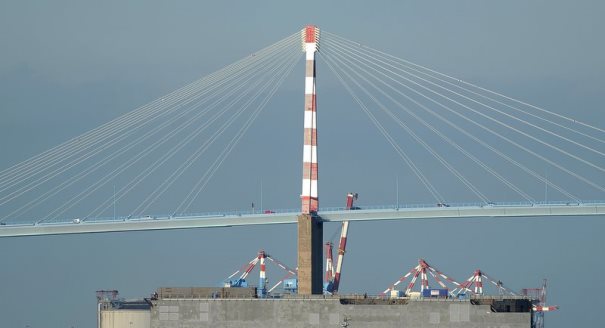
Source: Getty
Russia’s “pivot to Asia” is meeting with a number of challenges, such as bureaucratic inertia, lack of workable ideas, and high levels of corruption. However, there are ways of dealing with all of them.
Source: Global Times
Russia's "pivot to Asia" is meeting with a number of challenges. The principal ones are bureaucratic inertia; lack of workable ideas; and high levels of corruption. Deepening economic recession, the dramatic drop in the oil price, and Western sanctions compound the situation. And, of course, Russia's small population east of the Urals makes its Siberian and Far Eastern regional market unattractive to foreign investors. Yet, there are ways of dealing with all of them.
Russia is traditionally run in a top-down fashion. The "pivot to Asia" was originally President Vladimir Putin's idea, which he then imposed on the essentially inert and disinterested bureaucracy. In order to make aides, ministers and governors follow the boss's lead, Putin had to keep the pressure on them. With the outbreak in 2014 of the Ukraine crisis and the incorporation of Crimea, the Kremlin's attention has shifted, and the government's priorities have changed.It is precisely the rupture with the West, however, that make outreach to the East even more relevant. Russia faces the need to craft a closer and more productive relationship with China, the biggest economy outside the US-led coalition that has sanctioned Russia for its policies in Ukraine.
The way to break through the bureaucratic inertia remains Kremlin leadership. In the next few months, Putin will be seeing Chinese President Xi Jinping three times: in Moscow in May, in Ufa in July, and in Beijing in September. Accords which may follow from these summits would stimulate bureaucratic activism.
New accords, in turn, require new ideas. Russia needs to look at the reasons why its pet infrastructure projects such as upgrading the Transsiberian and the Baikal-Amur railroads have yet to take off.
Meanwhile, it should respond to those that the Chinese have already announced and begun to implement. One that clearly stands out is building a high-speed rail link between Beijing and Moscow with a connection to Europe - Berlin and Helsinki - would open immense economic opportunities.
Speeding up the passage of freight traffic between China and Europe is another area of potential collaboration. The sections of the road that pass through Kazakhstan and Belarus would tie in Russia's closest partners in Eurasia. Rather than competing against each other, the Eurasian Economic Union and the Silk Road economic belt can find synergies.
Russia itself should take the lead in opening the Northern Sea Route for international navigation. China is known to have a major interest in the matter. Creating infrastructure along the Arctic and Pacific coast of Russia would open up the country's northern façade, spurring economic and social development from Kamchatka to Kola.
Moscow has growing concerns about the security of its High North territories, and economic development of these areas in cooperation with China would bolster its position there. Having agreed in principle to allow China access to its energy deposits, Moscow now needs to lay down the ground rules for expanded energy partnership with Beijing.
Other ideas that have been floated, but not yet acted upon include expanding food production in southern Siberia for the Asian market; engaging with Asian countries in scientific and technological cooperation; and internationalizing Russia's educational system through closer links to Asian universities.
When it is finished, Russia's new space center in the Far East, Vostochny, can serve the needs of the region. Bureaucracy alone cannot do this. The Kremlin has to unchain the energies of the Russian business community, and support scientists, farmers and college professors and students.
Other activities, however, have to be reined in. The recent arrest of Alexander Khoroshavin, the governor of Sakhalin accused of corruption, illustrates the salient issue of criminality in the Russian Far East, which is reputed to be exceptionally bad even by Russian standards.
The arrest, however, just scratches the surface. Without cleansing the bureaucratic corps and its eventual restructuring on a meritocratic basis, Russia's governance will remain exceedingly dysfunctional.
The same goes for the courts system. These are, of course, fundamental issues, but without addressing them there can be no way forward for Russia as a whole and for its relations with its Asian neighbors in particular.
For the foreseeable future, China is likely to be Russia's main foreign partner, and the economic and political importance of Asia to Russia will rise, even as Europe's will continue to recede. It is time for Moscow elites to begin taking this new situation more seriously.
Former Director, Carnegie Moscow Center
Trenin was director of the Carnegie Moscow Center from 2008 to early 2022.
Recent Work
Dmitri Trenin
Dmitri Trenin

For every ruble allocated to social policy, health, and education in 2027, double that amount is earmarked for the army, the police, and the security services.

Alexandra Prokopenko
The acknowledgment has sparked fears of a new arms race with China and Russia.

Chris O’Meara
Smaller powers cannot go it alone, but Canadian history shows that integration with the United States will not always be benign.
Paul Samson

The European Commissioner for Trade is headed to China. But after President Xi’s bridge-building visit to Washington, can a more isolated EU overcome Beijing’s stranglehold on critical raw materials? Who will blink first?

Rym Momtaz, ed.
The summit may be remembered as a fatal blunder, when Washington, Beijing, and the AI industry collectively chose ceremony over action.
Jeffrey Prescott