

Article
C. Raja Mohan, Darshana M. Baruah
{
  "authors": [
    "C. Raja Mohan"
  ],
  "type": "legacyinthemedia",
  "centerAffiliationAll": "dc",
  "centers": [
    "Carnegie Endowment for International Peace",
    "Carnegie India"
  ],
  "collections": [],
  "englishNewsletterAll": "ctw",
  "nonEnglishNewsletterAll": "",
  "primaryCenter": "Carnegie India",
  "programAffiliation": "SAP",
  "programs": [
    "South Asia"
  ],
  "projects": [],
  "regions": [
    "Asia",
    "South Asia",
    "India",
    "East Asia",
    "China"
  ],
  "topics": [
    "Foreign Policy",
    "Nuclear Policy"
  ]
}
Source: Getty
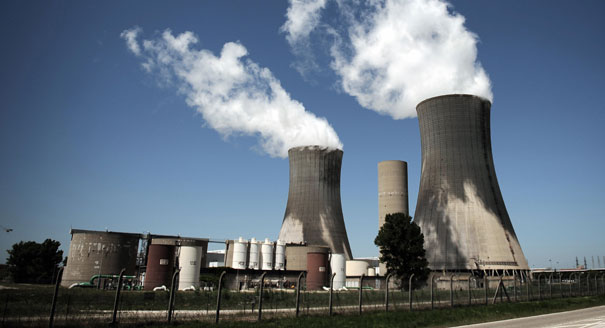
India should judge the possibilities for civil nuclear cooperation with China on the basis of technical merit and economic costs. Delhi should not allow political reservations, especially on the Sino-Pak nuclear nexus, to come in the way of atomic energy cooperation between India and China.
Source: Indian Express
The idea of civil nuclear cooperation between India and China might sound counter intuitive, but has long been in the realm of interesting possibilities between the two countries.
If Prime Minister Narendra Modi and his Chinese interlocutors unveil this week a political agreement to launch substantive civil nuclear energy cooperation, they could help reduce the negative salience of the atomic question in bilateral relations.
China’s assistance to Pakistan’s nuclear weapon programme in the past, its harsh reaction to India’s atomic tests in 1998, opposition to the India-U.S. nuclear deal of 2005, and the more recent deployment of Chinese nuclear submarines in the Indian Ocean have all made the atomic discourse between Delhi and Beijing a confrontational one.But the dark story of India-China nuclear engagement has not been without moments of brightness. In the early 1990s, when Delhi was struggling to ensure supply of enriched uranium to the U.S.-built Tarapur reactors, China stepped in to help out.
During the visit of President Hu Jintao to Delhi in November 2006, the two sides began to discuss proposals for launching more serious atomic engagement between the two countries. His successor Xi Jinping’s travel to India last September saw a more definitive affirmation of the case of civil nuclear energy cooperation between Delhi and Beijing.
“As large developing countries committed to promoting the use of clean energy”, Modi and Xi had declared, “India and China believe that expansion of civil nuclear energy program is an essential component of their national energy plans to ensure energy security”.
The two leaders agreed to “carry out bilateral cooperation in civil nuclear energy in line with their respective international commitments, including working level consultations between the Department of Atomic Energy of India and the China Atomic Energy Authority.”
It is not clear if enough consultations have taken place between the two atomic energy establishments to produce an MoU for example on the sale of Chinese nuclear power reactors to India during Modi’s visit.
Although the Indian side is mum on the question, Chinese officials speaking to the Indian media in recent weeks have expressed their strong interest in joining other countries in developing India’s nuclear power sector. Over the last two decades, China’s civilian atomic energy industry has matured thanks to an emphasis on development of indigenous capabilities through international cooperation.
Beijing is now eager to export its nuclear power reactors. Besides its plans to build new reactors in Pakistan, China has been exploring export opportunities in Argentina, Britain and Romania.
India should judge the possibilities for civil nuclear cooperation with China on the basis of technical merit and economic costs. Delhi should not allow political reservations, especially on the Sino-Pak nuclear nexus, to come in the way of atomic energy cooperation between India and China.
Despite their multiple differences and growing strategic contestation in Asia, China and the United States are eager to develop nuclear energy cooperation. President Barack Obama has asked the U.S. Senate this week to approve a new 30-year civil nuclear cooperation agreement with China.
The agreement will allow the exchange of nuclear material, equipment and technology between the two countries. Climate change has been a major driver behind the Obama Administration’s decision. It should also animate the discussions between Modi and the Chinese leadership on moving quickly towards atomic energy cooperation.
This article was originally published in the Indian Express.
Former Nonresident Senior Fellow, Carnegie India
A leading analyst of India’s foreign policy, Mohan is also an expert on South Asian security, great-power relations in Asia, and arms control.
Recent Work

C. Raja Mohan, Darshana M. Baruah


Alexander Gabuev, Paul Haenle, C. Raja Mohan, …
Carnegie does not take institutional positions on public policy issues; the views represented herein are those of the author(s) and do not necessarily reflect the views of Carnegie, its staff, or its trustees.
Why governance of rapidly evolving technology will be distributed and complex.


Stewart Patrick, Scott Singer

It should address the shortcomings of previous crisis communication efforts and adapt to the demands of frontier AI.

Lucy Luo

Washington’s decision to support some UN functions while letting others wither is pulling the organization apart at the seams.
Stewart Patrick, Theodore Zaritsky

Are Germany’s economic, industrial, and political struggles becoming a liability for the EU’s ability to rise to the geopolitical moment?

Rym Momtaz, ed.

China’s police training infrastructure construction projects provide benefits to recipient countries, promote China’s image as a major global security provider, and are likely to reinforce alignment between Beijing’s security priorities and those of countries in the Global South.


Cameron Waltz, Sheena Chestnut Greitens, Kim Nguyen, …