• Research
  • Emissary
  • About
  • Experts
Carnegie Global logoCarnegie lettermark logo
DemocracyIran
  • Donate
{
  "authors": [
    "Douglas H. Paal"
  ],
  "type": "legacyinthemedia",
  "centerAffiliationAll": "dc",
  "centers": [
    "Carnegie Endowment for International Peace"
  ],
  "collections": [],
  "englishNewsletterAll": "asia",
  "nonEnglishNewsletterAll": "",
  "primaryCenter": "Carnegie Endowment for International Peace",
  "programAffiliation": "AP",
  "programs": [
    "Asia"
  ],
  "projects": [],
  "regions": [
    "North America",
    "United States",
    "East Asia",
    "China"
  ],
  "topics": [
    "Economy",
    "Foreign Policy"
  ]
}
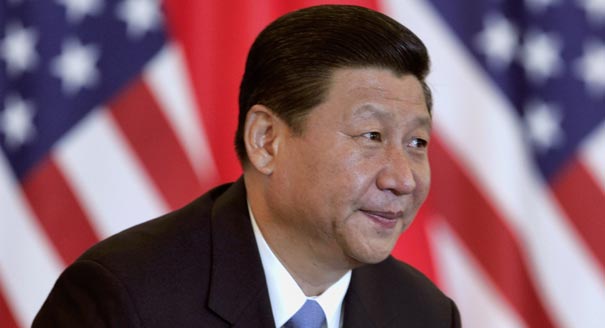
Source: Getty

In The Media

Will Xi’s State Visit Change U.S.-China Ties?

What can the global community expect ahead of Chinese President Xi Jinping’s state visit to the United States?

Link Copied
By Douglas H. Paal
Published on Sep 22, 2015
Program mobile hero image

Program

Asia

The Asia Program in Washington studies disruptive security, governance, and technological risks that threaten peace, growth, and opportunity in the Asia-Pacific region, including a focus on China, Japan, and the Korean peninsula.

Learn More

Source: CNBC

Speaking on CNBC, Carnegie’s Douglas H. Paal discussed what Xi and Obama are likely to discuss when they meet this week. Paal said that Xi will try to reassure Obama on China’s currency devaluation and cybersecurity. With regard to cybersecurity, Paal pointed out that the United States and China have recently made a “no first use” agreement, which has not been widely reported by American media outlets.

This interview was originally broadcast on CNBC.

About the Author

Douglas H. Paal

Distinguished Fellow, Asia Program

Paal previously served as vice chairman of JPMorgan Chase International and as unofficial U.S. representative to Taiwan as director of the American Institute in Taiwan.

    Recent Work

  • Paper
    America’s Future in a Dynamic Asia

      Douglas H. Paal

  • Q&A
    U.S.-China Relations at the Forty-Year Mark
      • +1

      Douglas H. Paal, Tong Zhao, Chen Qi, …

Douglas H. Paal
Distinguished Fellow, Asia Program
Douglas H. Paal
EconomyForeign PolicyNorth AmericaUnited StatesEast AsiaChina

Carnegie does not take institutional positions on public policy issues; the views represented herein are those of the author(s) and do not necessarily reflect the views of Carnegie, its staff, or its trustees.

More Work from Carnegie Endowment for International Peace

  • Article
    Separable, not Separate: Governing Europe’s Collective Defense

    European NATO countries are wrestling with the possibility of U.S. disengagement from the alliance. With the continent’s security increasingly uncertain, governments must restore the credibility of their collective defense.

      Hans-Dieter Lucas, Adam Thomson, Pierre Vimont

  • Commentary
    Strategic Europe
    How Le Pen Benefits from the Stalemate in Ukraine

    The domestic impacts of how long it is taking to end the war in Ukraine have pushed the French electorate to the political extremes and compromised the country’s diplomatic capacity.

      • Rym Momtaz

      Rym Momtaz

  • Tourists taking photos in front of the White House on a sunny day
    Paper
    Squandering Attraction: How the Second Trump Administration is Undermining American Soft Power

    Soft power on its own is insufficient to meet U.S. national security needs, but hard power also has its limits. Soft power allows for more effective and efficient use of hard power than hard power alone, as it encourages cooperation and compliance which deters the need for hard power.

      • Sarah Yerkes

      Sarah Yerkes

  • Close-up of Lithium-Ion Battery Pack
    Research
    Battery Ecosystems: A Comparative Analysis of Lithium-Ion Tech Policy

    A deep dive into the policy ecosystems behind battery development in China, South Korea, Japan, the European Union (including some of its member states), the United States, Canada, and India.

      • +5

      Milo McBride, Herbert Crowther, Darcie Draudt-Véjares, …

  • Commentary
    Diwan
    The Israel Lobby, U.S. Foreign Policy, and Domestic Liberties

    In an interview, Ian Lustick and Eli Clifton discuss their new book on why a prominent ally has so much influence in America.

      Michael Young

Get more news and analysis from
Carnegie Endowment for International Peace
Carnegie global logo, stacked
1779 Massachusetts Avenue NWWashington, DC, 20036-2103Phone: 202 483 7600
  • Research
  • Emissary
  • About
  • Experts
  • Donate
  • Programs
  • Events
  • Blogs
  • Podcasts
  • Contact
  • Annual Reports
  • Careers
  • Privacy
  • For Media
  • Government Resources
Get more news and analysis from
Carnegie Endowment for International Peace
© 2026 Carnegie Endowment for International Peace. All rights reserved.