

Other
François Godement, Ashley J. Tellis
{
  "authors": [
    "François Godement"
  ],
  "type": "legacyinthemedia",
  "centerAffiliationAll": "dc",
  "centers": [
    "Carnegie Endowment for International Peace",
    "Carnegie Russia Eurasia Center"
  ],
  "collections": [],
  "englishNewsletterAll": "asia",
  "nonEnglishNewsletterAll": "",
  "primaryCenter": "Carnegie Endowment for International Peace",
  "programAffiliation": "AP",
  "programs": [
    "Asia"
  ],
  "projects": [],
  "regions": [
    "East Asia",
    "China"
  ],
  "topics": [
    "Political Reform",
    "Economy"
  ]
}
Source: Getty
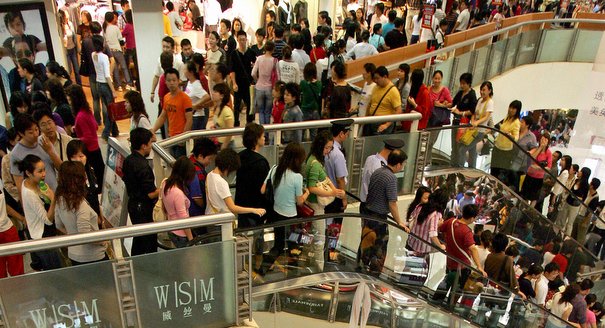
Despite the faltering pace of Chinese economic growth, China is not facing a deep-rooted economic crisis, but rather a crisis of expectations on the part of Chinese and international observers alike.
Source: European Council on Foreign Relations
In a new report for ECFR François Godement, director of ECFR’s Asia & China programme, asserts that recent economic issues in China should be seen as part of China’s transition to a service-driven economy, rather than a deep-rooted economic downturn.
The report highlights variances between different economic sectors within China, where the service sector continues to expand strongly – particularly e-commerce, with web retail sales growing 36 percent in the first three quarters of 2015. Meanwhile, declines in sectors such as steel and housing are desirable due to overproduction, and their environmental impact. Godement argues that these patterns reflect China’s long-trailed economic structural changes.Godement also asserts that ideas of China’s impact on the global economy are exaggerated, claiming that its effect is essentially “psychological”. He cites limited non-Chinese exposure to the Chinese stock market and its positive current account and trade balances as factors limiting any real contagion to the global economy.
Nevertheless, he highlights some possible effects of China’s economic changes on parts of the world economy, which do impact on Europe. Worst hit by the transition will be big exporters to China, including commodity providers like Brazil and Venezuela. For others, the effect may, in fact, turn out to be positive, as falling commodity prices help other importers and reduced price Chinese exports benefitting living standards. However, countries with high levels of indebtedness may suffer from the effects of price deflation.
For Europe, the impacts of China’s economic transition will be mixed. For Eastern Europe it will be mostly positive (lower primary prices and cheaper consumer products from China, while exports to China are not significant). The effects are negative for Germany (which is more energy efficient, and relies on China as an export market) and for southern European economies, including France, for whom price deflation may well increase their relative debt burden.
This paper was originally published by the European Council on Foreign Relations.

Former Nonresident Senior Fellow, Asia Program
Godement, an expert on Chinese and East Asian strategic and international affairs, was a nonresident senior fellow in the Asia Program at the Carnegie Endowment for International Peace.
Recent Work
François Godement, Ashley J. Tellis

François Godement, Abigaël Vasselier
Carnegie does not take institutional positions on public policy issues; the views represented herein are those of the author(s) and do not necessarily reflect the views of Carnegie, its staff, or its trustees.

It should address the shortcomings of previous crisis communication efforts and adapt to the demands of frontier AI.

Lucy Luo

If the Russian-speaking community in Latvia cannot articulate their interests without being seen as disloyal, they could end up embracing a pro-Kremlin agenda.

Sergejs Potapkins

Russia’s ruling party would have benefited from Putin appearing as its distant patron, but as an active frontman imposing his views on the public, he has done nothing but harm both the party’s election campaign and the ruling system overall.

Andrey Pertsev

China’s police training infrastructure construction projects provide benefits to recipient countries, promote China’s image as a major global security provider, and are likely to reinforce alignment between Beijing’s security priorities and those of countries in the Global South.


Cameron Waltz, Sheena Chestnut Greitens, Kim Nguyen, …

AI capabilities are moving fast. Most institutions—including governments—can’t keep up.


Anton Leicht, Scott Singer