

Article
C. Raja Mohan, Darshana M. Baruah
{
  "authors": [
    "C. Raja Mohan"
  ],
  "type": "legacyinthemedia",
  "centerAffiliationAll": "dc",
  "centers": [
    "Carnegie Endowment for International Peace",
    "Carnegie India"
  ],
  "collections": [],
  "englishNewsletterAll": "ctw",
  "nonEnglishNewsletterAll": "",
  "primaryCenter": "Carnegie India",
  "programAffiliation": "SAP",
  "programs": [
    "South Asia"
  ],
  "projects": [],
  "regions": [
    "South Asia",
    "India"
  ],
  "topics": [
    "Domestic Politics",
    "Economy",
    "Political Reform",
    "Foreign Policy"
  ]
}
Source: Getty
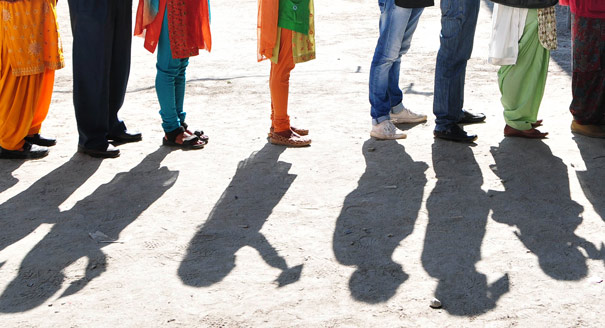
Returning to inclusive politics, regaining the focus on economic development, and, above all, restoring domestic harmony are all critical to arresting the erosion of Modi’s political capital at home.
Source: Indian Express
As he heads out to Britain and Turkey this week, and later in the month to Malaysia and Singapore, Prime Minister Narendra Modi would have liked to travel with a victory in Bihar under his belt. But the rout in Patna is bound to generate some complications for Modi’s conduct of India’s international relations — at least in the near term.
That he has lost political ground at home does not necessarily mean Modi has to alter the essence of his external strategy. The foreign policy of large nations such as India is not overly affected by national elections, or change of government, let alone those in the states. Change occurs only in response to major transformations, political and economic, at home and abroad.India faced such a moment in 1991, when New Delhi was compelled to alter the national economic strategy and adapt its foreign policy to the post-Soviet world. Since then, most governments have followed a similar path that sought to improve Delhi’s relations with all the major powers, reconnect with the extended neighbourhood in Asia, the Middle East and Africa, and deepen regional cooperation. Modi has been no exception. But diplomacy, or how foreign policy is conducted, is another matter. Although the goals remain the same, each government has its own diplomatic style. Political strength at home, the capacity for purposeful governance and the character of the leadership are among the key factors that shape the diplomatic performance of any government.
Modi’s strong political mandate in 2014, his personal energy and willingness to resolve outstanding problems, and his commitment to accelerate India’s economic growth, significantly enhanced Delhi’s room for diplomatic manoeuvre on the international stage. India’s international interlocutors, however, had begun to temper their expectations well before the Bihar elections. The gap between Modi’s vision and the bureaucratic delivery in key economic ministries has been too large to ignore.
While the world was coming to terms with the real difficulty of getting Delhi to reform at a faster pace, it has become more anxious about emerging religious tensions in India. The first to flag off these concerns was US President Barack Obama. At the end of his visit to India as the chief guest at the Republic Day celebrations in January, Obama pointed to the great dangers of religious conflict in India amidst the early signs of intolerance that came into view at the end of last year.
These concerns have intensified in recent weeks as communal polarisation sharpened within the country. Modi’s friends and partners might be willing to live with an Indian economy that grows slower than expected. But they will find it hard to hold back critical comments on India’s deteriorating internal situation. Nor can Delhi forget that India’s adversaries are bound to take advantage of India’s domestic conflicts. If pluralism has been central to India’s soft power, its illiberalism at home has begun to cast a shadow over its external relations.
It was inevitable, then, that the international narrative about Modi’s India would turn negative as global media, civil society organisations and business groups began to pay attention to India’s unfolding internal turmoil.
The deepening divisions within India have also begun to affect one important constituency that strongly rooted for the PM — the Indian diaspora. Indian communities abroad reflect all of the nation’s diversity. If Modi’s message of economic modernisation resonated with the Indian diaspora, the growing intolerance at home had begun to divide it. Protests against Modi’s visit, which seemed inconsequential when he travelled abroad in 2014, have acquired a sharper edge this year. The planned protests against Modi in London this week are likely to see a broader mobilisation.
The PM’s visits this month are not all bilateral. At the G-20 gathering in Turkey and the East Asia Summit in Kuala Lumpur, Modi will meet many of the world’s top leaders. While all of them will be polite, each of them will be making fresh calculations about Modi’s political vulnerabilities and his credibility as a partner. That is par for the course in the world of diplomacy.
For now, though, Modi’s problems are not external. They are internal. Returning to inclusive politics, regaining the focus on economic development and, above all, restoring domestic harmony are all critical to arresting the erosion of the PM’s political capital at home.
A decisive and quick course correction at home should help the PM limit the negative impact of the internal on the external and restore his international standing. National unity and internal coherence are, after all, important prerequisites for effective external engagement. If India’s internal fractures widen in the coming months, the external environment could turn unforgiving and make it much harder for the PM to regain political ground at home.
This article was originally published in the Indian Express.
Former Nonresident Senior Fellow, Carnegie India
A leading analyst of India’s foreign policy, Mohan is also an expert on South Asian security, great-power relations in Asia, and arms control.
Recent Work

C. Raja Mohan, Darshana M. Baruah


Alexander Gabuev, Paul Haenle, C. Raja Mohan, …
Carnegie does not take institutional positions on public policy issues; the views represented herein are those of the author(s) and do not necessarily reflect the views of Carnegie, its staff, or its trustees.

China’s political future will be shaped between now and next October. As the Communist Party enters its intense “campaign season” to prepare for a major political transition in 2027, reading Beijing's actions and responses may become more difficult as domestic politics weigh on its behavior more than usual.

Damien Ma

The EU can impose sanctions but struggles to enforce them without the United States. With Washington increasingly disinterested in backing European interests, the bloc must now fend for itself.


Nicu Popescu, Tiago Antunes
Global and rising powers will need to engage with Africa’s priorities and agency in order to secure the continent’s increasingly attractive partnerships.
Fonteh Akum

Rubio’s recent visit brought welcome attention, but more capital requires governance changes that may be a hard sell for regional governments.

Jennifer B. Murtazashvili

America’s foreign-policy objectives have grown more demanding while Americans have demanded greater focus on their own affairs.

Stephen Wertheim