

Commentary
Yukon Huang, Isaac B. Kardon, Matt Sheehan
{
  "authors": [
    "Yukon Huang"
  ],
  "type": "legacyinthemedia",
  "centerAffiliationAll": "dc",
  "centers": [
    "Carnegie Endowment for International Peace",
    "Carnegie China",
    "Carnegie Russia Eurasia Center"
  ],
  "collections": [],
  "englishNewsletterAll": "asia",
  "nonEnglishNewsletterAll": "",
  "primaryCenter": "Carnegie China",
  "programAffiliation": "AP",
  "programs": [
    "Asia",
    "American Statecraft"
  ],
  "projects": [],
  "regions": [
    "East Asia",
    "China"
  ],
  "topics": [
    "Economy"
  ]
}
Source: Getty
China’s economy is slowing, which could continue for years unless a sustainable growth path is established. However, the pervasive pessimism surrounding China’s prospects is overdone.
Source: Financial Times
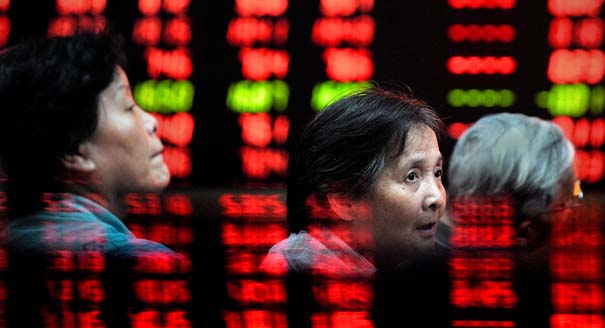
Headlines about China’s economy have been uniformly alarming. Every time equity markets in the west plunge, Beijing’s woes are cited as a factor with its plunging equity indices, rising debt ratios and exchange rate under pressure. Even with more sensible interventions, or perhaps none at all, increased volatility in the country’s financial markets is becoming the norm as its economy becomes more globalised and subjected to the same market pressures as other nations.
Although a “hard landing” is highly unlikely, the economy is slowly haemorrhaging and this could continue for years unless a sustainable growth path is established. To some extent, however, the pervasive pessimism surrounding China’s prospects is overdone. After all, excluding India, its growth rate of about 7 per cent is higher than that of any of the other major economies surveyed by the World Bank. And even if it declines to say 5-6 per cent by the end of this decade, the “new normal” would still be much better than in the rest of the world.The concern, therefore, is about the transition to a new growth path. The more optimistic observers see positive signs that the middle kingdom is finally rebalancing from an investment- and manufacturing-led economy to one more dependent on consumption and services. Progress is indicated in the share of consumption relative to gross domestic product having increased by 2-3 percentage points and the share of services by 6 percentage points since 2011.
But this focus on rebalancing is misplaced. The shares are an outcome of the growth process and not objectives in their own right or policy levers to be manipulated. The growth rate of real consumption has remained robust and steady at 8-8.5 per cent for more than a decade. With GDP growth slowing to less than 7 per cent, the share of consumption will automatically increase. But the growth rate of consumption is not actually increasing and will soon decline as the labour market softens. The pace of rebalancing will then moderate.
The recent surge in the share of services to GDP to 50 per cent and commensurate decline in the share of industry to 40 per cent overstates the extent to which the structure of production has evolved. As recently as 2012, both shares were 45 per cent. The striking shift in just a few years is largely explained by the widening difference in price deflators used to value their respective contributions to GDP.
The more labour-intensive services sector has been buoyed by sustained high wage increases. Meanwhile, sharp declines in commodity and producer prices have reverberated negatively on the valuation of industrial production. The “real” gap in the relative share of services and industry will become evident once the current deflationary cycle in producer prices is over.
Much of the recent negative news coming out of China’s financial markets is symptomatic of much earlier misguided policy choices. The collapse of the equity market is the result of a poorly thought-through strategy developed in 2014 to talk up equity prices so state-owned enterprises could float shares to pay off their excessive debts. Once a bubble was created no amount of policy intervention could forestall a collapse.
The risks in its exchange rate markets came from the rush to internationalise the renminbi. This meant it needed to be both strong and more market driven which, given the country’s current economic situation, is a contradiction that cannot be resolved through policy interventions.
The resulting firefighting in the financial markets has diverted attention away from addressing significant distortions in its real economy that have impeded the transition to the new normal.
The issue that needs more attention is how to deal with the supply and demand impediments holding back more sustainable growth. But the definition of “supply” is not what Beijing has in mind when it talks about eliminating excess capacity (which does need to be addressed) but rather about taking actions to increase productivity. And “demand” involves reforms to encourage growth in consumption and investment in a less debt-fuelled manner. There is not yet enough evidence to show that the leadership is following through on these concerns.
Most of the current debate has been on the need for more market-based reforms to correct the workings of China’s financial markets. But it is equally important to address the distortions in the real economy that have impeded the more efficient use of both labour and capital. Investment returns have fallen significantly in recent years, as has productivity. The depressing effects of the global financial crisis are, of course, partly to blame but the inhibiting effects of longstanding restrictive policies are taking their toll.
China’s restrictive “hukou” or residency policies have been a focus of considerable attention. According to research from Peking University, the unique hukou system of China distinguishes China’s internal migration from migration in other developing countries”.
Beijing has been liberalising these policies gradually, but they limit workers’ ability to move to the largest cities where labour productivity is the highest and the potential returns to investments the greatest. Similarly, the country has the most restrictive policies relative to other major economies regarding investment in higher value services such as communications, social services, legal, insurance and financial services.
Allowing a freer flow of labour to where the most productive jobs are and liberalising investment entry in higher value services would address both the supply and demand concerns needed to improve productivity and encourage more sustainable growth in consumption and investment.
This article was originally published on by the Financial Times.

Senior Fellow, Asia Program
Huang is a senior fellow in the Carnegie Asia Program where his research focuses on China’s economy and its regional and global impact.
Recent Work


Yukon Huang, Isaac B. Kardon, Matt Sheehan
Yukon Huang, Genevieve Slosberg

Beijing’s AI diplomacy is pivoting from infrastructure and associated technical standards toward a more comprehensive effort aimed at recrafting global norms and institutions of AI governance.

Arindrajit Basu

During our visit, we observed a democracy that has learned from its difficult past and is working toward an even more dynamic future.

Sarah Yerkes, Natalie Triche

The cost of air defense has become an unregistered tax on revenue for businesses. While military rents are consolidated in the federal budget, the costs of defense are being spread across the balance sheets of companies and regional governments.

Alexandra Prokopenko

Cities across the United States facilitate investment in American communities. Yet, because global attention remains focused on U.S. trade policy, their distinctive and bold local approaches to international trade and investment promotion are often underappreciated.


Wyatt Frank, Marissa Jordan
Previous dialogues ended in failure. This time could be different.

Scott Singer