

Commentary
With the growth in points of friction between the great powers, organizations like the SCO will continue to play a role in the strategic adaptation of the smaller powers caught between them.
Temur Umarov
{
  "authors": [
    "Sarah Chayes",
    "Alex de Waal"
  ],
  "type": "legacyinthemedia",
  "centerAffiliationAll": "dc",
  "centers": [
    "Carnegie Endowment for International Peace"
  ],
  "collections": [
    "Anti-Corruption"
  ],
  "englishNewsletterAll": "democracy",
  "nonEnglishNewsletterAll": "",
  "primaryCenter": "Carnegie Endowment for International Peace",
  "programAffiliation": "DCG",
  "programs": [
    "Democracy, Conflict, and Governance"
  ],
  "projects": [],
  "regions": [
    "Middle East",
    "Saudi Arabia"
  ],
  "topics": [
    "Political Reform",
    "Democracy",
    "Security",
    "Military",
    "Foreign Policy"
  ]
}
Source: Getty
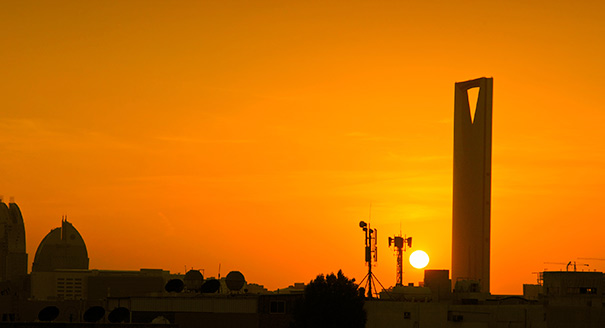
Saudi Arabia is no state at all. It could best be described as a political enterprise with a clever but ultimately unsustainable business model, or as so corrupt as to resemble a vertically and horizontally integrated criminal organization.
Source: Defense One
For half a century, the Kingdom of Saudi Arabia has been the linchpin of U.S. Mideast policy. A guaranteed supply of oil has bought a guaranteed supply of security. Ignoring autocratic practices and the export of Wahhabi extremism, Washington stubbornly dubs its ally “moderate.” So tight is the trust that U.S. special operators dip into Saudi petrodollars as a counterterrorism slush fund without a second thought. In a sea of chaos, goes the refrain, the kingdom is one state that’s stable.
But is it?In fact, Saudi Arabia is no state at all. There are two ways to describe it: as a political enterprise with a clever but ultimately unsustainable business model, or so corrupt as to resemble in its functioning a vertically and horizontally integrated criminal organization. Either way, it can’t last. It’s past time U.S.decision-makers began planning for the collapse of the Saudi kingdom.
In recent conversations with military and other government personnel, we were startled at how startled they seemed at this prospect. Here’s the analysis they should be working through.
Understood one way, the Saudi king is CEO of a family business that converts oil into payoffs that buy political loyalty. They take two forms: cash handouts or commercial concessions for the increasingly numerous scions of the royal clan, and a modicum of public goods and employment opportunities for commoners. The coercive “stick” is supplied by brutal internal security services lavishly equipped with American equipment.
The U.S. has long counted on the ruling family having bottomless coffers of cash with which to rent loyalty. Even accounting today’s low oil prices, and as Saudi officials step up arms purchases and military adventures in Yemen and elsewhere, Riyadh is hardly running out of funds.
Still, expanded oil production in the face of such low prices—until the Feb. 16 announcement of a Saudi-Russian freeze at very high January levels—may reflect an urgent need for revenue as well as other strategic imperatives. Talk of a Saudi Aramco IPO similarly suggests a need for hard currency.
A political market, moreover, functions according to demand as well as supply. What if the price of loyalty rises?
It appears that is just what’s happening. King Salman had to spend lavishly to secure the allegiance of the notables who were pledged to the late King Abdullah. Here’s what played out in two other countries when this kind of inflation hit. In South Sudan, an insatiable elite not only diverted the newly minted country’s oil money to private pockets but also kept up their outsized demands when the money ran out, sparking a descent into chaos. The Somali government enjoys generous donor support, but is priced out of a very competitive political market by a host of other buyers—with ideological, security or criminal agendas of their own.
Such comparisons may be offensive to Saudi leaders, but they are telling. If the loyalty price index keeps rising, the monarchy could face political insolvency.
Looked at another way, the Saudi ruling elite is operating something like a sophisticated criminal enterprise, when populations everywhere are making insistent demands for government accountability. With its political and business elites interwoven in a monopolistic network, quantities of unaccountable cash leaving the country for private investments and lavish purchases abroad, and state functions bent to serve these objectives, Saudi Arabia might be compared to such kleptocracies as Viktor Yanukovich’s Ukraine.
Increasingly, Saudi citizens are seeing themselves as just that: citizens, not subjects. In countries as diverse as Nigeria, Ukraine, Brazil, Moldova, and Malaysia, people are contesting criminalized government and impunity for public officials—sometimes violently. In more than half a dozen countries in 2015, populations took to the streets to protest corruption. In three of them, heads of state are either threatened or have had to resign. Elsewhere, the same grievances have contributed to the expansion of jihadi movements or criminal organizations posing as Robin Hoods. Russia and China’s external adventurism can at least partially be explained as an effort to re-channel their publics‘ dissatisfaction with the quality of governance.
For the moment, it is largely Saudi Arabia’s Shiite minority that is voicing political demands. But the highly educated Sunni majority, with unprecedented exposure to the outside world, is unlikely to stay satisfied forever with a few favors doled out by geriatric rulers impervious to their input. And then there are the “guest workers.” Saudi officials, like those in other Gulf states, seem to think they can exploit an infinite supply of indigents grateful to work at whatever conditions. But citizens are now heavily outnumbered in their own countries by laborers who may soon begin claiming rights.
For decades, Riyadh has eased pressure by exporting its dissenters—like Osama bin Laden—fomenting extremism across the Muslim world. But that strategy can backfire: bin Laden’s critique of Saudi corruption has been taken up by others and resonates among many Arabs. And King Salman (who is 80, by the way) does not display the dexterity of his half-brother Abdullah. He’s reached for some of the familiar items in the autocrats’ toolbox: executing dissidents, embarking on foreign wars, and whipping up sectarian rivalries to discredit Saudi Shiite demands and boost nationalist fervor. Each of these has grave risks.
There are a few ways things could go, as Salman’s brittle grip on power begins cracking.
One is a factional struggle within the royal family, with the price of allegiance bid up beyond anyone’s ability to pay in cash. Another is foreign war. With Saudi Arabia and Iran already confronting each other by proxy in Yemen and Syria, escalation is too easy. U.S. decision-makers should bear that danger in mind as they keep pressing for regional solutions to regional problems. A third scenario is insurrection—either a non-violent uprising or a jihadi insurgency—a result all too predictable given episodes throughout the region in recent years.
The U.S. keeps getting caught flat-footed when purportedly solid countries came apart. At the very least, and immediately, rigorous planning exercises should be executed, in which different scenarios and different potential U.S.actions to reduce the codependence and mitigate the risks can be tested. Most likely, and most dangerous, outcomes should be identified, and an energetic red team should shoot holes in the automatic-pilot thinking that has guided Washington policy to date.
“Hope is not a policy” is a hackneyed phrase. But choosing not to consider alternatives amounts to the same thing.
Former Senior Fellow, Democracy, Conflict, and Governance Program
Sarah Chayes is internationally recognized for her innovative thinking on corruption and its implications. Her work explores how severe corruption can help prompt such crises as terrorism, revolutions and their violent aftermaths, and environmental degradation.
Alex de Waal
Carnegie does not take institutional positions on public policy issues; the views represented herein are those of the author(s) and do not necessarily reflect the views of Carnegie, its staff, or its trustees.

With the growth in points of friction between the great powers, organizations like the SCO will continue to play a role in the strategic adaptation of the smaller powers caught between them.

Temur Umarov
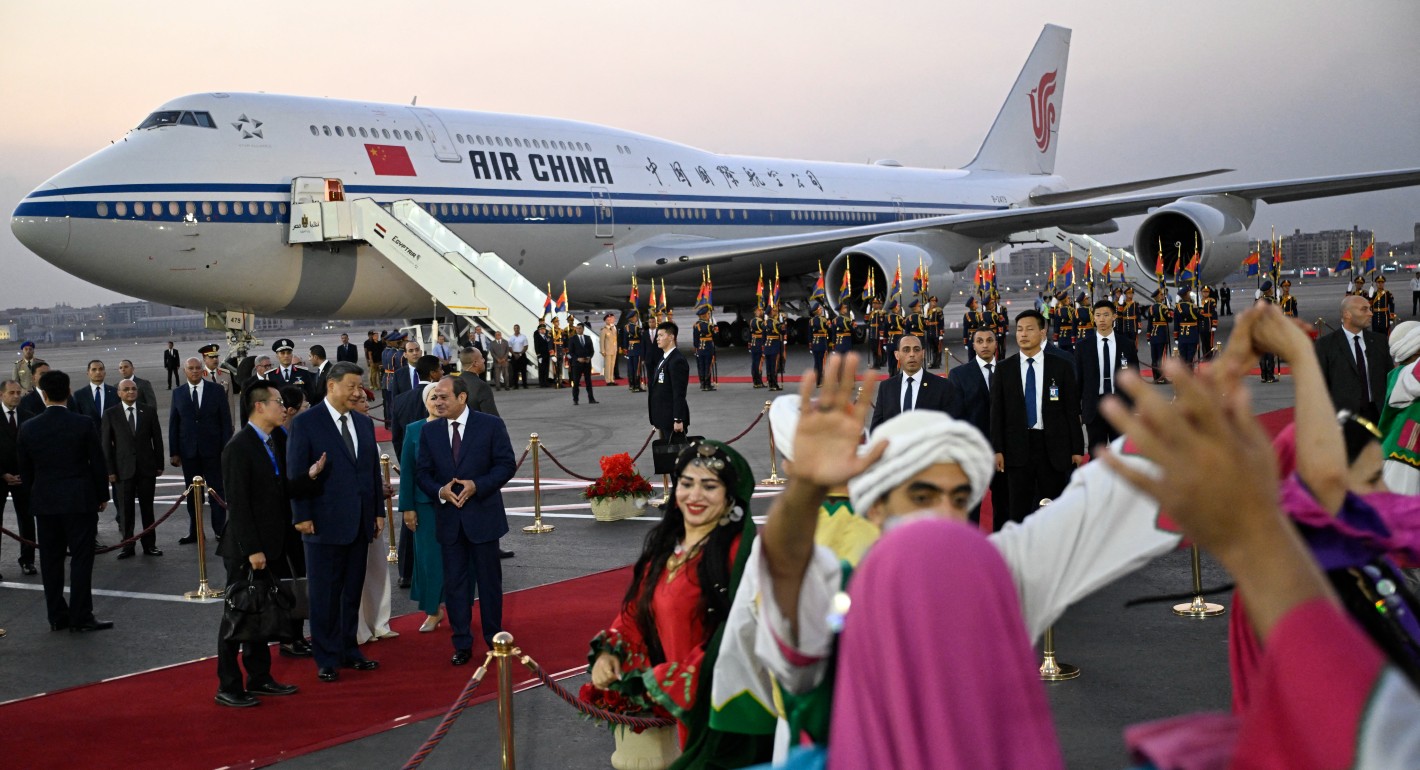
Amid celebrations of bilateral ties was a deeper focus on stability in the Middle East.

Amr Hamzawy

Canadian Prime Minister Mark Carney has twice inspired praise for standing up to U.S. President Donald Trump: at the 2026 World Economic Forum in Davos and on Canada-U.S. trade negotiations. Is Carney showing a third way better than the EU has in dealing with the Trump administration?

Rym Momtaz, ed.
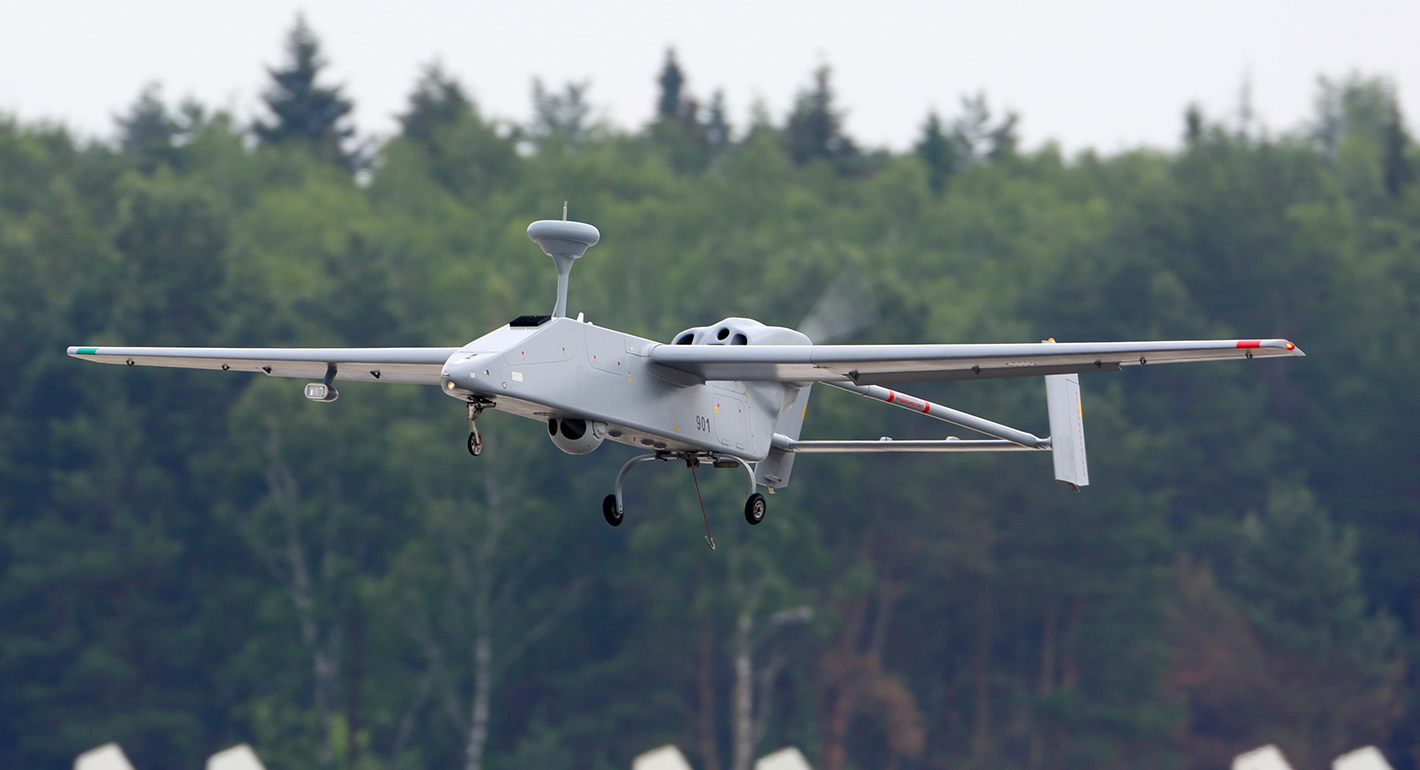
Moscow is testing Europe’s defenses with drone incursions and could decide to use drones against the continent on a much larger scale once the war in Ukraine pauses. European countries will need Kyiv to help them prepare for such a possibility.
Pavlo Zvenyhorodskyi
Xi, Putin, and other regional leaders are back-slapping in Bishkek, but the SCO has yet to answer the most serious questions about continental Asia's economic future.

Evan A. Feigenbaum