

Research
- +11
Frances Z. Brown, Nate Reynolds, Priyal Singh, …
{
  "authors": [
    "Frederic Wehrey"
  ],
  "type": "legacyinthemedia",
  "centerAffiliationAll": "dc",
  "centers": [
    "Carnegie Endowment for International Peace"
  ],
  "collections": [],
  "englishNewsletterAll": "menaTransitions",
  "nonEnglishNewsletterAll": "",
  "primaryCenter": "Carnegie Endowment for International Peace",
  "programAffiliation": "MEP",
  "programs": [
    "Middle East"
  ],
  "projects": [],
  "regions": [
    "North Africa",
    "Libya"
  ],
  "topics": [
    "Political Reform",
    "Security",
    "Military",
    "Foreign Policy"
  ]
}
Source: Getty
Libyans want to move forward with their government, with their economy. The United States has to harness that momentum.
Source: PBS’ NewsHour
Chaos has gripped the North African nation since the fall of Moammar Gadhafi, with at least two governments and multiple factions simultaneously vying for power. Now there’s word of wholesale atrocities by Islamic State forces in the coastal city of Sirte.
Fighter jets flying for Libya’s U.N.-backed government are bombing around Sirte, and allied ground forces are pushing back as well to stop Islamic State militants from expanding beyond their stronghold there; 120 miles of the Central Libyan coastline in and around Sirte has been under the militant group’s control since early 2015.
Nearly two-thirds of Sirte’s 80,000 people have fled, and been forced to rely on humanitarian aid.
MAN (through translator): The nationalities of ISIS fighters are all foreign, Tunisians, Egyptians, Sudanese. They came in and created a state of fear and terror for the people and families, so we fled. And they’re all foreigners. None of them are Libyans. We fled with nothing.
JUDY WOODRUFF: Now come disturbing details of what’s happening inside Sirte in a Human Rights Watch report based on interviews with those who left. It tells of dozens of beheadings by sword, floggings and crucifixions, fathers forced to marry off their daughters to ISIS fighters, and all females over the age of 10 forced to wear the conservative black cloak, the abaya.
On Monday in Vienna, Secretary of State John Kerry announced an agreement to arm the internationally recognized government in the fight against ISIS, also called Da’esh:
JOHN KERRY, Secretary of State: The international community will support the Presidency Council as it seeks exemption from the U.N. arms embargo to acquire those weapons and bullets need to fight Da’esh and other terrorist groups.
JUDY WOODRUFF: But it won’t be easy. The U.S. commander in Africa, General David Rodriguez, said yesterday it’s hard to tell which of many armed groups have aligned with the U.N.-supported regime and which have not.
And we take a closer look at those groups and what the United States is doing in Libya.
I’m joined now by Frederic Wehrey of the Middle East Program at the Carnegie Endowment for International Peace. He was a military attache to the U.S. Embassy in Tripoli during the George W. Bush administration, and he visits the country regularly.
Fred Wehrey, welcome back to the program.FREDERIC WEHREY, Carnegie Endowment for International Peace: Great to be here.
JUDY WOODRUFF: Remind us again how Libya got to this state, two warring governments the same time, multiple fighting groups.
FREDERIC WEHREY: Well, ever since the fall of Gadhafi, there has been a governance vacuum.
I mean, the country has split into civil war since 2014, two governments, two sets of militias. There is this new U.N. unity government in Tripoli that is still very weak, but the eastern faction doesn’t recognize it. So you have got this vacuum. And that is a ripe condition for the Islamic State to insert itself, as they have in the town of Sirte.
JUDY WOODRUFF: So, how strong is ISIS, the Islamic State, in Libya right now?
FREDERIC WEHREY: The estimates are about 3,000 to 6,000 fighters, bolstered by foreign volunteers from abroad. And they control about 120 miles, strip of coastline in the center.
JUDY WOODRUFF: And how big a threat does that represent, given everything else going on in Libya?
FREDERIC WEHREY: It’s destabilizing to the country’s growth. It’s also a threat to Europe and especially neighboring states. We have seen the Islamic State in Libya plot attacks against neighboring Tunisia.
JUDY WOODRUFF: And so, well, let’s back off a little bit here and go back to the role of the United States. You just mentioned NATO.
What does this mean? The U.S. was out of Libya. Then it was in, out. Where is the U.S. right now in Libya?
FREDERIC WEHREY: Well, the U.S. is really behind this new unity government in Tripoli. And they are obviously focused on the Islamic State threat.
But I think, more broadly, the U.S. wants to ensure that this government succeeds, that we don’t repeat the mistakes that we made after the fall of Gadhafi. But, of course, the first priority is protecting this government and then helping it fight the Islamic State.
And I think that’s going to be done through some training, through assistance, through the lifting of the arms embargo, as we heard.
JUDY WOODRUFF: But we also — we heard Secretary Kerry say the U.S. is going to be arming the right government. But we also heard the general say it’s not clear which group is which, on which side. How confusing is it?
FREDERIC WEHREY: Well, this is — it is very confusing. This is the problem we face in all of these states where we’re fighting the Islamic State. Who do you partner with?
In the case of Libya, there is no unified government, there is no unified chain of command, there is no unified army. So, you have got to pick among these militias. And it is a very dangerous game, because you don’t know who you are dealing with. Those militias may turn against you. They may turn against one another.
So, a great risk is that, by arming them, we could actually fuel the civil war. So, I think the general is very right in proceeding quite carefully.
JUDY WOODRUFF: How do you do that? How does the United States do that?
FREDERIC WEHREY: Well, there’s been reports now of U.S. special operations on the ground. And what they are trying to do is assess these militias, their capacity, their will, who are they aligned with, before they begin training and assisting them.
But you have got to vet them for human rights violations. You have got to recruit the right ones. But, more importantly, you have got to make sure that they are under the control of a democratic government.
JUDY WOODRUFF: What do you think should be done, Fred Wehrey? Is it your sense that this is a formula that is going to move in the right direction?
FREDERIC WEHREY: I think the U.S. has learned a great deal from the mistakes they made. And I think they’re proceeding quite cautiously. I think the right approach is to really support the legitimacy of this new government. This has to be a Libyan-led fight.
One of the things that really amazed me when I was in Libya was the amount of sort of societal resilience in Libya against the Islamic State. This was a foreign entity. People don’t want it. The Libyans want to move forward with their government, with their economy. And so the U.S. has to harness that momentum.
JUDY WOODRUFF: Now, that’s what I was trying to get at, as you know, because we see ISIS a factor in so many countries in the region. How do you tell the difference between countries where ISIS can overwhelm what is on the ground there, and where the forces against it can be stronger?
FREDERIC WEHREY: Yes, I mean, I think we shouldn’t be overly alarmist about the Islamic State in Libya. I mean, they are sort of boxed in the central region. They can still do a lot of damage. But it’s not to the extent that they are in Iraq, say, or Syria.
JUDY WOODRUFF: Bottom line, Fred Wehrey, what is at stake here for the United States?
FREDERIC WEHREY: Well, I think what is at stake is the success of the sort of toppling of the Gadhafi government, I mean, the security of important allies in the region, the security of Europe. It’s all wrapped up together. So, there is a lot at stake.
JUDY WOODRUFF: And Europe is very much a part of this. We haven’t — I haven’t asked you about that, but that is very much a…
(CROSSTALK)
FREDERIC WEHREY: Right. They are, absolutely. I mean, they are directly affected by it.
There are reports of…
JUDY WOODRUFF: Because of refugees?
FREDERIC WEHREY: Well, because of refugees, then also the potential plotting of terrorist attacks on Libyan soil against Europe.
So, the French are reportedly on the ground with their special operations. So are the British. The Italians have really committed to helping this government, to help train that new Libyan military.
JUDY WOODRUFF: Well, it is a complicated story, but it’s an important one for us to follow.
Fred Wehrey, thank you very much.
FREDERIC WEHREY: Thanks for having me. Thank you.
JUDY WOODRUFF: Appreciate it.
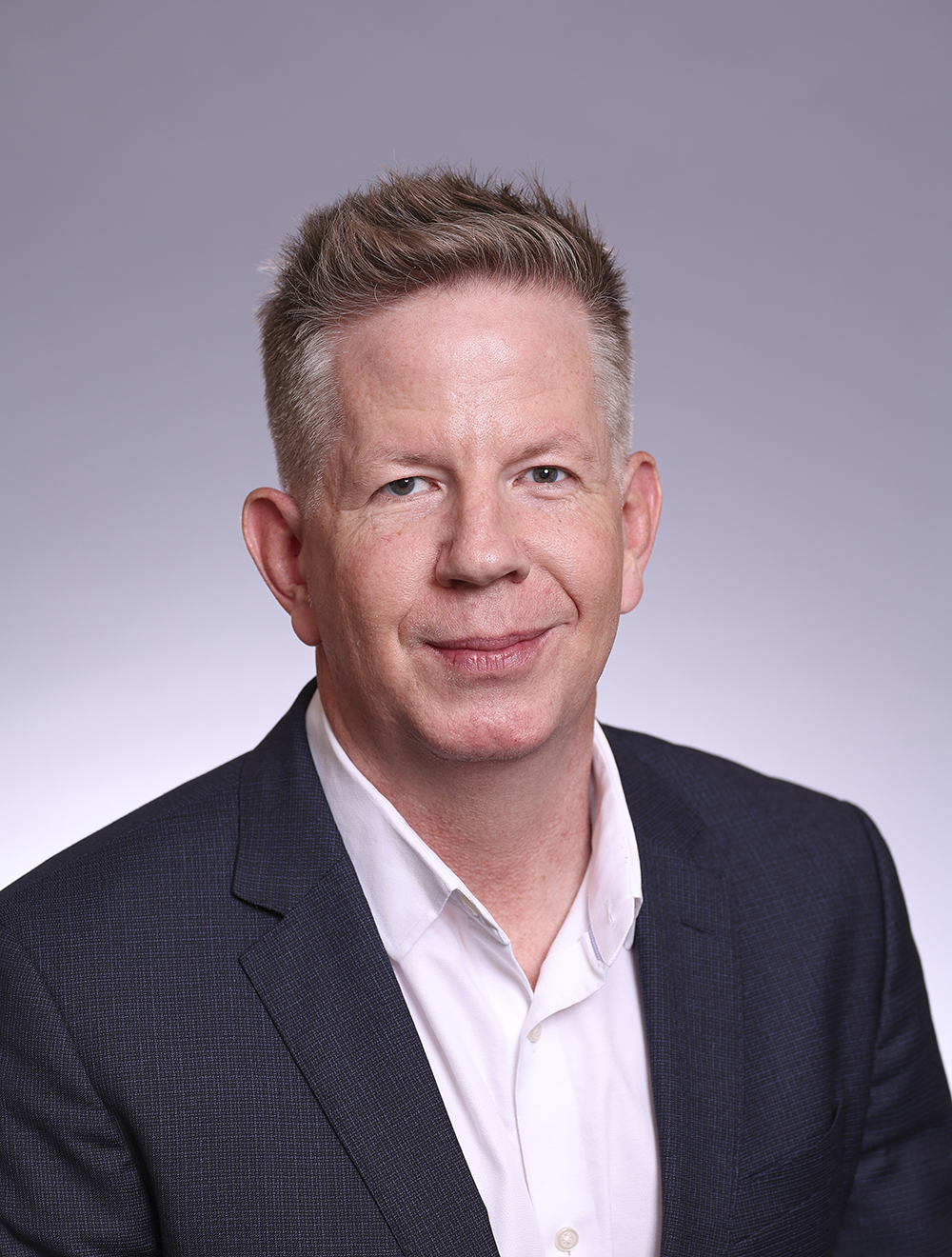
Senior Fellow, Middle East Program
Frederic Wehrey is a senior fellow in the Middle East Program at the Carnegie Endowment for International Peace, where his research focuses on governance, conflict, and security in Libya, North Africa, and the Persian Gulf.
Recent Work

Frances Z. Brown, Nate Reynolds, Priyal Singh, …
Charles H. Johnson, Frederic Wehrey
Carnegie does not take institutional positions on public policy issues; the views represented herein are those of the author(s) and do not necessarily reflect the views of Carnegie, its staff, or its trustees.

Germany's sometimes ambiguous nuclear policy advocates nuclear weapons for deterrence purposes but at the same time adheres to non-proliferation. This dichotomy can turn into a formidable dilemma and increase proliferation pressures in Berlin once no nuclear protector is around anymore, a scenario that has become more realistic in recent years.
Ulrich Kühn
European reactions to the war in Iran have lost sight of wider political dynamics. The EU must position itself for the next phase of the crisis without giving up on its principles.

Richard Youngs
For years, the United States anchored global cyber diplomacy. As Washington rethinks its leadership role, the launch of the UN’s Cyber Global Mechanism may test how allies adjust their engagement.

Patryk Pawlak, Chris Painter
Most of Moscow’s military resources are tied up in Ukraine, while Beijing’s foreign policy prioritizes economic ties and avoids direct conflict.


Alexander Gabuev, Temur Umarov
With the White House only interested in economic dealmaking, Georgia finds itself eclipsed by what Armenia and Azerbaijan can offer.

Bashir Kitachaev