

Research
- +5
Alper Coşkun, Fatih Ceylan, Tacan İldem, …
{
  "authors": [
    "Sinan Ülgen"
  ],
  "type": "legacyinthemedia",
  "centerAffiliationAll": "dc",
  "centers": [
    "Carnegie Endowment for International Peace",
    "Carnegie Europe"
  ],
  "collections": [
    "Transatlantic Cooperation"
  ],
  "englishNewsletterAll": "ctw",
  "nonEnglishNewsletterAll": "",
  "primaryCenter": "Carnegie Europe",
  "programAffiliation": "EP",
  "programs": [
    "Europe"
  ],
  "projects": [],
  "regions": [
    "Europe",
    "Western Europe",
    "Iran"
  ],
  "topics": [
    "Security"
  ]
}
Source: Getty
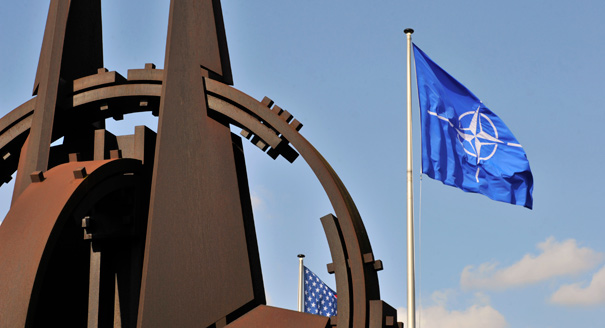
NATO’s ability to transform its strategic outlook and develop an effective southern strategy will depend on its leaders’ ability to reconcile the interests of its southern and eastern members.
Source: Project Syndicate
For almost seven decades, NATO has amply demonstrated its ability to fulfill its core mission of deterring a conventional attack against its member countries. But the threat landscape on NATO’s southern flank is changing, pushing the Alliance toward uncharted waters. This week’s NATO summit in Warsaw will amount to a litmus test of the Alliance’s ability to adapt to the new more complex security challenges that it faces.
Since the Cold War, when it was positioned as a bulwark against Soviet expansionism, NATO has proved adept at developing responses to conventional threats posed by state actors. When the threat of ballistic missiles from Iran became potent, it built a missile-defense architecture to deter provocation. When a resurgent Russia began to generate concerns among the Alliance’s eastern members, it revised its forward posture to reassure them. Baltic Air Policing detachment NATO After Brexit In the run-up to the Alliance’s Warsaw summit, John Andrews assesses the views of Wolfgang Ischinger, Yuriko Koike, Javier Solana, and others on the three main challenges it faces.
NATO’s approach to non-state actors, however, is less well developed. Indeed, no such approach really existed until the September 11, 2001, terror attacks on the United States, when the notion that terrorist groups could pose a real threat to the West’s security penetrated official thinking for the first time. That moment became a turning point for NATO, not only because it spurred the first invocation of the collective-defense clause, Article 5, but also because the clause was invoked against an amorphous non-state entity in the mountains of Afghanistan.Since 2001, NATO has been moving to create a more robust framework to defend its members against non-state actors and asymmetric threats. Soon after the September 11 attacks, NATO established a “terrorism threat intelligence unit” to bolster its intelligence pooling and analysis efforts. In 2002, it launched its first-ever “partnership action plan against terrorism,” which was re-branded in 2015 as “counter-terrorism policy guidelines.” These efforts will culminate at the Warsaw Summit, where NATO should establish a new strategic outlook that accounts for the complex and diffuse security challenges affecting its southern flank.
To be sure, state actors – in particular, an increasingly assertive Russia – remain a potent threat. After all, beyond putting pressure on NATO’s eastern flank, Russia has been building its military capabilities to NATO’s south. Given this, any “southern flank strategy” will need to include initiatives to bolster southern countries’ defenses against state actors, such as expanding the Standing NATO Maritime Group 2 in the Mediterranean and accelerating the NATO Response Force’s move toward a more flexible and deterrence-focused posture.
But there is also a more complex set of non-traditional challenges on NATO’s southern flank. Those challenges include, of course, the ongoing turmoil in the Middle East, which is fueling radical jihadism and spurring mass migration flows. There is also the prospect of the proliferation of chemical and biological weapons, which have already been used in the Syrian conflict both by President Bashar al-Assad’s regime and the Islamic State. And there is the risk of state collapse, accompanied by the specter of border change.
NATO’s southern strategy must therefore incorporate policies to improve its capacity to address non-conventional, asymmetric threats. In particular, NATO should become a more reliable and effective platform for member countries involved in counter-terrorism activities. For example, the Alliance should develop a terrorism risk-assessment model, with a special focus on its southern flank, and upgrade the amount of actionable intelligence collected by and from partner and member countries. The Alliance should also seek to enhance its capacity to detect the proliferation of weapons of mass destruction and improve its situational awareness of chemical and biological threats.
Though all of these elements are essential to an effective strategy, a political consensus will not be easy to achieve. One key barrier to agreement is the perennial conflict over the appropriate burden of defense on national budgets – a conflict that is particularly intense in today’s environment of fiscal anxiety.
But there is an even more politically divisive question facing NATO’s leaders in Warsaw: its eastern members continue to perceive Russia as the biggest threat facing the Alliance, and thus demand that more attention and resources be devoted to their protection. Yet the more diffuse threats faced by the smaller number of southern NATO members may well be more acute. To the extent that there is a tradeoff, with more resources for the south meaning fewer resources for the east, differences among the threat perceptions of the NATO allies risk producing deadlock.
NATO’s ability to transform its strategic outlook and develop an effective southern strategy will depend on its leaders’ ability to reconcile the interests of these two groups of members. At a time when tensions are on the rise, it will be a difficult balancing act.

Senior Fellow, Carnegie Europe
Sinan Ülgen is a senior fellow at Carnegie Europe in Brussels, where his research focuses on Turkish foreign policy, transatlantic relations, international trade, economic security, and digital policy.
Recent Work

Alper Coşkun, Fatih Ceylan, Tacan İldem, …
Carnegie does not take institutional positions on public policy issues; the views represented herein are those of the author(s) and do not necessarily reflect the views of Carnegie, its staff, or its trustees.

European NATO countries are wrestling with the possibility of U.S. disengagement from the alliance. With the continent’s security increasingly uncertain, governments must restore the credibility of their collective defense.



Hans-Dieter Lucas, Adam Thomson, Pierre Vimont

The domestic impacts of how long it is taking to end the war in Ukraine have pushed the French electorate to the political extremes and compromised the country’s diplomatic capacity.

Rym Momtaz

A deep dive into the policy ecosystems behind battery development in China, South Korea, Japan, the European Union (including some of its member states), the United States, Canada, and India.



Milo McBride, Herbert Crowther, Darcie Draudt-Véjares, …

Before the next wave of EU enlargement takes place, the union needs to grapple with thorny questions of how power is distributed among its members.


Emil Sondaj Hansen, Ditte Brasso Sørensen

The Horn of Africa countries are among those facing a new security calculus.


Andrew Leber, Lesley Anne Warner