

Commentary
Judy Dempsey
{
  "authors": [
    "Judy Dempsey"
  ],
  "type": "legacyinthemedia",
  "centerAffiliationAll": "dc",
  "centers": [
    "Carnegie Endowment for International Peace",
    "Carnegie Europe"
  ],
  "collections": [
    "EU Integration and Enlargement",
    "Brexit and UK Politics"
  ],
  "englishNewsletterAll": "ctw",
  "nonEnglishNewsletterAll": "",
  "primaryCenter": "Carnegie Europe",
  "programAffiliation": "EP",
  "programs": [
    "Europe"
  ],
  "projects": [],
  "regions": [
    "Europe",
    "Western Europe",
    "United Kingdom",
    "Germany",
    "Iran"
  ],
  "topics": [
    "EU"
  ]
}
Source: Getty
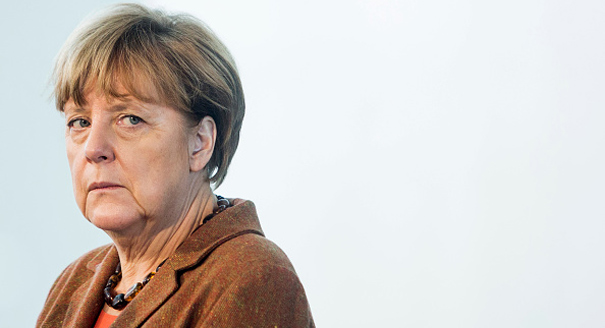
The German chancellor is the only leader who still has the authority to shape the outcome of the Brexit negotiations and rescue the European project from the Euroskeptics.
Source: Washington Post
Deep down, Angela Merkel hopes that Britain’s exit from the European Union can be reversed, even though she knows this might be against all the odds. The German chancellor holds the key to whether Britain can retain a special relationship with the E.U. Her legacy as a European leader will depend in large part on how she manages it.
For now, Merkel remains Europe’s undisputed leader. Her handling of the refugee and euro crises led to nasty backlashes against Germany and dented her reputation, but this emergency is different: Brexit affects every E.U. member and those wanting to join it. Britain has challenged Europe’s post-1945 architecture built on peace, democracy, free-market economies and solidarity.
These are now all up for grabs as Euroskeptic and populist movements challenge these achievements. They believe individual countries can pursue their own social, political and economic agendas, as if such policies would make them fit to deal with globalization.
As a result, Merkel, not the leaders of the E.U. institutions who are largely unknown by most Europeans, is the only leader who still has the authority to shape the outcome of the Brexit negotiations and rescue the European project from the Euroskeptics. It will be a stiff challenge: Not only is she alone at the top because of the euro and refugee crises. But also, in all her years in office, she has never given a major speech about what she really thinks about Europe and its future.
In the aftermath of the Brexit vote, Merkel has already set the agenda. She neither seeks revenge against Britain nor seeks negotiations that would speed up Britain’s exit from the E.U. “I would not fight now for a short time frame,” she said. That distinguishes her from the European Commission, the E.U’s executive, and the European Parliament, which want to wrap up the talks as quickly as possible once the next British prime minister triggers Article 50 of the E.U. treaty that sets in motion the procedures to leave the bloc.
Nor does Merkel, regrettably, support a European convention — a kind of Constitution for Europe that is long overdue. That would set out once and for all what the E.U. stands for.
Instead, vintage Merkel, she wants to play for time. She needs to win over many countries, especially those not belonging to the eurozone, such as Poland. They dread the prospect of Britain leaving.
They identify with Britain’s approach to economies based on competition, tight monetary policies and open economies. And many of them have tens of thousands of their citizens living in Britain whose futures are now in jeopardy. They want and need Britain to stay in the E.U.
They also dread the idea that France and Germany might race ahead to establish a two-speed Europe that would consist of an inner core of eurozone countries, leaving non-users of the euro currency as second-class members. That means putting a much-needed fiscal and banking union in place to underpin the euro. But for now, further integration, despite its need, is off the table. Euroskeptic movements and leaders would make hay were it to proceed.
Merkel also seeks to preserve the security and strategic role Britain has played. Take Russia: Merkel has been instrumental in keeping Europe united over sanctions against Russia. But now France, Italy and Merkel’s own coalition partners, the Social Democrats led by Sigmar Gabriel and foreign minister Frank-Walter Steinmeier, want the sanctions to be phased out.
With London sidelined, Merkel loses a valuable ally when it comes to her policy toward Vladimir Putin. She must try to sway Poland, Europe’s sixth-largest country, led by a nationalist Euroskeptic government that has shifted its foreign policy away from Germany to Britain. Brexit means that Poland needs Germany more than ever before, especially when it comes to Russia.
The second big strategic issue is the transatlantic relationship.
Britain has had a long and special relationship with the United States. Yes, it has weakened, especially because of the U.S.-led war against Iraq and the U.S. shift toward Asia.
Nevertheless, inside the E.U., Britain strengthened the Atlanticist faction. “A British exit from the E.U. would be a blow to U.S. influence in Europe,” said James Sherr, a senior associate fellow at Chatham House. It would also strengthen the latent anti-American sentiments in Germany.
Again, Merkel’s weak flank is her own coalition. Steinmeier, desperate to regain the pacifist wing of his flagging Social Democratic Party, has accused NATO of “saber-rattling” after it held maneuvers in Poland and other countries in Eastern Europe ahead of the NATO summit in Warsaw. Steinmeier’s comments tap into anti-NATO and anti-American sentiments inside a party desperately seeking anything that will improve its dismal standing in the polls.
This anti-Americanism feeds into the Transatlantic Trade and Investment Partnership talks that are a crucial pillar of the transatlantic relationship. Outgoing British prime minister David Cameron campaigned for TTIP because he believed it would strengthen the West — and serve British and European trade interests. Merkel has been lukewarm, unwilling to take on her opponents.
Brexit changes everything. If Merkel really wants to make a difference — either by trying to keep Britain in or negotiate an elegant exit — her legacy will be sealed only by declaring once and for all how she sees Europe’s future. That speech is long overdue.
This article was originally published by the Washington Post.

Nonresident Senior Fellow, Carnegie Europe
Judy Dempsey is a nonresident senior fellow at Carnegie Europe
Recent Work
Judy Dempsey
Judy Dempsey
Carnegie does not take institutional positions on public policy issues; the views represented herein are those of the author(s) and do not necessarily reflect the views of Carnegie, its staff, or its trustees.

The EU can impose sanctions but struggles to enforce them without the United States. With Washington increasingly disinterested in backing European interests, the bloc must now fend for itself.


Nicu Popescu, Tiago Antunes

Russia is testing the waters of NATO’s mutual defense clause. What do strikes in Romanian territorial waters mean for the alliance’s posture toward Moscow?

Dimitar Bechev
The truth of the strategic situation is that Europe and Russia are extremely unlikely to be able to “turn the page” on their confrontation within the next two decades.
Arkady Moshes
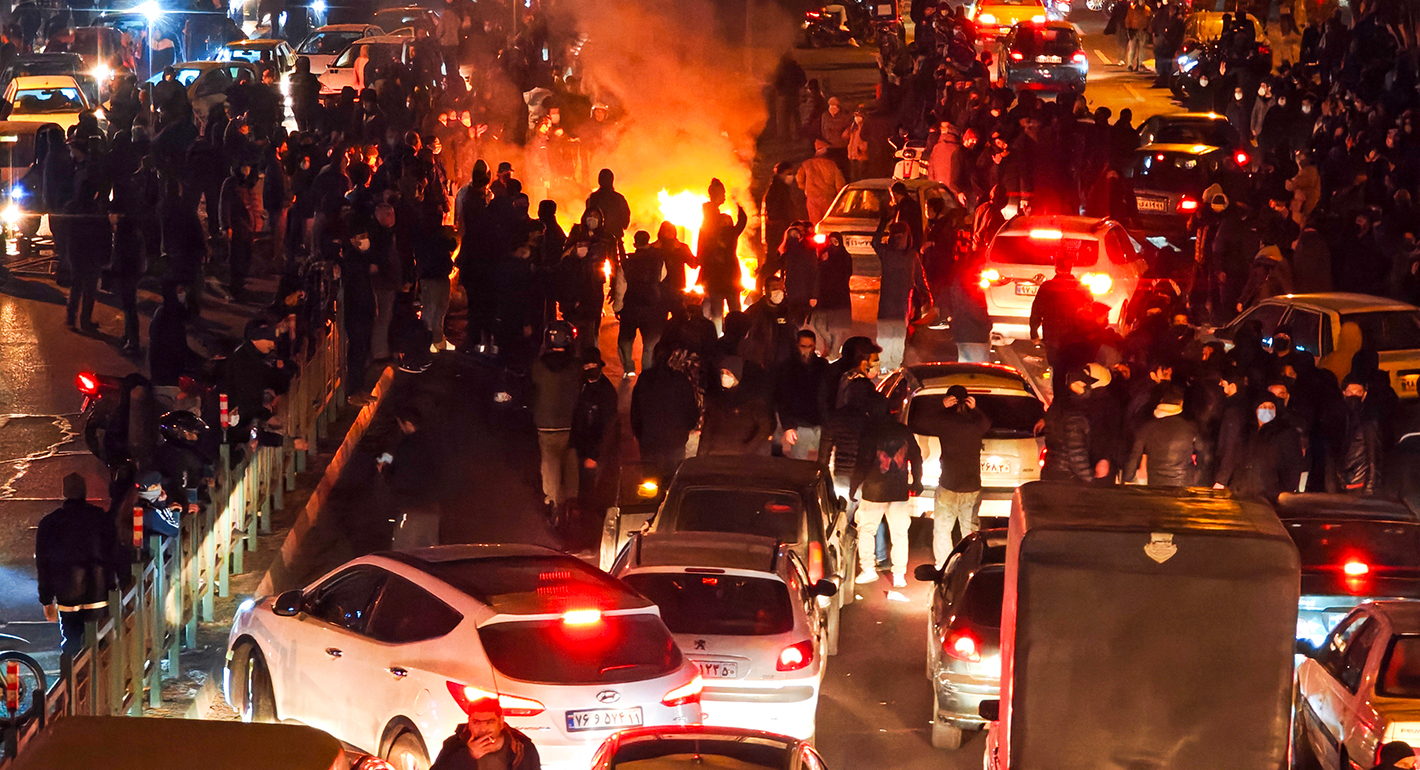
Protests in Iran follow a similar pattern: Economic grievances turn into political protests that spread nationwide. But increased state repression has begun to shift the arrangement.

Eric Lob
It signals a new era of tech diffusion and warfare.

Steve Feldstein