

Research
- +4
Milan Vaishnav, Rahul Verma, Rukmini S., …
{
  "authors": [
    "Christophe Jaffrelot"
  ],
  "type": "legacyinthemedia",
  "centerAffiliationAll": "dc",
  "centers": [
    "Carnegie Endowment for International Peace"
  ],
  "collections": [],
  "englishNewsletterAll": "ctw",
  "nonEnglishNewsletterAll": "",
  "primaryCenter": "Carnegie Endowment for International Peace",
  "programAffiliation": "SAP",
  "programs": [
    "South Asia"
  ],
  "projects": [],
  "regions": [
    "South Asia",
    "India"
  ],
  "topics": [
    "Political Reform"
  ]
}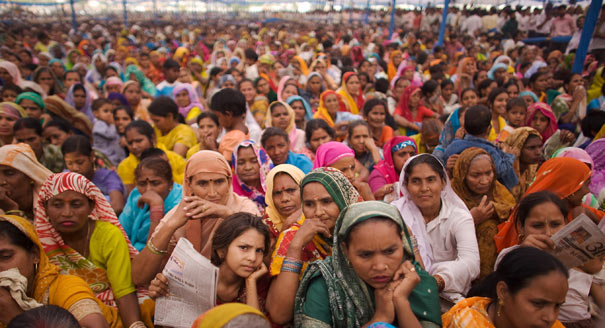
Source: Getty
The plight of Dalits in Gujarat cannot be attributed only to BJP rule. Congress must share the blame.
Source: Indian Express
The tragic episode in Una and the Dalit mobilisation that followed last month reflect the condition of this social category in Gujarat, not just in terms of ritual status, but also from a socio-economic point of view. They show Gujarat has not been a model of development for everybody in the state. Ancestral practices of discrimination related to the so-called impurity of Dalits are particularly resilient in Gujarat. In 2013, a report, Understanding Untouchability, based on a survey conducted in 1,589 villages by the Navsarjan Trust — an organisation that promotes the rights of Dalits — documented some of these practices. In more than half of the villages surveyed, the Dalits did not have access to wells, temples, tea stalls, panchayat offices, barbers, non-Dalit mid-wives, mid-day meals etc. This state of affairs is partly due to the non-implementation of the Scheduled Castes and Scheduled Tribes (Prevention of Atrocities Act), 1989.
Indeed, public policies are largely responsible for the pursuit of these societal curses. But they also account for socio-economic backwardness. Over the last 10 years, the CAG has reproached the Gujarat government for failing to ensure that enough development funds were allocated to Dalits in proportion to their population, as per the guidelines of the Planning Commission. Dalits, who represent 7.1 per cent of the state’s population, were allotted 1.41 per cent of the budget in 2007-08, 3.93 per cent in 2008-09, 4.51 per cent in 2009-10, 3.65 per cent in 2010-11 and 3.20 per cent in 2011-12.
On the basis of National Sample Survey reports, Surjit Bhalla established that Gujarat had performed no better than an average state as far as Dalits and Adivasis were concerned. He made these observations on the basis of four social indicators affecting the SCs/STs vis-à-vis “non-minority” groups: one, the number of years in education in the 8-24 age group: Gujarat’s performance is ranked 12th for males and 16th for females; two, consumption of the SCs/STs: Gujarat comes 12th and three, poverty reduction among the SCs/STs: the state ranks 11th.
In addition, the BJP government’s policy towards conversion has been ill-perceived by Dalits. In 2003, the state assembly passed a “Gujarat Freedom of Religion Act” prohibiting conversion “by use of force or by allurement or by any fraudulent means”… Those who wished to make new converts now needed to get prior permission from the District Magistrate (DM). Dalits resented this decision to make religious conversion more difficult. In October 2013, 60 Dalit families of Junagadh wanted to convert to Buddhism. One of the prospective converts justified his decision by the fact that Dalit children had “to sit separately while eating their lunch” in school. According to the state authorities, these Dalits had not obtained the permission of the DM before. A probe was initiated — an unprecedented move.
But the plight of the Dalits of Gujarat cannot be attributed only to BJP rule. In fact, no Congress leader took their side till the 1970s. While the party had a few progressive pro-Dalit Gandhians in its ranks, they were marginalised by conservatives early on. Indulal Yagnik is a case in point. Yagnik was drawn to Gandhi immediately after the latter returned from Africa in 1914. He was then a member of the Servants of India Society, formed by Gopal Krishna Gokhale, Gandhi’s guru. When Gandhi took over Young India, Yagnik settled in Ahmedabad and worked for the newspaper. However, he was more interested in serving the poor in the countryside, especially Adivasis and Dalits. As Ajay Skaria explains in Homeless in Gujarat and India, Yagnik wanted to start a school for Dalits, for which he submitted a provisional budget of Rs 5,000 to the Congress provincial committee. Its president, Vallabhbhai Patel, turned down his request, arguing that “while the Congress was committed to a campaign against untouchability, it had to direct its resources to the struggle against the British.” Yagnik turned to Gandhi, who supported him, which angered Patel. As a consequence, “Feeling that there was little point staying in the Congress in the face of such hostility, Yagnik submitted his resignation, which Gandhi promptly accepted”.
After Patel, conservative Congressmen continued to dominate the party in Gujarat: K.M. Munshi, Gulzarilal Nanda and Morarji Desai were not interested in the fate of Dalits. Things changed in the 1970s because of the creation of the Congress (O) — in which Desai took the lead — and of Indira’s Congress (R) which played the socialist card. In Gujarat, the Congress (R) leaders were from lower castes. Jinabhai Darji and Madhavsinh Solanki were both OBCs, who drew some of their political ideas — including their agenda for reservations — from Rammanohar Lohia. Darji, who became president of Congress (R) in 1972, is usually considered as the father of KHAM, a formidable caste alliance incorporating Kshatriyas, Harijans, Adivasis and Muslims.
KHAM largely explained the party’s success during the 1980 elections. For the first time, OBC MLAs formed the largest group in the legislative assembly of Gujarat with 24 per cent (the Patidars were second with 21 per cent). The Solanki government granted new quotas to OBCs, but the reactions resulting from this policy affected the Dalits. The slogan “abolish all reservations everywhere” became popular among the “General” constituency, especially the Patels. In four months, their protests resulted in the deaths of 31 people, mostly Dalits. Anti-reservation demonstrations also erupted in 1985, after Solanki played the reservation card for the second time. Again, Dalits faced the brunt of the Patels’ wrath, who had started to turn to the BJP. Solanki resigned and the Dalits were left in the cold.
After almost two decades of BJP rule, Gujarat is at a crossroads again. Not just because of the Dalit mobilisation — after all, the SCs have never supported the BJP in large numbers — but the party may badly miss the 25-35 per cent of them who used to vote for the BJP now that the state government has alienated sections of the Patels. Last year, the BJP lost the local elections in rural and semi-urban areas of the state largely because of the Patels returning to the Congress. When Keshubhai Patel had lost the local elections in 2000, he was replaced by Narendra Modi. Now, Anandiben Patel has been replaced. Next year’s elections will tell how effective such a move might be. But the ball is also in the Congress’ court which, to win, may have to invent a new kind of coalition bringing together KHAM and the anti-BJP Patels. The only probable way out is not to cash in on caste, but to highlight the class element, in a state where the model of development has increased inequalities. After introducing class-based reservations earlier this year, Gujarat could be the first state to promote class-based politics in a meaningful way.
This article was originally published in the Indian Express.
Former Nonresident Scholar, South Asia Program
Jaffrelot’s core research focuses on theories of nationalism and democracy, mobilization of the lower castes and Dalits (ex-untouchables) in India, the Hindu nationalist movement, and ethnic conflicts in Pakistan.
Recent Work

Milan Vaishnav, Rahul Verma, Rukmini S., …
Christophe Jaffrelot
Carnegie does not take institutional positions on public policy issues; the views represented herein are those of the author(s) and do not necessarily reflect the views of Carnegie, its staff, or its trustees.

With the growth in points of friction between the great powers, organizations like the SCO will continue to play a role in the strategic adaptation of the smaller powers caught between them.

Temur Umarov
Xi, Putin, and other regional leaders are back-slapping in Bishkek, but the SCO has yet to answer the most serious questions about continental Asia's economic future.

Evan A. Feigenbaum

The greater threat to Zelensky comes not from Fedorov alone, but from the convergence between the former defense minister’s political campaign and the anti-corruption investigations moving ever closer to the presidential administration.

Balázs Jarábik
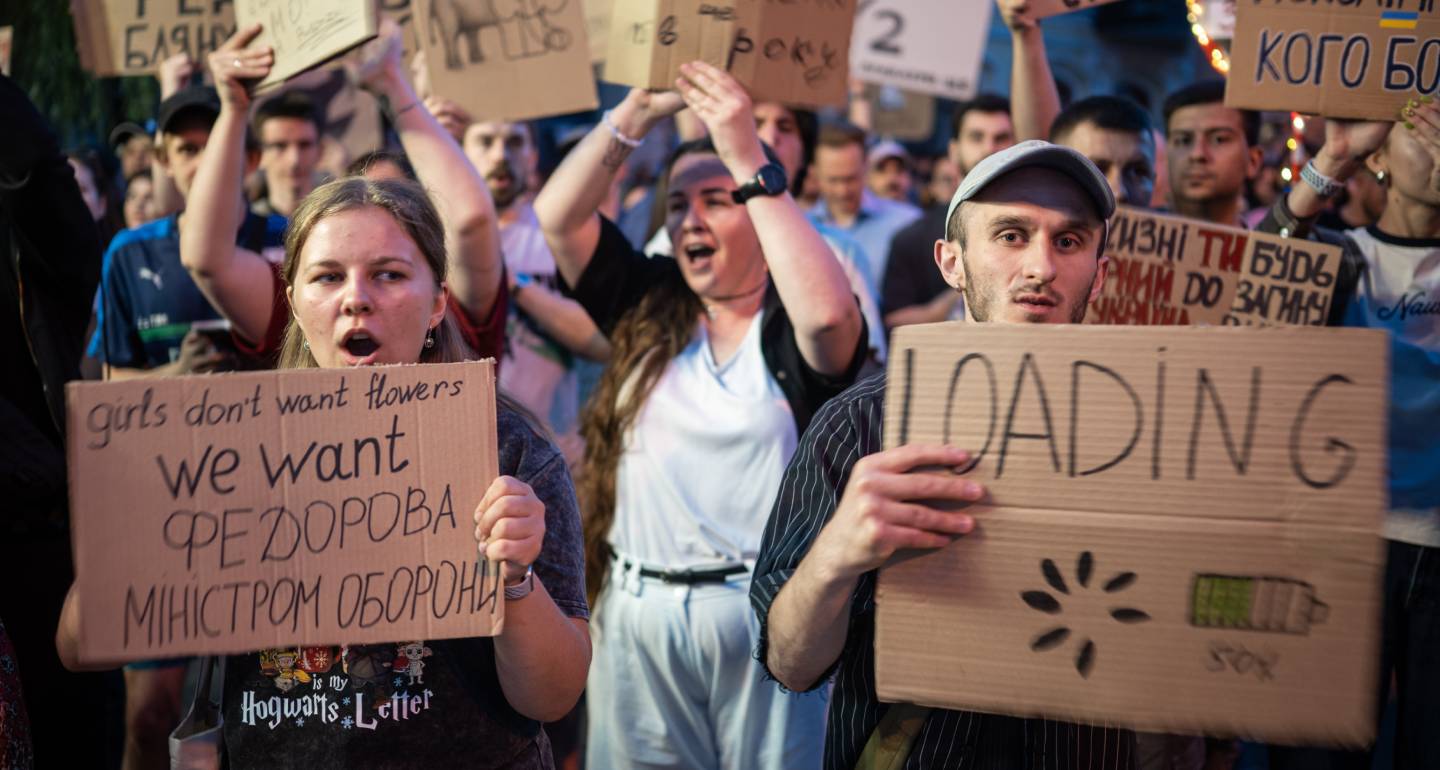
With his public call for new elections in Ukraine, ex-defense minister Mykhailo Fedorov has opened Pandora’s box.

Konstantin Skorkin

In any defense establishment, change is an ongoing process. However, despite the best of intentions, existing bureaucracies, bound by habit and years of socialization, have their limits in implementing transformative change.

Anit Mukherjee