

Paper
Xiaoping Yang
{
  "authors": [
    "Xiaoping Yang"
  ],
  "type": "legacyinthemedia",
  "centerAffiliationAll": "dc",
  "centers": [
    "Carnegie Endowment for International Peace",
    "Carnegie China",
    "Carnegie India"
  ],
  "collections": [],
  "englishNewsletterAll": "ctw",
  "nonEnglishNewsletterAll": "",
  "primaryCenter": "Carnegie Endowment for International Peace",
  "programAffiliation": "SAP",
  "programs": [
    "South Asia"
  ],
  "projects": [],
  "regions": [
    "South Asia",
    "India",
    "East Asia",
    "China",
    "Asia"
  ],
  "topics": [
    "Economy",
    "Security",
    "Foreign Policy"
  ]
}
Source: Getty
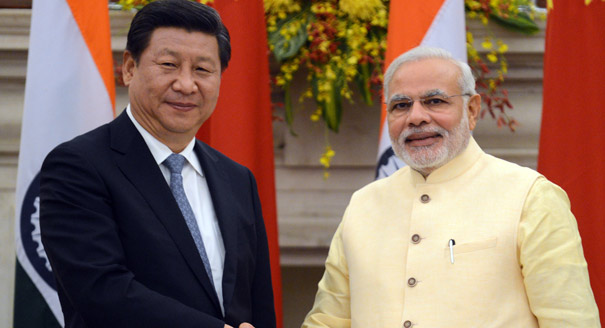
Intensifying strategic competition between India and China does not have to hinder cooperation in economic and social development, as long as both countries make development their ultimate goal.
Source: China-India Dialogue
For a long time, the Chinese mainstream views on India and its development have been very static. First, India’s “unique” democratic system has created sound strategic environment for its development while also limiting its growth rate; Second, despite the steady growth of its military strength, India still maintains defensive strategy and keeps traditions of diplomatic autonomy; Third, India’s innovation capacity is rooted in its well-educated elites, and the middle class is the primary driving force for its domestic consumption. To achieve better development in future, India urgently needs to solve problems such as unemployment of young people, as well as challenges concerning the livelihood of ordinary people including medical care, public health, housing, and drinking water.
Narendra Modi won the 2014 general election amidst the general hopes for change. Two years later, he overcame difficulties in an iron-fisted manner and eventually enabled the passing of the Goods and Services Tax (GST) Bill. These dynamics caused subtle changes in China’s view of India. On the one hand, the GST Bill has resulted in substantive changes in India’s investment environment, making its investment and economic prospects more promising, which also benefits China. On the other hand, the pragmatic national-interest-oriented approach adopted by Modi after his taking office will probably undermine India’s long-standing “strategic autonomy” tradition though in practice India might connect closer with China economically. This becomes particularly evident as the United States continues to push forward its Asia Rebalance strategy.
To some extent, the 1991 currency crisis forced India to launch its economic reform process. Despite its weak infrastructure, India’s software industry made full use of its advantages in English language and labor cost in the era of the digital economy, and occupied a certain position in the global service outsourcing chain, creating a unique India mode, featuring a thriving service industry.
Unlike many other countries, India bypassed the industrialization period and directly prioritized to develop the service industry. However, this may exert a negative impact on the country’s development in the long run, for such a model would fail to provide enough jobs for young Indians. In this case, India would be unable to take full advantage of its demographic dividend (laborers aged between 15 and 64 account for 65 to 70 percent of the total population), thus threatening its capability for sustainable economic development.
Creating large numbers of jobs requires inflows of tremendous foreign investment. However, India’s current overall investment environment is far from satisfying due to underdeveloped infrastructure, habitual bureaucratic practices of administration and taxation, difficulty in land acquisition, protectionism from powerful labor unions and environment organizations, and fragmented domestic market. According to the Global Competitiveness Report 2014-2015 released by the World Economic Forum, India is ranked 71st among 144 countries/regions in terms of international competitiveness, and 87th upon infrastructure index. It is widely acknowledged that operation cost of business is comparatively higher in India.
In this context, Modi’s reform is vital for the future of India’s economy. Theoretically, the reform aims to clear those chronic structural obstacles that are impeding India’s development. And strategically, three areas are listed as priorities, namely upgrading infrastructure, attracting more foreign investments, and creating the conditions for “reindustrialization” through “Make in India.”
In the field of infrastructure, the Modi administration mainly focuses on building telecommunication networks, upgrading highways and railways, reforming the taxation system, and constructing smart cities. In terms of attracting foreign investments, priority is given to improving the investment environment and rectifying laws and regulations, which involve the areas of land acquisition, electricity, taxation, and labor. “Make in India” initiative aims to facilitate the development of manufacturing in 25 separate sectors such as transportation, coal mining, electronics, chemicals, and food processing.
Modi’s reform doesn’t go smoothly. At power structure level, though Bharatiya Janata Party (BJP) enjoys majority in the Lok Sabha (Lower House of Parliament), the opposition still controls the Rajya Sabha (Upper House), which constrains Modi from fully exercising his power. At political force level, Modi’s reform, at some aspects, is doomed to harm the interests of some groups, thus evoking negative responses or even backlash in some cases. Therefore, in the past couple of years Modi’s reform actually faced more pressure than ever expected.
Fortunately, the reform achieved a breakthrough with the passing of the GST in August 2016, which gave ‘high’ stimulus to Modi’s following reforms. As well accepted, it wasn’t easy for the GST (also called the 122nd Constitutional Amendment Bill) to be passed, which involved not only amending of the Constitution, but also fierce bargaining between central and local governments.
Historically, the GST bill was passed by the Lok Sabha in 2015 with the introduction under India’s Finance Minister at the end of 2014, but could not pass the test in the Rajya Sabha until 2016. The existed debates on compensations for possible loss of some states, as well as the organizational structure, functions and authority of the GST Committee just fatigued the whole process. Somehow, a political consensus has been reached in August as a result of all-round compromises and balance of varied interests. The passing of GST has made a single integrated tax possible when buying goods or services in whole India. Meanwhile, GST will also contribute to decrease ‘smuggling’ between Indian states.
In addition to the GST, progress was also made on land acquisition considering India’s Land Acquisition Amendment Bill has been passed by the Lok Sabha, though in nature land acquisition is one of the items on the concurrent list.
So far, except for GST, Modi has only advanced essential reforms in those areas with fewer obstacles. This also implies the diversity, complexity and decentralization of India’s political complex. With regard to land acquisition, state governments are actually more influential than central government within India’s federal system. And in the field of attracting foreign investments, local states vary greatly due to their capacity differences on infrastructure and implementation. At national level, another challenge for the Modi administration is how to tackle bad debts of state owned banks, which have increased enormously since he became Prime Minister.
In sum, reform means not only just changes of rules and regulations, but also evolutions of ideas. It is undeniable that in spite of its rapid economic growth, India lags behind in updating its mindset, such as its attitude towards labor, land acquisition, and re-industrialization. In the course of its reform, India needs to constantly struggle against the ‘orthdox’ that has penetrated the blood of its administrative and government system.
Soon after Modi took power in 2014, China and India issued the Joint Statement on Building a Closer Developmental Partnership, according to which the two countries decided to “explore new areas for economic cooperation through the Sino-Indian Strategic Economic Dialogue in the fields including industrial investment, infrastructure development, energy conservation and environment protection, high-tech industry, clean energy and sustainable urbanization.”
By getting the GST passed, the Modi administration demonstrated New Delhi’s determination to further the reform, which in turn bolsters China’s confidence to cooperate with India, especially in the framework of development-driven and win-win cooperation. In the future, the two countries could make efforts to explore the opportunities in the following (but not refined to) realms.
First, in the infrastructure sector, including highways, railways, harbors, and housing, where India suffers from a tremendous shortage of funds, China may contribute to facilitate in funds, machinery equipment, technology, and project management professionals.
Second, in the power industry, considering the domestic pressure that India is facing from its environmental groups against establishing nuclear power plants, China’s expertise in thermal and solar power sector might be reconsidered as an option. Also it is expectable that in the future a more criteria-based norm would apply to nuclear energy and nuclear safety internationally.
Third, India may collaborate with China in terms of vocational skills training, thus improving the quality of its labor force.
Finally, there is a lot of room for China-India to cooperate in addressing the reality of a huge impoverished population and environmental pollution while India accelerates its urbanization process. The two countries could share experiences in poverty reduction and drinking water supply, and even carry out cooperations on transboundary water resources and biodiversity protection.
Some researches argue that China and India have “overlapped” strategic space in South Asia and Southeast Asia, so India (which is comparatively weaker) might consider to introduce a third party (such as the United States) to balance China, thus intensifying strategic competition between the two Asian neighbors.
However, if both countries make development their ultimate goal, this strategic competition does not necessarily hinder their “creative” cooperation in economic and social development. The key is to properly reduce the negative impacts of their trust deficit, and creatively expand the pie of common interests. Both China and India should realize that they are obligated to contribute their Oriental wisdom to the reshaping of world order together as representatives of developing countries.
This article was originally published in the China-India Dialogue.

Former Visiting Scholar, South Asia Program
Yang Xiaoping was a visiting scholar in the South Asia Program at the Carnegie Endowment for International Peace.
Recent Work
Xiaoping Yang
Carnegie does not take institutional positions on public policy issues; the views represented herein are those of the author(s) and do not necessarily reflect the views of Carnegie, its staff, or its trustees.

The ninety-three-year-old Biya’s absence and refusal to name a vice president threaten to upend domestic and regional stability.

Lesley Anne Warner

With the growth in points of friction between the great powers, organizations like the SCO will continue to play a role in the strategic adaptation of the smaller powers caught between them.

Temur Umarov
Amid celebrations of bilateral ties was a deeper focus on stability in the Middle East.

Amr Hamzawy

Canadian Prime Minister Mark Carney has twice inspired praise for standing up to U.S. President Donald Trump: at the 2026 World Economic Forum in Davos and on Canada-U.S. trade negotiations. Is Carney showing a third way better than the EU has in dealing with the Trump administration?

Rym Momtaz, ed.

Moscow is testing Europe’s defenses with drone incursions and could decide to use drones against the continent on a much larger scale once the war in Ukraine pauses. European countries will need Kyiv to help them prepare for such a possibility.

Pavlo Zvenyhorodskyi