

Research
- +4
Milan Vaishnav, Rahul Verma, Rukmini S., …
{
  "authors": [
    "Christophe Jaffrelot"
  ],
  "type": "legacyinthemedia",
  "centerAffiliationAll": "dc",
  "centers": [
    "Carnegie Endowment for International Peace"
  ],
  "collections": [],
  "englishNewsletterAll": "ctw",
  "nonEnglishNewsletterAll": "",
  "primaryCenter": "Carnegie Endowment for International Peace",
  "programAffiliation": "SAP",
  "programs": [
    "South Asia"
  ],
  "projects": [],
  "regions": [
    "South Asia",
    "India"
  ],
  "topics": [
    "Political Reform",
    "Religion"
  ]
}
Source: Getty
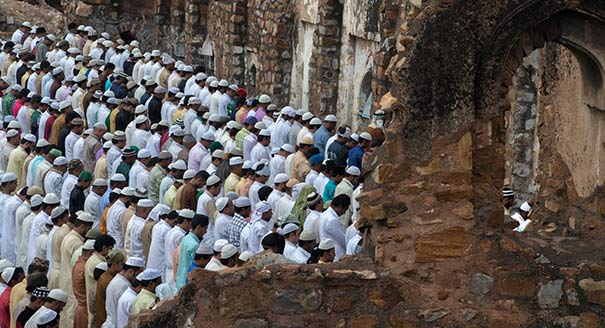
Arguments for “purification” through “nationalization” are redundant in the case of Indian Muslims. They have always looked to local sites and the land of their saints as their holy land.
Source: Indian Express
Last month, in the tribute he paid to Deendayal Upadhyaya on his birth centenary, Narendra Modi declared, “Fifty years ago, Pandit Upadhyaya said “Do not reward/appease (puraskrit) Muslims, do not shun (tiraskkrit) them, but purify (parishkar) them.” The notion of “purification” is clearly associated with Hinduism’s caste system, evident from the shuddhi rituals that Swami Dayananda, who founded Arya Samaj in 1875 and was the architect of Hindu revivalism, adapted to initiate the reconversion of Dalits who had become Muslims or Christians in Punjab. The Arya Samaj played on the craze for Sanskritisation that prevailed among some known as “untouchables” in the late 19th century. By passing them the sacred thread, the Arya Samajists tried to defuse centrifugal social forces and invited them to pay allegiance to savarnas’ values. For Dayananda, the Varna vyavastha was a model of social cohesion to which each caste could adhere, including the “untouchables”, after they underwent shuddhi.
Upadhyaya shared similar beliefs. The organic unity of the Varna vyavastha is one of the key ideas of his philosophy of “integral humanism”, referred to as the cornerstone of their ideology by Sangh Parivar leaders. In 1965, he wrote: “In our concept of four castes, they are analogous to the different limbs of Virat-Purusha, the primeval man whose sacrifice, according to the Rig Veda, gave birth to society in the form of the Varna vyavastha.” For him, the Varna vyavastha was endowed with the organic unity that could sustain the nation-making process.
The resilience of such categories explains why Hindu nationalist ideologues tried to apply techniques of “purification”, not only to Dalits but also to those who converted to other religions. This modus operandum was particularly relevant in the case of Hindu converts seen as of the same race — a very popular notion in the 19th and 20th century. Saraswati thought Hindus were descendants of the ancient Aryans, in whose veins ran the blood of the founders of the Vedic civilisation. Those who shifted to Islam could return to the Hindu fold simply by undergoing shuddhi.
Subsequently, the Hindu nationalist discourse vis-à-vis Islam shifted in a more political direction. V.D. Savarkar, who coined the Hindutva concept, wanted to purify Muslims ideologically, not religiously. He had a problem with non-Hindus because of the way they related to the land of Bharat: “Any convert of non-Hindu parentage to Hindutva could be a Hindu, if bona fide, he or she adopts our land as his or her country and marries a Hindu, thus coming to love our country as a real Fatherland, and adopts our culture and thus adores our land as the Punyabhu (sacred land).”
For Savarkar, Mohammedans and Christians possessed all the essential qualifications of Hindutva, but Christian Catholics were turned to Roma and Muslims were also problematic because, he said, “Their holy land is far off in Arabia and Palestine. Their mythology and godmen, ideas and heroes are not the children of this soil. Consequently their names and their outlook smack of foreign origin. Their love is divided.”
Which meant for Savarkar, Muslims had to be “nationalised”, the word he would use instead of “purified”, and that the Sangh Parivar leaders will use too when they designate conversion out of Hinduism as a “denationalisation” process.
Savarkar’s views of Indian Muslims’ allegiance to Arabia and Palestine are largely due to the Khilafat Movement which, in the early 1920s, convinced him that Muslims living in India were not loyal to their country and did not regard it as their sacred land. But ironically, they did — the sacredness of the Indian land is even one of the most remarkable features of Islam in India that reflects the pervasive influence of Sufism.
None of the Sufi saints — who established Islam in India — ever went to Mecca or Medina. Instead, they engaged in intense spiritual conversation with yogis, often establishing their abodes next to sacred Hindu sites. Their tombs became pilgrimage centres. Sultans and the great Mughals — Aurangzeb included — did not go to Mecca and Medina either (in fact, Akbar stopped Haj caravans and terminated relations with the sharifs of Mecca). Instead, they went to the dargahs of Mu’in al-Din Chishti in Ajmer, Nizamuddin Auliya in Delhi or to still other places. Iltutmish onwards, Muslim rulers looked at local Sufi saints as the protectors of their territory. Even their tombs were built near those of Sufi saints, like Humayun’s, in a Delhi locality named after Nizamuddin Auliya.
India also became sacred to the Muslims because of the popularisation of land-related legendary accounts. Amir Khusro, a poet and a close disciple of Nizamuddin Auliya, “read” in a hadith that India was where Adam descended after being expelled from paradise. According to Carl Ernst, Azad Bilgrami, a 17th century Islamic scholar, “described India as the place where the eternal light of Muhammad first manifested in Adam”. For Ernst, this reveals an eagerness “to show that India was in all ways closely linked to the essence of the Islamic faith”.
The crowds at the dargahs shows that while ideologues may be attracted by Saudi Arabia, popular Islam continues to be turned towards local sacred sites: “Purification” through “nationalisation” is redundant in the case of Indian Muslims, who always looked at the land of their saints as their holy land.
This article was originally published in the Indian Express.
Former Nonresident Scholar, South Asia Program
Jaffrelot’s core research focuses on theories of nationalism and democracy, mobilization of the lower castes and Dalits (ex-untouchables) in India, the Hindu nationalist movement, and ethnic conflicts in Pakistan.
Recent Work

Milan Vaishnav, Rahul Verma, Rukmini S., …
Christophe Jaffrelot
Carnegie does not take institutional positions on public policy issues; the views represented herein are those of the author(s) and do not necessarily reflect the views of Carnegie, its staff, or its trustees.

Ex-president Gurbanguly Berdimuhamedov remains interested in politics, but his son Serdar, Turkmenistan’s current president, is becoming increasingly independent and willing to break with his father’s legacy. If their covert rivalry goes too far, both risk losing power.

Galiya Ibragimova

A notable degree of participative democracy has firmly arrived in Europe. But to have more far-reaching impact, democratic deliberation needs to move into a radically new phase.

Richard Youngs
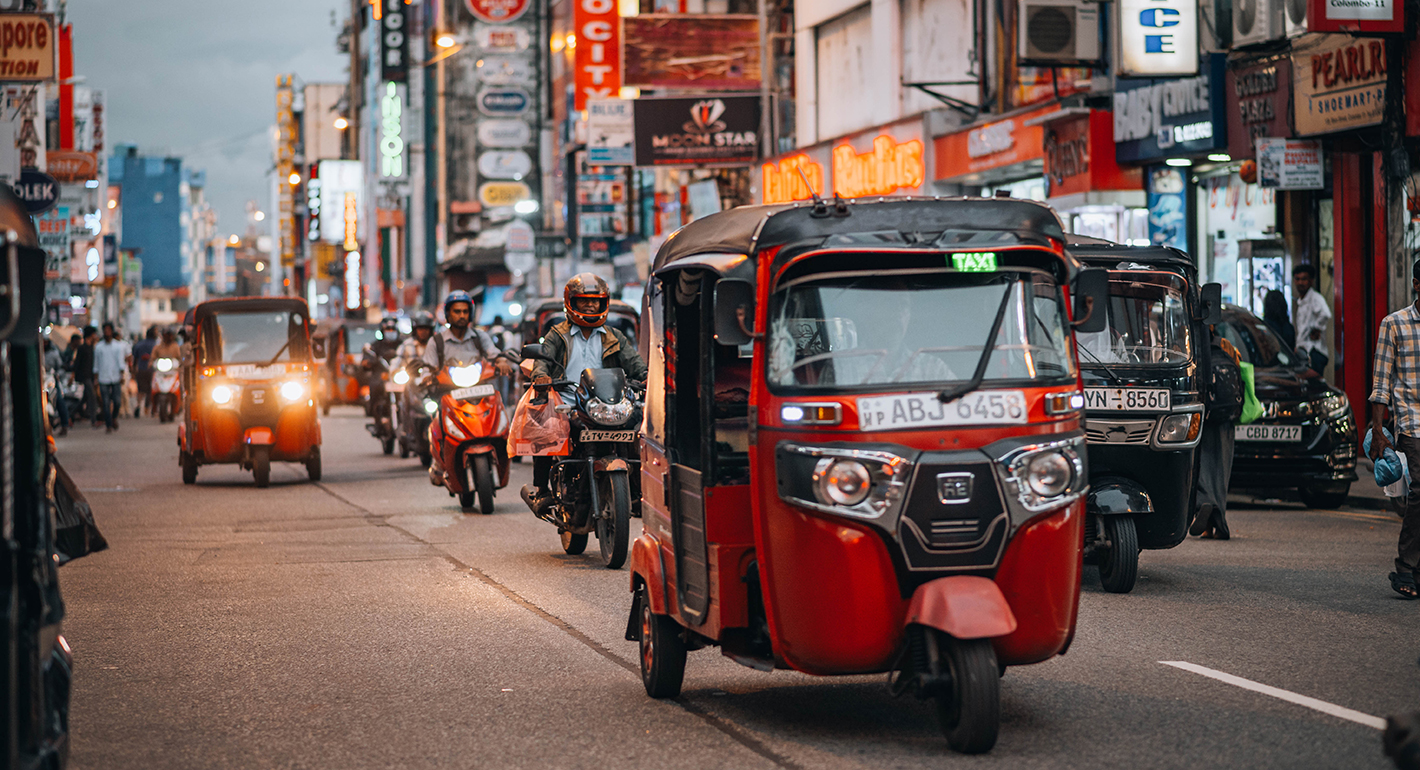
Economic recovery has brought Sri Lanka a modicum of stability, but domestic strains and great-power rivalry could test how long it lasts.
Avinash Paliwal
A deep dive into the policy ecosystems behind battery development in China, South Korea, Japan, the European Union (including some of its member states), the United States, Canada, and India.



Milo McBride, Herbert Crowther, Darcie Draudt-Véjares, …

Sergei Kiriyenko used Russia’s parliamentary vote to further hone his strategy of corporate mobilization that is designed to maximize votes for United Russia.

Andrey Pertsev