

Commentary
Marc Lynch
{
  "authors": [
    "Marc Lynch"
  ],
  "type": "legacyinthemedia",
  "centerAffiliationAll": "dc",
  "centers": [
    "Carnegie Endowment for International Peace",
    "Malcolm H. Kerr Carnegie Middle East Center"
  ],
  "collections": [
    "Arab Awakening"
  ],
  "englishNewsletterAll": "menaTransitions",
  "nonEnglishNewsletterAll": "",
  "primaryCenter": "Carnegie Endowment for International Peace",
  "programAffiliation": "MEP",
  "programs": [
    "Middle East"
  ],
  "projects": [],
  "regions": [
    "Middle East",
    "North Africa",
    "Egypt"
  ],
  "topics": [
    "Political Reform",
    "Democracy"
  ]
}
Source: Getty
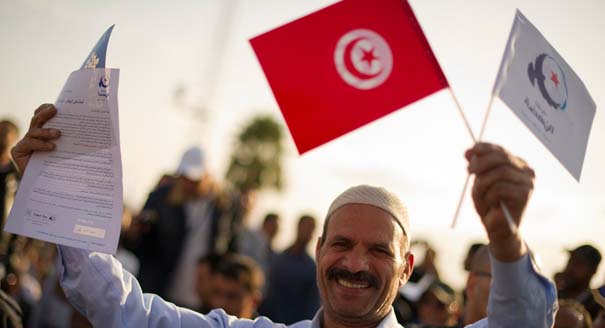
Despite several setbacks across the Middle East, Islamist parties have adapted in diverse ways to the new political environments.
Source: Washington Post
Islamist parties had seemed poised for political ascendance after the Arab uprisings, as they won elections in Egypt, Morocco, Libya and Tunisia. But the years since have not been kind to Islamists who pursued electoral politics. They have lost power won through elections in Egypt and Tunisia and have suffered extreme repression and surging popular hostility across many countries. Several Persian Gulf states have joined the Egyptian government in designating the Brotherhood a terrorist organization. The incoming Trump administration has been contemplating doing the same.
Because of its centrality to regional politics, Egypt’s Muslim Brotherhood understandably dominates discussion about Islamist parties. But, as I show in a new report for the Carnegie Middle East Program, Egypt’s experience is far from typical and many misleading lessons are being learned from its disaster. Across the region, Islamist parties have adapted in diverse ways to the new political environments. Most have done better than Egypt’s at navigating the new environment, and virtually all remain critical players in their domestic political scene. Taken collectively, the experience of Islamist parties over the past five years strongly suggests that political and institutional context — and not ideology or organizational structure — best explain their choices and behavior.
The centerpiece of the Islamist reversal was in Egypt, where the Muslim Brotherhood suffered crushing repression after the military coup on July 3, 2013, that removed President Mohamed Morsi from power. Its leadership has been decimated, its social service networks shut down and vast numbers of its membership killed, jailed or forced into exile. Egypt’s Muslim Brotherhood no longer exists in its traditional form as a rigidly hierarchical, highly structured organization with a significant public presence and a cautious strategy of limited political participation.
The poor showing of Egypt’s Muslim Brotherhood during its stint in power from 2012 to 2013 has been the central focus of much recent analysis of Islamism. Its failure has typically been blamed on the pathologies of its organizational structure or its extreme ideology. But Islamists hardly had a monopoly on failure during the complex politics of the post-2011 transition. Every Egyptian political trend failed at critical junctures of the transition. The military governed poorly between 2011 and 2012, and has deployed far more lethal violence after the 2013 coup than anything committed by Islamists. Egyptian activists, liberals and secularists failed repeatedly, contributing their share to the polarization and extreme rhetoric that overtook the transition.
Looking beyond Egypt further proves the limitations of sweeping conclusions about Islamist parties. In almost every Arab country, Islamist parties have adapted their political strategies to the local context rather than pursuing an unyielding ideology. Islamist parties have continued to contest elections when given the opportunity and to join coalitions when available. Jordan’s Muslim Brotherhood survived unprecedented state repression and internal divisions, returning successfully to parliamentary elections this year. Kuwait’s Islamic Constitutional Movement ended years of electoral boycotts and won four out of the five seats it contested. Morocco’s Party of Justice and Democracy has won consecutive parliamentary elections and has governed reasonably effectively within the constraints of the monarchical system.
Tunisia’s Ennahda most vividly demonstrates this Islamist adaptability. Contrary to the common mantra that Islamists would never voluntarily surrender power through elections, Ennahda did precisely that. Faced with a profound and escalating political crisis in 2013, the Islamist party decided to voluntarily surrender power to a technocratic government. It then gracefully accepted the victory of the anti-Islamist Nedaa Tounes party in both parliamentary and presidential elections, choosing to work closely with its rival to ensure national consensus rather than engage in scorched earth opposition. Earlier this year, it made a huge splash by separating the Ennahda party from the Islamist movement — although the realities of this split remain to be seen.
Other Islamist parties have found ways to make themselves useful to the same regional powers who have led the anti-Brotherhood campaign. Yemen’s al-Islah has been a critical componentof the Saudi-led coalition’s war. Despite its weakness on the ground, Syria’s Muslim Brotherhood established itself at the center of the opposition institutions supported by Turkey, the Gulf states and the West. Islamist parties across the Middle East have been key sources of financial and media support for the Syrian rebels more broadly. Bahrain’s al-Minbar made itself useful to the monarchy by rallying Sunni support for its harsh sectarian repression. Less successful has been Libya’s Muslim Brotherhood, caught up in a fierce proxy war.
Islamist parties tend to adapt to their political environment. But, given the increasingly intolerant, violent and repressive regional political environment, this is not necessarily reassuring. The regional campaign against the Muslim Brotherhood has taken a toll, especially in Egypt. So has the broader regional autocratic resurgence, which has closed down many traditional channels of political opposition. Shattered organizations such as Egypt’s Muslim Brotherhood are in no condition to play the role they once filled as a firewall against radical jihadists. The rise of the Islamic State, the popularity of the Syrian insurgency and the legacy of Egypt’s military coup have shifted the terms of Islamist thinking about violence.
Islamist parties and movements will continue to evolve to meet these challenges. Rather than drawing rigid conclusions, now is a time for researchers to question their assumptions about these organizations. Today’s Muslim Brotherhood is not a terrorist organization, but it is also not the organization we have been studying for the past few decades. My argument about the primacy of local political context over broad ideology for explaining how it is changing is not an especially reassuring one. Political repression, societal discontent, political violence, and the cascading human costs of wars in Iraq, Libya, Syria and Yemen mean that those local conditions are likely to worsen before they improve.
This article was originally published by the Washington Post.

Former Nonresident Senior Fellow, Middle East Program
Marc Lynch was a nonresident senior fellow in Carnegie’s Middle East Program where his work focuses on the politics of the Arab world.
Recent Work
Marc Lynch
Marc Lynch
Carnegie does not take institutional positions on public policy issues; the views represented herein are those of the author(s) and do not necessarily reflect the views of Carnegie, its staff, or its trustees.

Ex-president Gurbanguly Berdimuhamedov remains interested in politics, but his son Serdar, Turkmenistan’s current president, is becoming increasingly independent and willing to break with his father’s legacy. If their covert rivalry goes too far, both risk losing power.

Galiya Ibragimova

A notable degree of participative democracy has firmly arrived in Europe. But to have more far-reaching impact, democratic deliberation needs to move into a radically new phase.

Richard Youngs
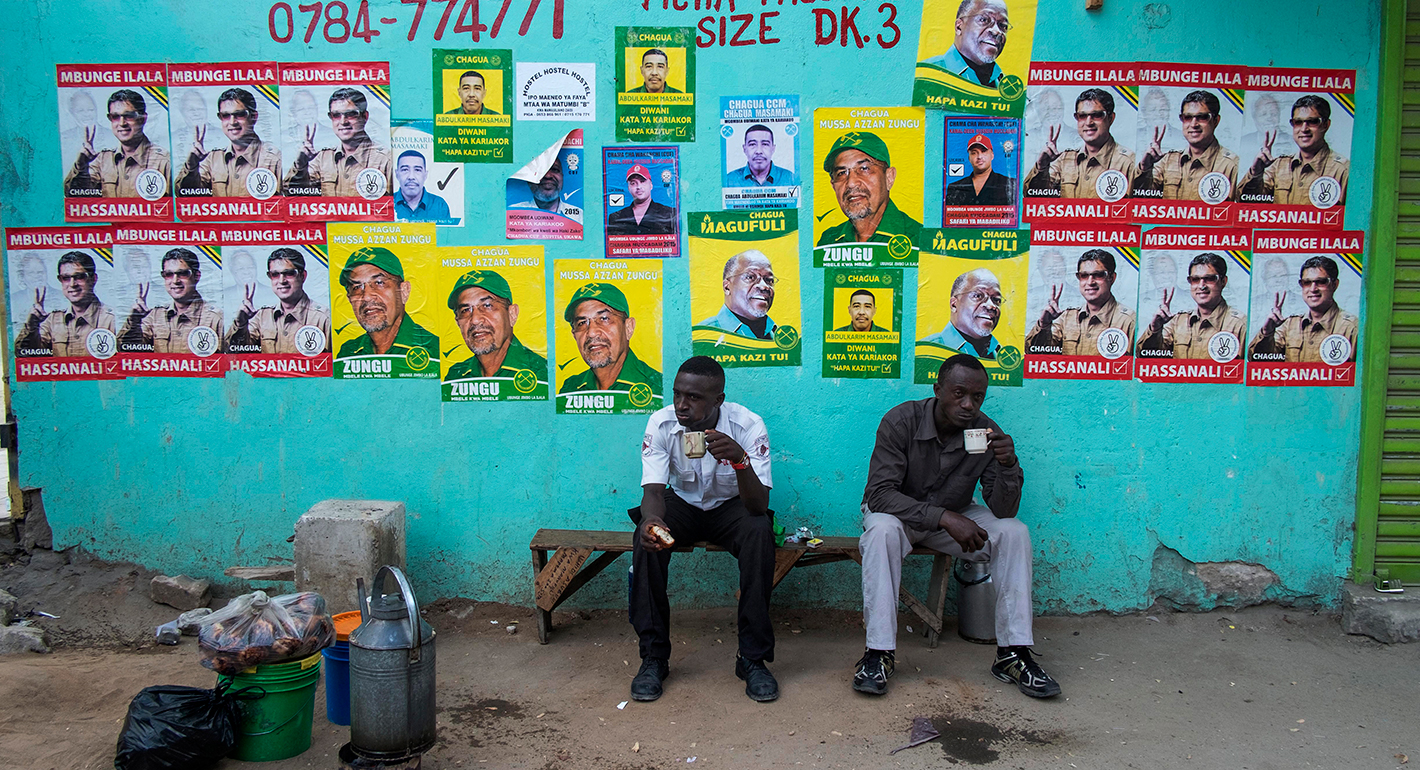
Today’s global democratic recession is partly rooted in a common perception that democracies have a delivery problem, with many citizens in both autocracies and democracies alike now believing that strongmen can achieve better governance outcomes. But a study of four countries in Africa reveals that democratic-leaning governments have demonstrated better governance performance than autocratic governments.


Sarah Yerkes, Natalie Triche, Amr Hamzawy
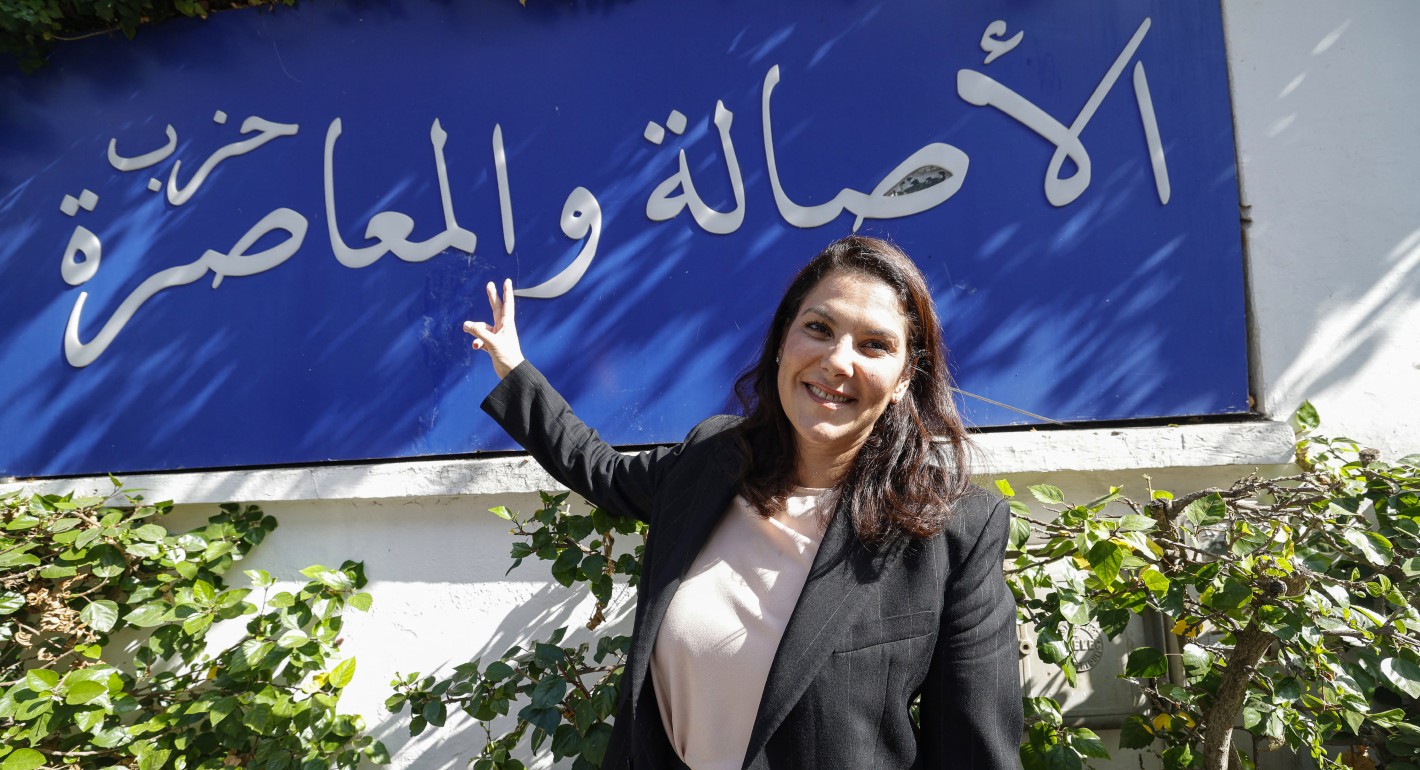
Fatima El Mansouri is the country’s first female prime minister. She’s also a privileged insider in a largely ceremonial position.
Sarah Yerkes

The domestic impacts of how long it is taking to end the war in Ukraine have pushed the French electorate to the political extremes and compromised the country’s diplomatic capacity.

Rym Momtaz