

Commentary
Aron Lund
{
  "authors": [
    "Aron Lund"
  ],
  "type": "legacyinthemedia",
  "centerAffiliationAll": "dc",
  "centers": [
    "Carnegie Endowment for International Peace",
    "Malcolm H. Kerr Carnegie Middle East Center"
  ],
  "collections": [
    "Arab Awakening"
  ],
  "englishNewsletterAll": "menaTransitions",
  "nonEnglishNewsletterAll": "",
  "primaryCenter": "Carnegie Endowment for International Peace",
  "programAffiliation": "MEP",
  "programs": [
    "Middle East"
  ],
  "projects": [],
  "regions": [
    "Middle East",
    "Syria",
    "Levant"
  ],
  "topics": [
    "Political Reform",
    "Security",
    "Military"
  ]
}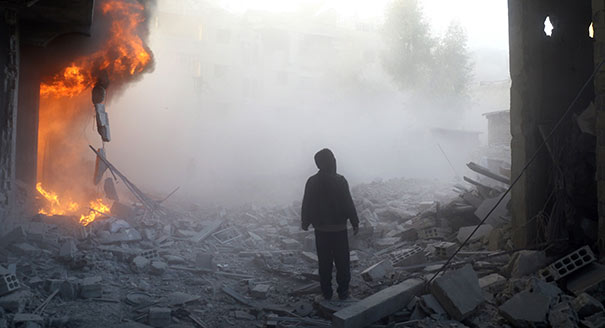
Source: Getty
Following infighting during the spring of 2016, the Eastern Ghouta has been split and Assad is now moving to recapture it.
Source: Century Foundation
In the sixth year of its civil war, Syria is a shattered nation, broken into political, religious, and ethnic fragments. Most of the population remains under the control of President Bashar al-Assad, whose Russian- and Iranian-backed Ba‘ath Party government controls the major cities and the lion’s share of the country’s densely populated coastal and central-western areas.
Since the Russian military intervention that began in September 2015, Assad’s Syrian Arab Army and its Shia Islamist allies have seized ground from Sunni Arab rebel factions, many of which receive support from Saudi Arabia, Qatar, Turkey, or the United States. The government now appears to be consolidating its hold on key areas.
Media attention has focused on the siege of rebel-held Eastern Aleppo, which began in summer 2016, and its reconquest by government forces in December 2016. The rebel enclave began to crumble in November 2016. Losing its stronghold in Aleppo would be a major strategic and symbolic defeat for the insurgency, and some supporters of the uprising may conclude that they have been defeated, though violence is unlikely to subside.
However, the Syrian government has also made major strides in another besieged enclave, closer to the capital. This area, known as the Eastern Ghouta, is larger than Eastern Aleppo both in terms of area and population—it may have around 450,000 inhabitants2—but it has gained very little media interest. One reason is that the political situation of the Eastern Ghouta is exceedingly complicated and difficult to parse. Despite a three-year army siege, ruthless shelling and airstrikes, and a sometimes very strict blockade on food and aid deliveries, discreet links have been maintained across the front lines. Even as they wage war on each other, certain progovernment and pro-opposition commanders remain connected through an informal wartime economy, muddling their political and military incentives and complicating any analysis of the situation.
The Eastern Ghouta is unique even in terms of its political players. Northern Syria is dominated by Islamist factions like Ahrar al-Sham, the Muslim Brotherhood’s Failaq al-Sham, and the al-Qaeda-linked Nusra Front (which renamed itself Fateh al-Sham in July 2016 and claims to have cut its ties with al-Qaeda). But these groups have only a limited presence in the Eastern Ghouta. There, instead, the insurgency has been led by factions indigenous to the area, including, at various times, a major Salafi group known as the Islam Army, the non-Salafi Islamists of Ajnad al-Sham, the self-declared Free Syrian Army faction Failaq al-Rahman, and local groups with opportunistic politics and uncertain ideology, such as Fajr al-Umma and the coalition known as the Umma Army.
In mid-2013, one of these factions began to overshadow all rivals: the Islam Army, a military-religious organization led by the Salafi firebrand Zahran Alloush, who would come to play a pivotal part in the Eastern Ghouta rebellion. By early 2015, Alloush had managed to pressure nearly all other local factions into joining military and judicial institutions under Islam Army dominance. The power of the Islam Army kept smaller factions in check and brought a modicum of stability to the enclave, allowing it to maintain a more or less united front against the Syrian government. Though he was resisted and reviled by critics who opposed his autocratic methods, Alloush began to appear as one of the insurgency’s few effective state-builders.
The efforts to establish a new political order under Alloush’s dominance make the Eastern Ghouta important to understand—and tragically relevant for the rest of Syria and, indeed, for other fragmented insurgencies. For over five years, the Syrian opposition has failed to produce any viable alternatives to the government it seeks to replace. Only two credible state-building projects have emerged in the territories abandoned by Assad’s regime: the Sunni-fundamentalist “caliphate” of the so-called Islamic State, and the Rojava region run by secular-leftist Kurdish groups. However, both have developed in opposition to the general thrust of the Sunni Arab insurgency and neither could hope to seize Damascus and rule Syria. While other Syrian opposition groups have created a variety of coalitions, military councils, and rival leaderships-in-exile, they have failed to develop effective ground-level governing structures that supersede factional divides and are able to impose themselves on the population. In the Eastern Ghouta, an exception to that rule seemed to be taking shape in 2014–15, led by the Islam Army.
But the balance of power that had enabled Alloush’s ascent eventually began to crumble, due to changes in the enclave’s political economy that weakened the Islam Army and provoked conflicts over smuggling revenues. Alloush’s death in December 2015 created a political vacuum that second- and third-tier factions sought to fill. As the Islam Army’s dominance faded, intra-rebel conflict resurfaced with devastating effect.
In April 2016, major infighting split the Eastern Ghouta enclave, putting a decisive end to the Eastern Ghouta’s experiment with rebel unity. It also seems to have hastened the end of the enclave itself. In the months since, the Syrian army has retaken about a third of the area, and it is now pushing to impose “ceasefire” deals that will effectively dismantle the last anti-government stronghold near the Syrian capital. If this succeeds, Bashar al-Assad will have dealt a crippling blow to the opposition.
Though the insurgency in the Eastern Ghouta has been the product of unique circumstances, the rise of its rebellion—and now likely also its fall—remains instructive for what it tells us about the development of factionalized insurgencies, how political order may be created from the bottom up, and what conditions facilitate state-building successes or presage their failure.
Former Nonresident Fellow, Middle East Program
Aron Lund was a nonresident fellow in the Middle East Program and the author of several reports and books on the Syrian opposition movement.
Recent Work
Aron Lund
Aron Lund
Carnegie does not take institutional positions on public policy issues; the views represented herein are those of the author(s) and do not necessarily reflect the views of Carnegie, its staff, or its trustees.
Trade statistics show why Amman has more reason than Damascus to welcome the improvement in bilateral commerce.

Armenak Tokmajyan
Europe seems to have accepted its sidelining in the Middle East. The EU must reassert its support for the international rules-based order and step up engagement.

Rym Momtaz
By reminding the world that Lukashenko is a threat to NATO and Ukraine, Kyiv is trying to return the focus to why the Belarusian regime needs to be contained rather than rewarded.

Artyom Shraibman
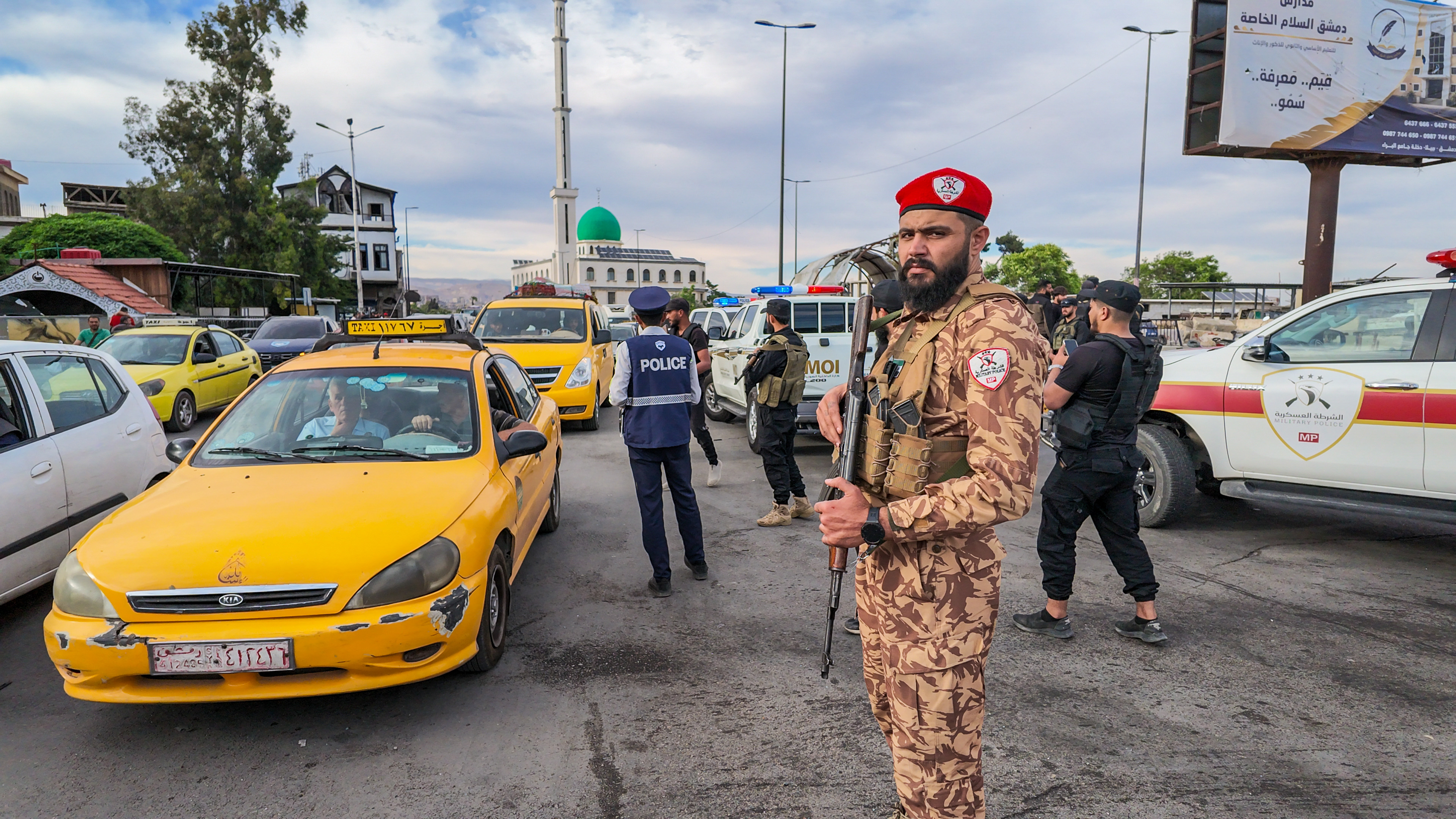
The country’s armed forces have been reorganized as an emergency measure to prevent national fragmentation, however their diffuse structure on the ground may, in the future, serve only to reinforce fragmentation.
Kheder Khaddour
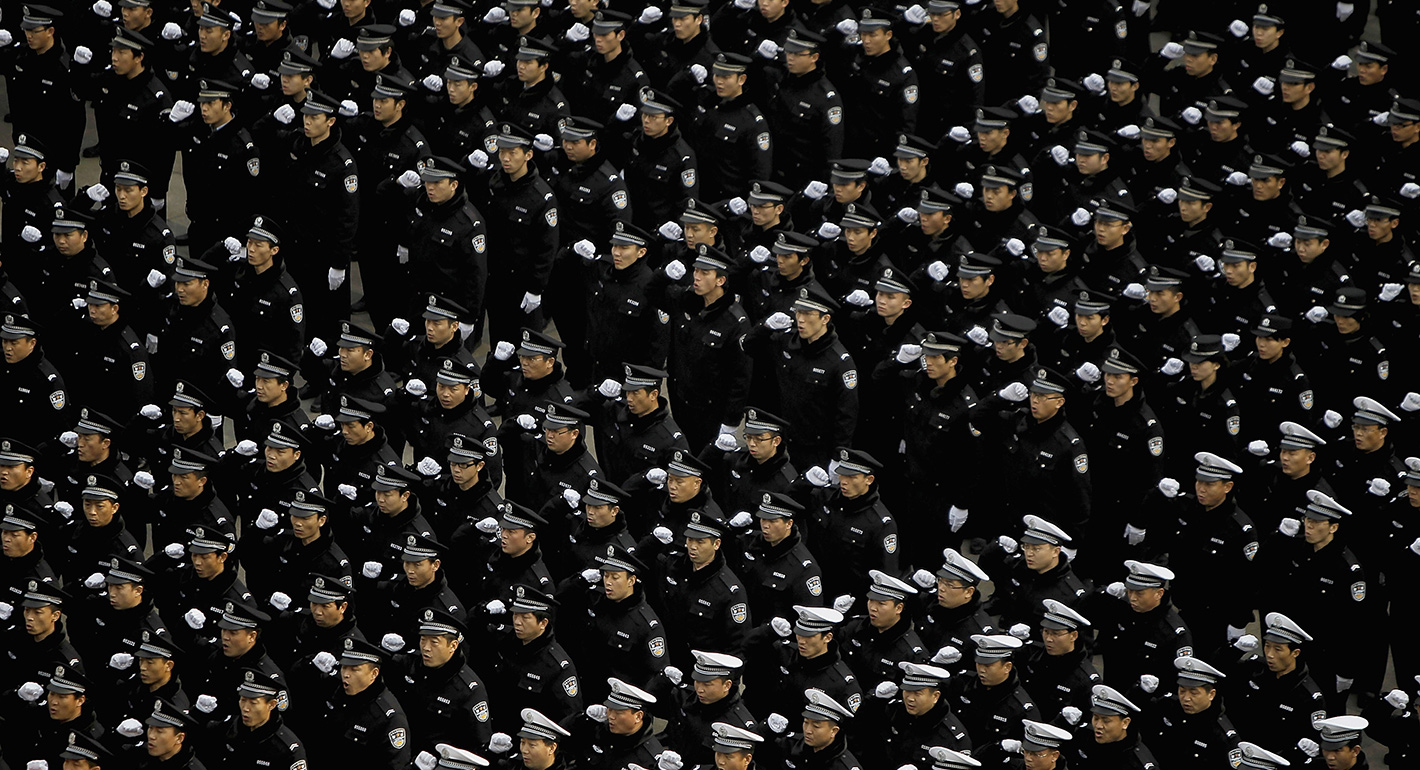
China’s Ministry of Public Security is often portrayed as a domestic law enforcement agency, but it is also a global security actor. This paper explores how MPS has used international law enforcement and security cooperation agreements—over 200 since 2006—to advance China’s vision of security in a changing global environment.


Sophie Zhuang, Sheena Chestnut Greitens, Cameron Waltz