

Commentary
Despite public disputes over trade and immigration, the strategic partnership’s foundations remain sturdy.
Sameer Lalwani
{
  "authors": [
    "Frederic Wehrey",
    "Robin Wright",
    "et al."
  ],
  "type": "other",
  "centerAffiliationAll": "dc",
  "centers": [
    "Carnegie Endowment for International Peace",
    "Malcolm H. Kerr Carnegie Middle East Center"
  ],
  "collections": [],
  "englishNewsletterAll": "menaTransitions",
  "nonEnglishNewsletterAll": "",
  "primaryCenter": "Carnegie Endowment for International Peace",
  "programAffiliation": "MEP",
  "programs": [
    "Middle East"
  ],
  "projects": [],
  "regions": [
    "Middle East",
    "North Africa",
    "Levant"
  ],
  "topics": [
    "Political Reform",
    "Security"
  ]
}
Source: Getty
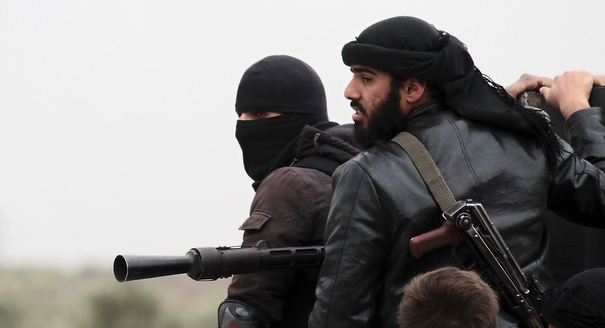
Since 2001, jihadism has evolved and proliferated in ways both unanticipated and once considered unimaginable.
Source: United States Institute of Peace
Jihadism has evolved dramatically and traumatically since the 9/11 attacks. Movements, leaders, targets, tactics, and arenas of operation have all proliferated in ways unimagined in 2001. The international community has mobilized unprecedented force against an array of jihadis, with mixed results. The United States alone has spent trillions of dollars—in military campaigns, intelligence, law enforcement, homeland security, and diplomacy—to counter jihadism. Progress has been made; fewer than a hundred people were killed inside the United States between 2001 and late 2016—in stark contrast to the death toll on 9/11. Yet the threat endures.
The emergence of the Islamic State—also known as ISIS, ISIL, or Daesh—transformed the world of jihadism. After capturing large swaths of Iraq and Syria in 2014, the Islamic State attracted tens of thousands of foreigners who sought to build a new Islamic society in a modern caliphate. They included engineers, accountants, teachers, grandparents, and teenage girls, as well as fighters. They reinvigorated existing jihadist movements and galvanized a new wave of support for jihadism generally. In 2014, ISIS seemed to eclipse al-Qaeda.
But al-Qaeda, the vanguard of the global jihadist movement, is seeking to reclaim its primacy. It has built support among local jihadist groups in the Middle East, Africa, South Asia, and the Caucasus. Core leaders still provide overall directives, although they have also dispersed among affiliates. Advisors help groups define local goals and targets. Al-Qaeda has played the long game, and it may prove to be a more enduring model than the Islamic State.
Together, ISIS and al-Qaeda pose complementary threats to global security. But the jihadist spectrum is also far more diverse today than it was on 9/11. The danger is not justfrom this duo.
Local extremist groups are creating ever more complex variations of jihadism across the Middle East. Some invoke the global jihadist rhetoric of al-Qaeda or ISIS, while others are more nationalist. Some of these groups—such as Jabhat Fateh al-Sham ( JFS) and Ahrar
al-Sham—are “country-first” jihadists, albeit with different levels of commitment to nationalist politics. Their immediate focus has been establishing institutions within the local communities where they have thrived, even if they have networks outside or connections abroad. For this reason, disentangling local Sunni communities from country-first jihadis will prove as challenging as routing out ISIS from cities in Iraq and Syria, as the United States and its partners are doing.
Another variation is the “marbling” of jihadi groups. Local country-first groups have fluid relationships with global jihadist movements—merge or cut ties with one another as is convenient. The shifts often happen for strategic, logistical, or financial (including salary-related) reasons rather than for purely ideological ones.
Regardless of the fate of ISIS and al-Qaeda, Sunni extremist movements have proliferated at a time when governments across the region are comparatively weak or vulnerable. Traditional forms of authority are being challenged; traditional forms of national identity are being redefined. New political spaces have emerged that are beyond the control of traditional governments. As a result, the region—politically and physically—is extremely vulnerable....
This piece was originally published by the United States Institute of Peace.

Senior Fellow, Middle East Program
Frederic Wehrey is a senior fellow in the Middle East Program at the Carnegie Endowment for International Peace, where his research focuses on governance, conflict, and security in Libya, North Africa, and the Persian Gulf.

Robin Wright
Contributing Writer and Columnist, The New Yorker
Robin Wright, a contributing writer and columnist, has written for The New Yorker since 1988. Her first piece on Iran won the National Magazine Award for best reporting. A former correspondent for The Washington Post, CBS News, The Los Angeles Times, and The Sunday Times of London, she has reported from more than a hundred and fifty countries and all seven continents. She has also been a senior fellow at the Woodrow Wilson International Center for Scholars, the U.S. Institute of Peace, the Brookings Institution and the Carnegie Endowment for International Peace as well as at Yale, Duke, Dartmouth, and the University of California.
et al.
Carnegie does not take institutional positions on public policy issues; the views represented herein are those of the author(s) and do not necessarily reflect the views of Carnegie, its staff, or its trustees.

Despite public disputes over trade and immigration, the strategic partnership’s foundations remain sturdy.

Sameer Lalwani

It signals a new era of tech diffusion and warfare.

Steve Feldstein

With its public finances in shambles, the far right polling at 35 percent ahead of the 2027 presidential election, and a growing protest movement, is France’s crisis a threat to the EU’s geopolitical awakening?

Rym Momtaz, ed.

Putin’s conservative staffing policies and search for ever greater control have cemented parliament’s transformation into a bureaucratic appendage of the executive branch.

Andrey Pertsev

Russia’s AI-driven propaganda campaigns operate in a fragmented, chaotic, and often illogical manner. That’s not necessarily a problem for the Kremlin, though: It’s much easier to mimic genuine public debate that way.

Ilya Klishin