

Commentary
A summer of escalation in the Black Sea has hurt Ukraine economically and is exacerbating world food security. A truce is needed—as is a broader reframing of Europe’s Ukraine strategy.
Thomas de Waal
{
  "authors": [
    "Saksham Khosla"
  ],
  "type": "legacyinthemedia",
  "centerAffiliationAll": "",
  "centers": [
    "Carnegie Endowment for International Peace",
    "Carnegie India"
  ],
  "collections": [],
  "englishNewsletterAll": "",
  "nonEnglishNewsletterAll": "",
  "primaryCenter": "Carnegie India",
  "programAffiliation": "",
  "programs": [],
  "projects": [
    "Political Economy"
  ],
  "regions": [
    "South Asia",
    "India"
  ],
  "topics": [
    "Domestic Politics",
    "Economy",
    "Political Reform"
  ]
}
Source: Getty
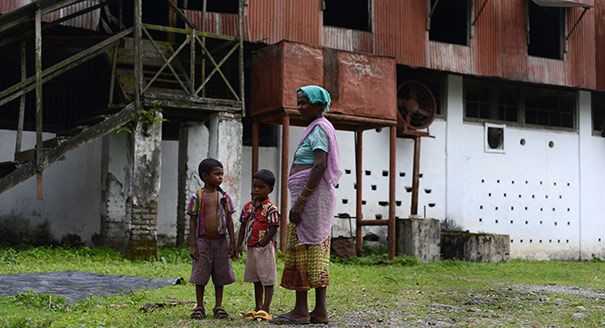
As the universal basic income discussion evolves, it is imperative that policymakers deliberate upon the research on cash transfers, the administrative muscle required to disburse benefits across the land, and the contextual factors driving the revealed preferences of the poor.
Source: Livemint
These are heady times for the Indian welfare state. Comments by government officials have renewed hope that a universal basic income, or a variant thereof, is under serious consideration. Presenting the state’s budget earlier this month, Jammu and Kashmir finance minister Haseeb Drabu proposed a targeted basic income in the form of cash transfers. Articulating a more critical view, Niti Aayog vice-chairman Arvind Panagariya, in a recent interview, stated that India simply lacked the fiscal room to deliver a universal basic income benchmarked to the poverty line. Chief economic adviser Arvind Subramanian had indicated in September that the Economic Survey will likely examine the mechanics of implementing a universal basic income in detail. What practical and analytical criteria might the Survey’s evaluation, slated for release on Tuesday, incorporate?
Several distinguished economists have examined the question of affordability in great detail. To avoid repetition, I focus on three pressing questions that deserve equal attention: As a tool of poverty alleviation, what specific benefits does a universal basic income unlock? What delivery mechanism will the Indian state employ for this transfer? Must existing welfare schemes be cut to make space for a universal basic income? A reading of the evidence on the subject throws both the knowns and unknowns of a universal basic income into sharp relief.
First, there is little question that unconditional cash transfers are a progressive policy instrument. Headline results from randomized control trials (RCTs) conducted in Madhya Pradesh and Delhi show that monthly unconditional cash transfers do not harm food security and do not encourage unemployment or wasteful expenses. In 2010, Shubhashis Gangopadhyay and others gave households the choice of receiving Rs1,000 in lieu of subsidized food through the public distribution system (PDS). The study found that the fear that households would shift their spending away from nutritious foods was unfounded, and no concomitant increase in the consumption of alcohol was observed. In India’s only experiment with basic income, Guy Standing and others launched two pilots in Madhya Pradesh in 2011 where over 6,000 individuals received monthly payments (Rs300 per adult and Rs150 per child) for 12 to 18 months. This modest sum enabled a multitude of positive impacts on nutrition, health, indebtedness and investment, with women, scheduled castes and the differently abled benefiting the most. The number of hours worked increased in villages receiving the basic income, with no impact on spending on alcohol. While the limited sample size does not allow one to extrapolate the results across the country, they do inspire confidence in the virtues of making small transfers to easily targeted communities in need.
Echoes can be found in the research on cash transfers in comparative contexts. A review of 165 studies across 30 countries found that they reduce poverty, encourage school attendance and use of medical services, improve savings, and benefit women’s decision-making power. Data on conditional and unconditional transfers from Asia, Africa and Latin America finds either no or negative impact on alcohol and tobacco expenditure, while other studies show no evidence that such programmes discourage work. But must such transfers be provided over many years to everyone in a community, rich and poor, to reap such benefits? We simply do not know yet. GiveDirectly, a non-profit specializing in cash transfers to Uganda and Kenya’s poor, announced the launch of a novel RCT last year which intends to give at least 6,000 Kenyan individuals approximately a dollar a day for 10-15 years. It will take approximately a year or two for data on consumer behaviour to become public.
The second question concerns India’s state capacity constraints. How will the state distribute basic income grants and verify delivery? The limits of India’s banking and digital payment networks are well known. Recent reports indicate the government’s interest in shifting beneficiary identification from indicators based on the poverty line to individual-level data from the 2011 Socio-Economic Caste Census linked to the Aadhaar database. While the combination of a unique Aadhaar number linked to biometric data was expected to improve targeting for the PDS, news reports from Jharkhand, Rajasthan, Chhattisgarh and Gujarat paint a dismal picture. Large numbers of beneficiaries have had to go without their entitlements as unreliable fingerprints, connectivity infrastructure and false rejection rates led to system failures. When the mechanism works, however, it can deliver outsize benefits—biometric smart cards reduced corruption and improved payment delivery in two expansive employment and pension transfer programmes in Andhra Pradesh. Variations in sub-national state capacity will clearly continue to plague welfare schemes, even those based on universal coverage.
The final question concerns a universal basic income’s place in India’s complex welfare architecture. Should it replace the government’s flagship poverty programmes? A survey of rural households conducted in nine Indian states in 2011 found that nearly two-thirds of all respondents preferred in-kind food transfers over cash. Another survey held in 2012 to study the performance of the Mukhyamantri Balak and Balika Cycle Yojana in Bihar found that more than half of all beneficiaries surveyed favoured receiving the in-kind transfer (a bicycle) over cash. On the other hand, a nationally representative household survey conducted last year found that about 53% of households preferred cash transfers in comparison to 29% in favour of in-kind foodgrain transfers. To explain this variation, the literature points to background factors like sociocultural norms, demographic idiosyncrasies, the efficiency and presence of local markets, and access to banking facilities. India’s size and diversity warns against adopting a one-size-fits-all cash policy that risks leaving India’s poor with cash in hand but nowhere to spend it.
As the universal basic income discussion evolves, it is imperative that policymakers deliberate upon the research on cash transfers, the administrative muscle required to disburse benefits across the land, and the contextual factors driving the revealed preferences of the poor. The Economic Survey has a great opportunity to expand the contours of the public debate on a universal basic income and address key knowledge and implementation gaps. One hopes that the Survey will grapple with some of these fundamental questions of policy design.
Saksham Khosla
Former Research Analyst, Carnegie India
Saksham Khosla was a research analyst at Carnegie India.
Carnegie does not take institutional positions on public policy issues; the views represented herein are those of the author(s) and do not necessarily reflect the views of Carnegie, its staff, or its trustees.

A summer of escalation in the Black Sea has hurt Ukraine economically and is exacerbating world food security. A truce is needed—as is a broader reframing of Europe’s Ukraine strategy.

Thomas de Waal
Why governance of rapidly evolving technology will be distributed and complex.


Stewart Patrick, Scott Singer

If the Russian-speaking community in Latvia cannot articulate their interests without being seen as disloyal, they could end up embracing a pro-Kremlin agenda.

Sergejs Potapkins

Washington’s decision to support some UN functions while letting others wither is pulling the organization apart at the seams.
Stewart Patrick, Theodore Zaritsky

Russia’s ruling party would have benefited from Putin appearing as its distant patron, but as an active frontman imposing his views on the public, he has done nothing but harm both the party’s election campaign and the ruling system overall.

Andrey Pertsev