

Commentary
Despite its flop at the box office, the film raises important questions for the climate community to answer.
Leonardo Martinez-Diaz
{
  "authors": [
    "Ananth Padmanabhan",
    "Shashank Reddy"
  ],
  "type": "legacyinthemedia",
  "centerAffiliationAll": "dc",
  "centers": [
    "Carnegie Endowment for International Peace",
    "Carnegie India"
  ],
  "collections": [],
  "englishNewsletterAll": "ctw",
  "nonEnglishNewsletterAll": "",
  "primaryCenter": "Carnegie India",
  "programAffiliation": "SAP",
  "programs": [
    "South Asia"
  ],
  "projects": [],
  "regions": [
    "South Asia",
    "India"
  ],
  "topics": [
    "Technology",
    "Climate Change"
  ]
}
Source: Getty
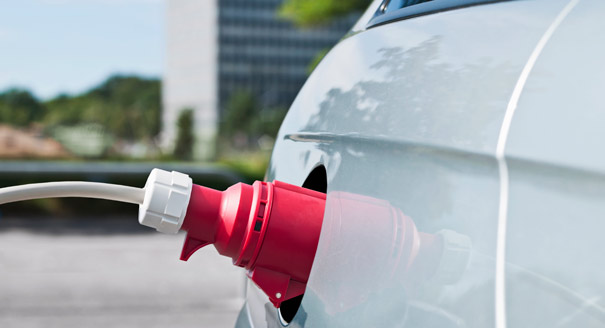
Electric vehicles offer advantages that are particularly suited to India’s economic and environmental conditions.
Source: Livemint
Ashlee Vance, in his recent biography Elon Musk: Tesla, SpaceX, And The Quest For A Fantastic Future, writes that Tesla’s original founders encountered few venture capitalist funds willing to advance relatively modest investments their way in 2003. But Tesla grew to dethrone General Motors a few weeks ago as America’s most valued automobile company. The resistance in its formative years, and Tesla’s astounding success thereafter, share a common cause: its exclusive focus on electric cars.
Market sentiment has changed over the last 14 years because of several advantages offered by electric vehicles (EVs). EVs are much more eco-friendly than internal combustion engines. They significantly reduce the oil import bill of nations, bolstering energy security. They can also be much cheaper than conventional vehicles in the long run, due to fewer moving parts, lower maintenance costs, and reduced fuel expenses.
However, in FY16, only 22,000 EVs were sold in India, of which approximately 2,000 were cars and the rest two-wheelers. In Norway, EVs accounted for 23% of all new car sales in 2015. The figure for the same year stood at 9% in the Netherlands. China is now the largest market for electric buses, with over 173,000 of them on its roads. In 2015, China also became the top electric passenger car market globally. Perceived from this lens, the Indian market for EVs has seen minimal uptake.
But hope is on the horizon, with the Central government’s renewed commitment to EVs, especially for public transportation. This is critical considering how India lost out in the early phase of EV adoption. 2013-14 was particularly bad, as electric two-wheeler sales crashed to a mere 21,000 units from 100,000 two years prior. Nearly half the total number of e-bike distributors closed shop during that period. Though the National Electric Mobility Mission Plan (Nemmp) 2020 generated positive buzz when launched in January 2013, subsidies and incentives promised by the plan were difficult to come by. Several new players in this sector wound up, leading to a loss of innovative capabilities and solutions.
On the contrary, the Faster Adoption and Manufacturing of (Hybrid &) Electric Vehicles in India (FAME) scheme, launched in 2015, seeks to tackle the pain points largely unaddressed by Nemmp in its first phase. To overcome the scattered presence of charging stations, and the additional barrier of still-expensive batteries, the Narendra Modi government is contemplating a policy push for the sale of EVs without batteries, supplemented with battery leasing operations and battery swap stations. This is an important step, considering most projections (except Tesla’s own aggressive 2020 deadline) place somewhere between 2025-30 as the period when battery pack prices will fall below the current gold standard of $100 per kWh. India cannot afford to wait that long.
The xEV One consortium, a collaborative effort between the government of India and car manufacturers to develop a supplier base for critical hybrid and EV components, started off on a wrong footing with Maruti Suzuki and Ford India backing out. But the government appears committed to the driving philosophy behind the consortium—public-private collaboration. A recent partnership with Ola Cabs, pursuant to Masayoshi Son of SoftBank (Ola’s investor) committing to a million EVs, that aims to introduce a fleet of 300 electric cars in Nagpur, is a case in point.
More policy innovations, both from the Centre and the states, are required to ensure the success of these green initiatives. These steps can be structured around three key themes. The first, and perhaps the most obvious, is the targeting of direct sops and incentives for EV and component manufacturers, as well as consumers. From the supply side, such interventions include speed-tracking of environmental and labour clearances, tax rebates and exemptions. Demand-side interventions include direct consumer subsidies, waiver of road tax and registration fees, GST (goods and services tax) refunds, and free parking spaces.
The second step must be a renewed commitment on the part of governments to provide and promote greater public infrastructure for EVs, including public charging stations, dedicated electric supply lines for such stations, and battery swap stations. Doing so will infuse much-needed trust and confidence in this mobility solution. As seen from the earlier failure of Nemmp, financial incentives do not work by themselves.
Third, and equally important, is a big boost for R&D (research and development) innovation in this space. In February 2016, a Technology Platform for Electric Mobility was initiated jointly by the departments of heavy industries, and science and technology. Five projects have been accurately identified therein for “demand driven R&D to achieve desirable target specs”—lithium battery, charging infrastructure, driving cycle and traffic pattern, motors and drives, and lightweighting of EVs. These are clearly the most critical areas for research, and directing funding will be instrumental in meeting the Nemmp target of six million EVs/hybrids by 2020. In addition, a robust system of incentives for private entities spearheading EV innovation, including tax credits for setting up research labs, is crucial.
EVs offer advantages that are particularly suited to India’s economic and environmental conditions. India must move quickly in this space, both in terms of EV adoption and innovation, to transition to a cleaner, greener and more efficient age of mobility.
Former Fellow, Carnegie India
Ananth Padmanabhan was a fellow at Carnegie India, based in New Delhi. His primary research focus is technology, regulation, and public policy, and the intersection of these three fields within the Indian context.
Shashank Reddy
Shashank Reddy is a researcher with Carnegie India.
Carnegie does not take institutional positions on public policy issues; the views represented herein are those of the author(s) and do not necessarily reflect the views of Carnegie, its staff, or its trustees.

Despite its flop at the box office, the film raises important questions for the climate community to answer.

Leonardo Martinez-Diaz

Economic recovery has brought Sri Lanka a modicum of stability, but domestic strains and great-power rivalry could test how long it lasts.

Avinash Paliwal

The acknowledgment has sparked fears of a new arms race with China and Russia.

Chris O’Meara

The summit may be remembered as a fatal blunder, when Washington, Beijing, and the AI industry collectively chose ceremony over action.

Jeffrey Prescott

A deep dive into the policy ecosystems behind battery development in China, South Korea, Japan, the European Union (including some of its member states), the United States, Canada, and India.



Milo McBride, Herbert Crowther, Darcie Draudt-Véjares, …