

Other
Michael D. Swaine
{
  "authors": [
    "Michael D. Swaine"
  ],
  "type": "legacyinthemedia",
  "centerAffiliationAll": "dc",
  "centers": [
    "Carnegie Endowment for International Peace",
    "Carnegie China"
  ],
  "collections": [],
  "englishNewsletterAll": "asia",
  "nonEnglishNewsletterAll": "",
  "primaryCenter": "Carnegie China",
  "programAffiliation": "AP",
  "programs": [
    "Asia"
  ],
  "projects": [],
  "regions": [
    "East Asia",
    "China",
    "North America",
    "United States"
  ],
  "topics": [
    "Foreign Policy",
    "Security",
    "Military"
  ]
}
Source: Getty
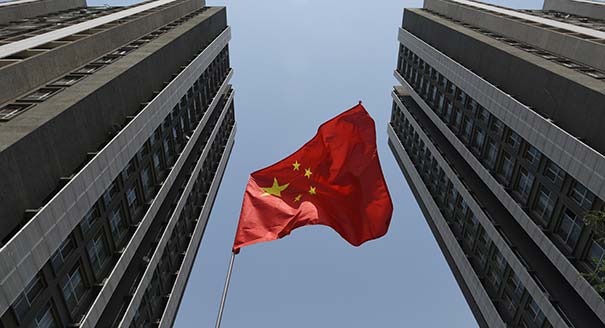
Many Sinologists have labored for years to disabuse lay readers of the notion that contemporary China is a modern-day imperial dynasty bent on dominating Asia and beyond.
Source: New York Times
To the Editor:
Judith Shapiro’s review (June 18) of two recent books by Howard W. French (“Everything Under the Heavens”) and Graham Allison (“Destined for War”) uncritically reinforces two prevailing myths about modern China. Many Sinologists have labored for years to disabuse lay readers of the notion that contemporary China is a modern-day imperial dynasty bent on dominating Asia and beyond. But Shapiro (channeling French) buys into this delusion without any qualms.
Similarly, many international relations specialists have incisively challenged Allison’s flawed application of the so-called Thucydides’s Trap to Sino-United States relations, yet Shapiro sees the argument as confirmation of French. The overall result is yet another simplistic affirmation of the “China threat” thesis.
MICHAEL D. SWAINE
WASHINGTON
This letter to the editor was originally published in the New York Times.

Former Senior Fellow, Asia Program
Swaine was a senior fellow at the Carnegie Endowment for International Peace and one of the most prominent American analysts in Chinese security studies.
Recent Work
Michael D. Swaine
Michael D. Swaine
Carnegie does not take institutional positions on public policy issues; the views represented herein are those of the author(s) and do not necessarily reflect the views of Carnegie, its staff, or its trustees.

The real test may come after the leaders leave the room.



Sheena Chestnut Greitens, Oriana Skylar Mastro, Yukon Huang, …

The Horn of Africa countries are among those facing a new security calculus.


Andrew Leber, Lesley Anne Warner

The European far right might fail to steer EU policy in the direction Russia wants, but they will create enough chaos inside Europe to benefit the Kremlin.

Dimitar Bechev

The new U.S.–Denmark–Greenland agreement will help Washington exert political, economic, and financial dominance under the guise of security. Yet, it acknowledged Copenhagen’s and Nuuk’s sovereignty on the island.

Marc Pierini

The nuclear relationship between China and the United States is increasingly shaped by widening perception gaps rather than deliberate strategic design.

Tong Zhao