

Commentary
The conflict has sent economic and political shock waves through a country with no representation at the negotiating table—and Kenya is not alone.
Georgia Schaefer-Brown, Jane Munga
{
  "authors": [
    "Richard Sokolsky",
    "Aaron David Miller"
  ],
  "type": "legacyinthemedia",
  "centerAffiliationAll": "",
  "centers": [
    "Carnegie Endowment for International Peace"
  ],
  "collections": [],
  "englishNewsletterAll": "",
  "nonEnglishNewsletterAll": "",
  "primaryCenter": "Carnegie Endowment for International Peace",
  "programAffiliation": "",
  "programs": [],
  "projects": [],
  "regions": [
    "North America",
    "United States"
  ],
  "topics": [
    "Political Reform",
    "Foreign Policy"
  ]
}
Source: Getty
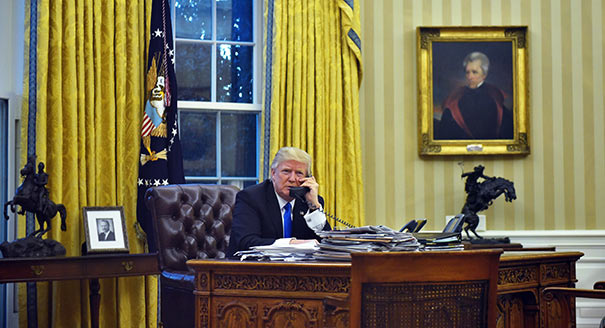
The leaked transcripts of U.S. President Donald Trump’s two conversations with Mexican and Australian leaders reveals a man so focused on his own needs and requirements that he can't seem to make much room for those of anyone else.
Source: CNN
Our greatest presidents were by and large men who kept their private thoughts and feelings to themselves and didn't share them with many others, even while they projected larger than life public personas on the national stage. Donald Trump, on the other hand, and not to put too fine a point on it, seems to say what's on his mind in public; he's unscripted and unplugged and far too often does not fully appreciate the consequences his words carry.
Still, even by Trumpian standards, the leaked transcripts of his two conversations with Mexico's President Enrique Pena Nieto and Australian Prime Minister Malcolm Turnbull are quite revealing in both style and substance. Indeed, in addition to raising the obvious question of why there seem to be so many leaks in this White House, the conversations reflect Trump's thinking on how his world relates to the foreign leaders with whom he's dealing.
These calls were made within the first month of his presidency, and he has likely learned a lot since then. But the initial read reveals a man so focused on his own needs and requirements that he can't seem to make much room for anyone else's.
In our nearly six decades of working at the State Department, it's our assessment that leaks generally fall into five categories: personal, political, bureaucratic, policy, and authorized. We don't know who is responsible for what appears to be mainly unauthorized leaking. Among the possibilities, it could be individuals from other agencies who resent the President's trash talking and budget cutting that threaten their mission, leadership and credibility. It could be individuals within the White House who are out to discredit or diminish their rivals or to advance their own personal agendas amid the cacophony of voices surrounding the President.
What has been remarkable about the Trump White House is that, with a few exceptions, all of the leaks have been in the first three categories; they involved neither unauthorized disclosure of sensitive national security information nor the airing out of disagreements over foreign policy.
But take away the dysfunction -- the self-inflicted wounds over "Russiagate," the un-presidential behavior, the gross incompetence in managing policy and the White House's legislative agenda, and a totally disorganized White House operation -- and it's a good bet that most of the leaks would have never occurred.
During the campaign, Trump prided himself on cutting the best deals for America and driving a stake through the heart of every agreement or major legislative achievement negotiated by his predecessor, such as the Paris Climate Accord and perhaps soon the Iran nuclear deal.
And yet despite his bluster in both conversations on the building of the border wall that Mexico is going to pay for and the agreement to take a limited number of refugees from Australia, it's stunning how quickly the master of the "Art of the Deal" backs off his opening positions and implicitly concedes that they were just ploys.
After the Mexican President adamantly but courteously opines that "Mexico cannot pay for that wall," Trump responds "but you cannot say that to the press," all but admitting that he knows Mexico won't pay for the wall. He is far more concerned -- even obsessed -- that the Mexican President not undermine his political position at home.
And by the end of his very tough talk with Turnbull, who keeps pressing Trump on Obama's commitment to take the 1,250 refugees who had tried to enter Australia by boat, Trump succumbs, arguing to save face that it's a "disgusting deal" but he'd honor "my predecessor's deal."
These calls demonstrate in stunning fashion that, however unpleasant the conversations, both Pena Nieto and Turnbull got what they wanted and, in the process, the best of Trump.
Talk about a political tin ear. The President of the United States asks the President of Mexico to lie in public just to protect Trump with his base. The "ask" reflects a remarkable degree of both naiveté and cynicism. For a President who seems obsessed with playing to his base, it never seemed to occur to him that Pena Nieto has to protect not only his own base, but also his credibility and standing among all Mexicans.
Trump is focused on his own image and needs, incapable of understanding or empathizing with Pena Nieto's political needs. And because Trump has only a casual relationship with the truth and thinks nothing of misleading the American public, he naturally assumed that his Mexican counterpart would be equally unburdened by the same norms.
It's striking how quickly the tone of the conversation with both leaders escalated, largely because of Trump's aggressiveness, impatience and inability to have his own way. The President seems to have little sense that building relationships requires time and the capacity to listen with a measure of empathy, even though he may not agree.
In a first conversation as President (as opposed to conversations during a campaign as a candidate), he needed to be ready to accept the dictum that you rarely get a second chance to make a first impression. Trump seems oblivious to this rather elemental law of human interaction as evidenced by his outbursts with Turnbull -- a close American ally with whom he has little reason to argue, let alone offend.
"I have had it," Trump exploded after an exchange on refugees. "I have been making these calls all day, and this is the most unpleasant call all day." And then in another gratuitous remark he goes on to refer to Putin as a "pleasant call," as if the Russian leader represented some paragon of virtue and courteousness in comparison with a longstanding US ally.
It's not surprising but still utterly incomprehensible why Trump accords this protected political space to a US adversary and explodes in friendly first contact with a close American neighbor and ally. One can only imagine how Trump would perform in a true crisis situation negotiating with a recalcitrant ally or a tough-minded adversary if he cannot handle pro-forma introductory calls with friendly partners.
Former Secretary of State James Baker had an alliterative expression that he learned from his grandfather about success in life and politics. "Prior preparation prevents poor performance." And having worked for Baker, we know he lived it. The notion that you have to know what you don't know and be in a hurry to find out is one of the key attributes of a successful presidency, too.
These transcripts don't reveal highly classified information or state secrets. What they do reflect is a president who was not prepared for these conversations, was unfamiliar with the issues and focused on politics rather than policy, and was bereft of any sense of the leaders with whom he was dealing.
Maybe Gen. John Kelly, his new chief of staff, will be able to stop the leaks and manage to bring the White House staff into line. Perhaps he can help ensure that Trump is as well-briefed as he can be for his encounter with foreign leaders.
What Kelly cannot easily do is alter Trump's temperament and instill the judgment, wisdom and emotional intelligence required for real leadership. Today America faces trying times at home and abroad. And it will take a president with nothing less to see the nation through them.

Nonresident Senior Fellow, Russia and Eurasia Program
Richard Sokolsky is a nonresident senior fellow in Carnegie’s Russia and Eurasia Program. His work focuses on U.S. policy toward Russia in the wake of the Ukraine crisis.

Senior Fellow, American Statecraft Program
Aaron David Miller is a senior fellow at the Carnegie Endowment for International Peace, focusing on U.S. foreign policy.
Carnegie does not take institutional positions on public policy issues; the views represented herein are those of the author(s) and do not necessarily reflect the views of Carnegie, its staff, or its trustees.

The conflict has sent economic and political shock waves through a country with no representation at the negotiating table—and Kenya is not alone.
Georgia Schaefer-Brown, Jane Munga

In the discussions made possible by the State Duma election campaign, one question is being asked more and more loudly. “What next?”

Andrey Pertsev
Over the past decade, China has moved from marginal player to major producer of all things batteries. The United States, Europe, and others are aiming to balance the market.

Milo McBride
The DFC should focus on advanced, low-carbon energy sources, prioritizing areas where the United States has comparative advantages.
Noah Gordon, Liana Schmitter-Emerson
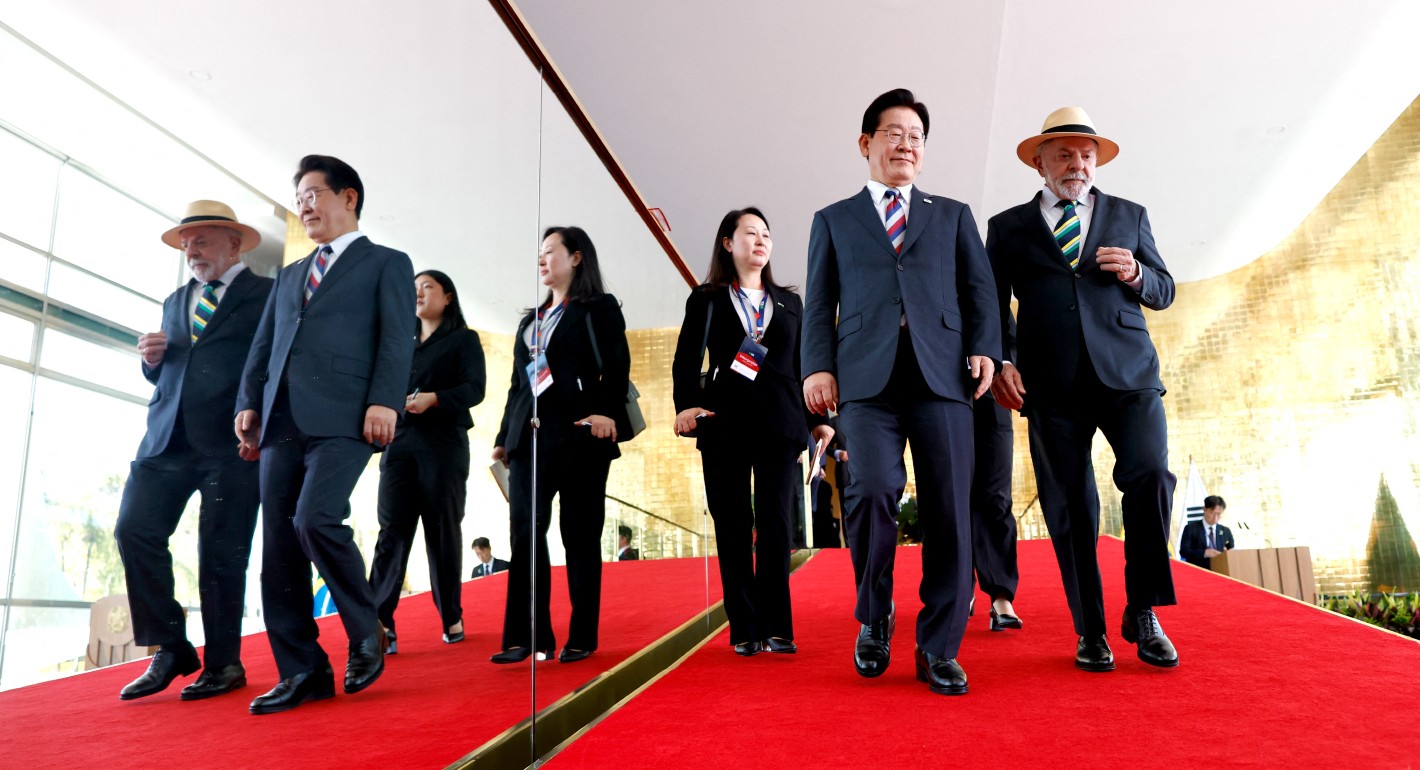
Lee’s tour shows how Seoul is reorganizing its diplomacy away from Pyongyang and toward industrial networks and the geography of the compute economy.

Darcie Draudt-Véjares