

Article
C. Raja Mohan, Darshana M. Baruah
{
  "authors": [
    "C. Raja Mohan"
  ],
  "type": "legacyinthemedia",
  "centerAffiliationAll": "dc",
  "centers": [
    "Carnegie Endowment for International Peace",
    "Carnegie India"
  ],
  "collections": [],
  "englishNewsletterAll": "ctw",
  "nonEnglishNewsletterAll": "",
  "primaryCenter": "Carnegie India",
  "programAffiliation": "SAP",
  "programs": [
    "South Asia"
  ],
  "projects": [],
  "regions": [
    "South Asia",
    "India"
  ],
  "topics": [
    "Foreign Policy"
  ]
}
Source: Getty
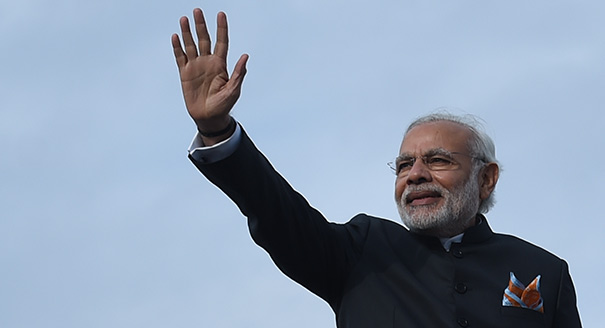
If cultural, digital, and physical connectivity have become important themes in Indian diplomacy these days, so has the idea of minilateralism with multiple partners.
Source: Indian Express
India’s intensive diplomatic engagements this week help us better frame Delhi’s unfolding multi-directional foreign policy. That India can sit with the US and its allies one day and hold consultations with the Russians and Chinese the next is certainly disconcerting to the traditionalists in Delhi. But South Block sees the new approach as reflecting a definitive pragmatism rooted in the rise of India and the emergence of multipolar world.
But first to Delhi’s diplomatic calendar this week. It began with the conclusion of “Bodhi Parva” — a celebration of Buddhist heritage to mark the 20th anniversary of a Bay of Bengal Forum, inelegantly called the BIMSTEC. It brings together five South Asian nations (Bangladesh, Bhutan, India, Nepal and Sri Lanka) and two South East Asian nations (Burma and Thailand). India’s current eastward orientation is also highlighted by a second event in Delhi this week — a conference on connecting India and the 10-member Association of South East Asian Nations (ASEAN).
If cultural, digital and physical connectivity have become important themes in Indian diplomacy these days, so has the idea of minilateralism with multiple partners. Delhi’s support for the renewal of the quadrilateral security dialogue last month marked its emphasis on ad hoc and flexible arrangements to pursue India’s interests in a more complex world.
Delhi is hosting the Russian and Chinese foreign ministers this week as part of a continuing trilateral engagement over the last decade and a half. It then holds another trilateral forum with Japan and Australia this week. Top diplomats from Delhi, Tokyo and Canberra have been meeting regularly over the last three years. This supplements the quadrilateral dialogue as well as the on-going trilateral engagement with the US and Japan. Delhi is also holding the first-ever “two plus two” dialogue with Australia in which the foreign and defence secretaries from the two countries sit together.
To add some additional spice into this mix, Delhi is welcoming the Secretary General of the Commonwealth, Baroness Patricia Scotland, this week. This follows the visit to Delhi last month by Prince Charles, when the two sides agreed to consider the prospects for India playing a larger role in the Commonwealth.
The revival of the quad certainly raised political eyebrows in Delhi and beyond. Some worry about India’s commitment to non-alignment and presume an irreversible tilt towards the US. Delhi, by no means is defensive. It points to the Chinese effort to construct a “new type of great power relations” with the United States, Beijing’s quadrilateral dialogue with the US, Afghanistan and Pakistan, and Russia’s interest in a grand bargain with America under President Donald Trump. Delhi has no reason to abandon its engagement with Russia and China. India is certainly eager to expand the sphere of cooperation with Russia and China and limit many of the divergences.
For the conservatives in the foreign policy community, India’s seemingly polyamorous engagements are quite incomprehensible. Whether we agree with the government or not, it is quite evident that Delhi is no longer bound to the inherited diplomatic canon. Unlike the ideologues wedded to the worldview from a different era, realists in Delhi emphasise the need to continuously adapt. They point to the breakdown of the post Cold War world order dominated by the United States amidst the Russian and Chinese assertiveness in Europe and Asia and India’s need to secure its interests in an increasingly uncertain world.
Pragmatism has indeed been a compelling imperative after the Cold War came to an end. Many of the current initiatives, the opening to the West in general and the United States in particular, the trilateral engagement with Russia and China and the quadrilateral security dialogue were all initiated and advanced by the governments led by P.V. Narasimha Rao, Atal Bihari Vajpayee and Manmohan Singh.
The contribution of Prime Minister Narendra Modi has been in bringing greater energy to these initiatives and discarding some of the past political inhibitions. Pragmatism after the Cold War has meant that Delhi looked beyond the Non-Aligned Movement. Today it is part of such diverse organisations like the G-20, East Asia Summit, BRICS, and Shanghai Cooperation Organisation. Having ignored the Commonwealth all these decades, Delhi is now looking more positively at the forum that brings more than 50 members together. It is a potential arena for Indian leadership.
Meanwhile, the rise of India is changing Delhi’s location in the structure of global power. This, in turn, alters the trajectory of India’s great power relations. In the past, Delhi’s main purpose was to prevent great power competition from constraining newly sovereign India’s room for manoeuvre on the global stage. Today as one of the world’s top economies with growing military potential, India is in a position to shape the great power politics and influence the balance of power in the Indo-Pacific and Eurasia.
Finally, India’s wish for a multipolar world has been granted. A multipolar world is far more unstable than a world that is dominated by single power or structured around a duopoly. As the weakest among the major powers in the unfolding multipolar world, Delhi needs to advance in all directions and engage more actively with a variety of minilateral and multilateral forums.
This article was originally published in the Indian Express.
Former Nonresident Senior Fellow, Carnegie India
A leading analyst of India’s foreign policy, Mohan is also an expert on South Asian security, great-power relations in Asia, and arms control.
Recent Work

C. Raja Mohan, Darshana M. Baruah


Alexander Gabuev, Paul Haenle, C. Raja Mohan, …
Carnegie does not take institutional positions on public policy issues; the views represented herein are those of the author(s) and do not necessarily reflect the views of Carnegie, its staff, or its trustees.

While the EU and European governments are embracing the much-lauded middle-power moment, this entails three difficult conundrums.

Richard Youngs
The middle power moment will not be defined by sovereign states alone, and California stands out for its potential contributions to international cooperation.


Ian Klaus, Stewart Patrick

Much has been said of the changes Brussels is trying to make to the EU enlargement process. Here’s why gradual integration might—or might not—be the answer.

Dimitar Bechev
Economic recovery has brought Sri Lanka a modicum of stability, but domestic strains and great-power rivalry could test how long it lasts.
Avinash Paliwal

Despite a new textbook, an influx of Russian teachers and managers, and an end to the teaching of Ukrainian, the Kremlin is unlikely to have “reprogrammed” locals.

Konstantin Skorkin